



Bioidentical Hormones vs. Traditional HRT: What's the Difference?



Bioidentical hormones aren't always what marketing suggests. Learn what BHRT means, how compounded hormones compare to FDA-approved HRT, and what to ask.
- Bioidentical hormones match the molecular structure of the hormones your body makes, but the term doesn't mean they're natural, unprocessed, or risk-free.
- Many FDA-approved HRT medications already contain bioidentical hormones, including estradiol patches and oral micronized progesterone.
- Compounded hormones aren't FDA-approved and don't go through the same testing and quality standards.
- The major safety concerns from the Women's Health Initiative came from a study of conjugated equine estrogens and a synthetic progestin.
- No form of hormone therapy is risk-free, and whether it's right for you depends on your age, health history, and symptoms. It's always a good idea to discuss your options with a licensed healthcare provider who can review your specific situation and health context.
This article is intended for general informational purposes only and is not a substitute for professional medical advice, diagnosis, or treatment. Always talk with a licensed healthcare provider before starting, changing, or stopping any medication or hormone therapy.
Compounded medications are not FDA-approved. They are prepared by state-licensed pharmacies for individual patients and are not reviewed by the FDA for safety, effectiveness, or quality.
come across the term bioidentical hormones. It frequently pops up on wellness podcasts, in social media ads, and sometimes, even in your doctor's office.
The catch is that the phrase means different things depending on who's saying it. A clinician is referring to a precise chemical description. But a marketer may use it as a selling point. These mixed messages can be confusing, to say the least.
This article dives into what bioidentical hormones actually are, how they compare to traditional HRT, and what current evidence says about safety. That way, you can have an informed discussion with your healthcare provider about what may be best for you.
What Does "Bioidentical" Actually Mean?
Bioidentical is a chemistry term. It refers to hormones with the exact same molecular structure as the hormones your body makes on its own. According to the Endocrine Society, any hormone can be made bioidentical, and many FDA-approved preparations already are.
The bioidentical hormones used most often in menopause care are:
- Estradiol: the main form of estrogen your ovaries produce before menopause
- Progesterone: a hormone that helps regulate your cycle and protects the lining of the uterus
- Testosterone: present in smaller amounts in women and linked to libido and energy
Bioidentical hormones usually start as plant compounds, often from soy or wild yam, which are then chemically processed in a lab to match human hormones. Cleveland Clinic describes them as "processed hormones designed to mimic the hormones made by your body's glands." In other words, plant-derived doesn't mean unprocessed, and it doesn't mean it's risk-free.
What Is Traditional HRT? And How Is It Different?
Traditional HRT generally refers to hormone medications that have been prescribed for decades to manage perimenopause and menopause symptoms. But a large number of FDA-approved hormone therapies prescribed in the U.S. contain bioidentical hormones.
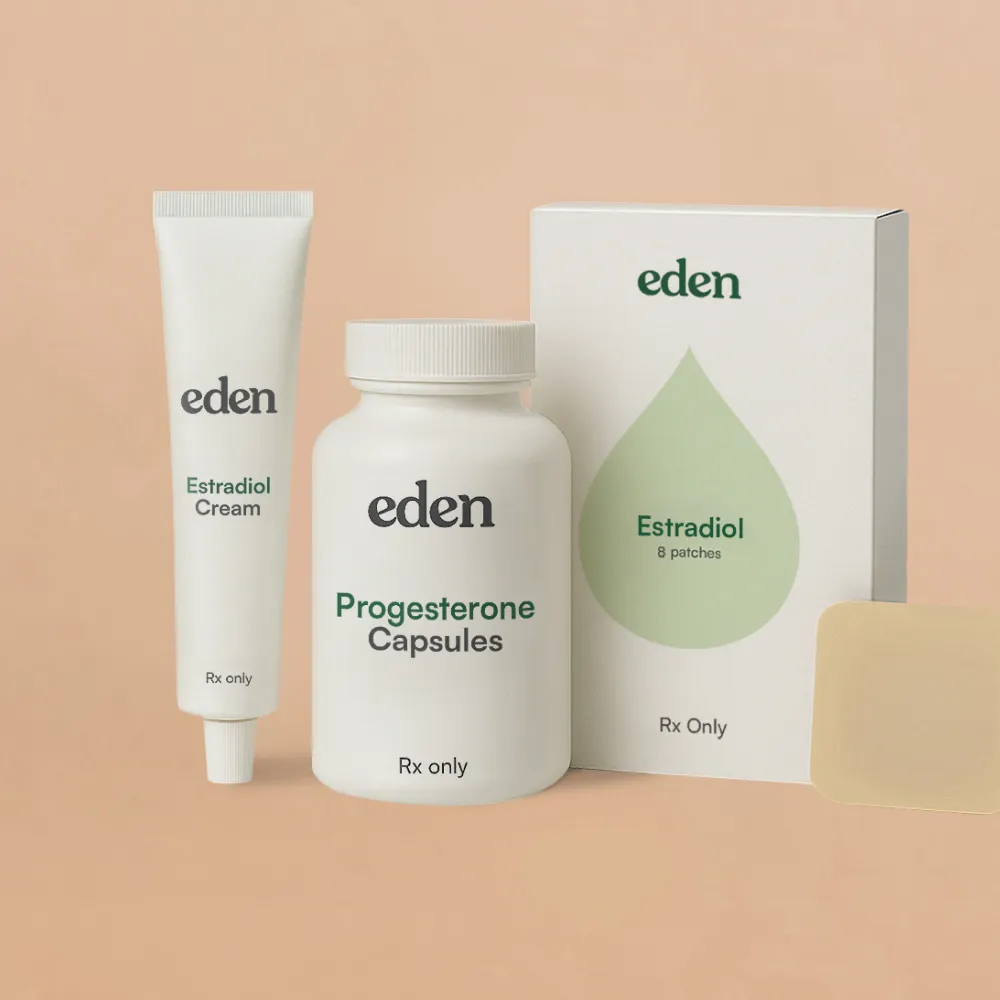
FDA-approved bioidentical options include estradiol patches such as Vivelle-Dot® and Climara®, Estrace® vaginal cream, generic estradiol tablets, Prometrium® (oral micronized progesterone), and Bijuva®, which combines estradiol and progesterone in one capsule.
When people say "traditional HRT," they may be referring to hormones that aren't structurally identical to your own, although traditional HRT also includes bioidentical hormones. The two best-known examples are conjugated equine estrogens (Premarin®), which are derived from horse urine, and synthetic progestins such as medroxyprogesterone acetate (Provera®).
Much of the fear around HRT traces back to the Women's Health Initiative (WHI). In 2002, its estrogen-plus-progestin trial was stopped early after researchers found higher rates of breast cancer, stroke, blood clots, and heart disease among women ages 50 to 79. Yet, these participants took conjugated equine estrogens plus medroxyprogesterone acetate, not bioidentical estradiol or progesterone, an important distinction that is often missing from discussions of the study.
More recently, The Menopause Society's 2022 position statement concluded that for most healthy women under 60, or within 10 years of menopause onset, the benefits of hormone therapy for hot flashes and bone protection outweigh the risks when there are no contraindications.
In November 2025, the FDA also began removing boxed warnings about cardiovascular disease, breast cancer, and probable dementia from menopausal hormone therapy labels, and it approved the first updated labels in February 2026. A boxed warning about endometrial cancer remains for estrogen-only products, and detailed risk information is still included in the labeling.
Still, none of this proves bioidentical forms are safer. Even FDA-approved bioidentical estradiol and progesterone haven't been studied in trials as large or as long as the WHI, a gap the Endocrine Society's scientific statement acknowledges. Every option has some risk.
Compounded vs. FDA-Approved Bioidentical Hormones: A Key Distinction
Bioidentical hormones exist in two main forms:
- FDA-approved bioidentical hormones are tested for safety, effectiveness, dose consistency, and purity before they reach a pharmacy shelf. These are manufactured under federal quality standards, which means each dose should contain what the label says.
- Compounded hormones are prepared by a compounding pharmacy (a pharmacy that prepares medications for an individual patient based on a provider's prescription). The FDA does not approve compounded drugs, which means it doesn't verify their safety, effectiveness, or quality before they're used. As a result, potency and purity may vary from batch to batch or pharmacy to pharmacy.
With that said, some patients may need a dose or delivery format that isn't commercially available, or they may react to an inactive ingredient in a standard product. In these situations, a provider may choose a compounded preparation when clinically appropriate and permitted under applicable compounding requirements.
Major medical organizations remain cautious, though. The American College of Obstetricians and Gynecologists (ACOG) advises that compounded bioidentical hormones shouldn't be prescribed routinely when an FDA-approved option exists. The Endocrine Society and a 2020 National Academies review raised similar concerns about limited evidence and inconsistent quality oversight.
Additionally, some compounding programs may use saliva tests to "customize" a hormone prescription. However, The Menopause Society states that saliva testing hasn't been shown to be accurate or reliable, partly because hormone levels shift throughout the day. In practice, providers typically adjust hormone therapy based on how your symptoms respond, not on a single test result.
Whatever form you use, hormone therapy should always be prescribed and monitored by a licensed provider.
BHRT vs HRT at a Glance
This table is intended as a general overview. Your provider can help determine which type of hormone therapy, if any, is appropriate for your individual health profile and symptoms.
Common Misconceptions About Bioidentical Hormones
Conflicting claims about bioidentical hormones tend to spread quickly. So, here's what the evidence says about the ones that come up most often.
Misconception 1: Bioidentical hormones are natural, so they're automatically safer.
"Natural" refers to the plant origin of the raw material, not the finished product. All bioidentical hormones, FDA-approved or compounded, are processed in a lab. Natural isn't a synonym for safe, and both forms carry potential risks worth discussing with a provider.
Misconception 2: Compounded hormones are more personalized, so they must be better.
Customization can help people with specific needs, but it doesn't guarantee better outcomes. Without standardized quality controls, potency may be inconsistent.
Misconception 3: Traditional HRT is synthetic and dangerous.
Many FDA-approved HRT medications are bioidentical. The risks highlighted by the WHI were observed with specific hormone formulations, and current evidence suggests that for many women who start hormone therapy earlier in the menopause transition, the benefits may outweigh the risks. However, keep in mind that this varies from person to person.
Who May Benefit from Hormone Therapy, and Who Should Use Caution
Hormone therapy, whether bioidentical or conventional, may be used to ease common symptoms of perimenopause and menopause, such as:
- Hot flashes and night sweats
- Vaginal dryness
- Disrupted sleep
- Mood changes and brain fog
- Low libido
- Joint discomfort
It's most often considered when these symptoms are affecting your quality of life.
Midlife hormonal changes can also affect body composition, including more fat around the midsection. Hormone therapy isn't a weight loss treatment, but if weight changes are part of what you're noticing, your provider can discuss options for that separately, such as GLP-1 weight loss treatment.
At the same time, hormone therapy may not be appropriate for women with a personal or family history of hormone-sensitive cancers (such as certain breast cancers), blood clotting disorders, stroke, or cardiovascular disease. Age and time since menopause also play a role. A licensed provider will review your full health history before deciding whether any form of hormone therapy fits your situation. To learn more about HRT and its safety, read our guide on whether HRT is safe.
How Eden Approaches Hormone Therapy for Women
Eden's My Custom Hormone Kit™ is built around individualized, provider-guided care, and a licensed provider decides which option (if any) suits your symptoms, health history, and goals.
There are three kit tiers:
- Balance: an estradiol patch
- Ignite: an estradiol patch plus compounded progesterone capsules
- Radiance: an estradiol patch, compounded progesterone capsules, and vaginal estradiol for localized comfort
These tiers describe available program options, not predetermined prescriptions. A licensed provider determines whether treatment is appropriate, including whether a compounded medication is clinically necessary for an individual patient. Compounded medications are not FDA-approved and are not reviewed by the FDA for safety, effectiveness, or quality before marketing.
You can get started with Eden with a quick online intake; we'll connect you with a licensed provider who will review your health history, symptoms, and goals. If treatment is appropriate, your medication may be shipped to your door from a state-licensed pharmacy with free expedited shipping, and you'll have ongoing access to your care team for check-ins and adjustments.
At the end of the day, "bioidentical" is a useful word, but it isn't a safety guarantee. If your menopause or perimenopause symptoms are getting in the way of your daily life, speak with a licensed provider about your options.






The FDA does not approve compounded medications for safety, quality, or manufacturing. Prescriptions and a medical evaluation are required for certain products. The information provided on this blog is for general informational purposes only. It is not intended as a substitute for professional advice from a qualified healthcare professional and should not be relied upon as personal health advice. The information contained in this blog is not meant to diagnose, treat, cure, or prevent any disease. Readers are advised to consult with a qualified healthcare professional for any medical concerns, including side effects. Use of this blog's information is at your own risk. The blog owner is not responsible for any adverse effects or consequences resulting from the use of any suggestions or information provided in this blog.
Eden is not a medical provider. Eden connects individuals with independent licensed healthcare providers who independently evaluate each patient to determine whether a prescription treatment program is appropriate. All prescriptions are written at the sole discretion of the licensed provider. Medications are filled by state-licensed pharmacies. Please consult a licensed healthcare provider before making any medical decisions.
Frequently asked questions
What's the difference between BHRT and HRT?

BHRT (bioidentical hormone replacement therapy) uses hormones that are structurally identical to the ones your body makes, such as estradiol and progesterone. HRT is the broader term for menopausal hormone therapy, and many FDA-approved HRT products are already bioidentical. The more important distinction is often whether a product is FDA-approved or compounded.
Are bioidentical hormones safer than HRT?
Not necessarily. Major medical organizations say bioidentical hormones, especially compounded versions, haven't been shown to be safer or more effective than FDA-approved hormone therapy.
Is bioidentical HRT FDA-approved?
Some of it is. Products such as estradiol patches and Prometrium® are FDA-approved, while compounded bioidentical hormones are not.
Do I need a hormone test before starting bioidentical hormones?
Not usually. The Menopause Society notes that saliva hormone testing hasn't been shown to be accurate or reliable, and hormone levels naturally shift throughout the day. Providers typically base hormone therapy decisions on your symptoms, age, and health history, then adjust based on how you respond.
Acertis Pharmaceuticals. (2026). PROMETRIUM® (progesterone, USP) capsules: Prescribing information. U.S. Food and Drug Administration. https://www.accessdata.fda.gov/drugsatfda_docs/label/2026/019781s026lbl.pdf
Allergan, Inc. (2024). ESTRACE® (estradiol vaginal cream, USP, 0.01%): Prescribing information. DailyMed, U.S. National Library of Medicine. https://dailymed.nlm.nih.gov/dailymed/drugInfo.cfm?setid=dfc41fcd-c5ba-4b25-b647-cf04d3988b3e
American College of Obstetricians and Gynecologists. (2023). Compounded bioidentical menopausal hormone therapy: ACOG Clinical Consensus No. 6. Obstetrics & Gynecology, 142(5), 1266–1273. https://www.acog.org/clinical/clinical-guidance/clinical-consensus/articles/2023/11/compounded-bioidentical-menopausal-hormone-therapy
Bayer HealthCare Pharmaceuticals. (2024). CLIMARA® (estradiol transdermal system): Prescribing information. U.S. Food and Drug Administration. https://www.accessdata.fda.gov/drugsatfda_docs/label/2024/020375s049s050lbl.pdf
Cleveland Clinic. (n.d.). Bioidentical hormones. https://my.clevelandclinic.org/health/treatments/15660-bioidentical-hormones
Mayne Pharma. (2026). BIJUVA® (estradiol and progesterone) capsules: Prescribing information. U.S. Food and Drug Administration. https://www.accessdata.fda.gov/drugsatfda_docs/label/2026/210132s013lbl.pdf
Mayo Clinic. (n.d.). Bioidentical hormones: Are they safer? https://www.mayoclinic.org/diseases-conditions/menopause/expert-answers/bioidentical-hormones/faq-20058460
The Menopause Society. (n.d.). What is hormone testing? https://menopause.org/publications/clinical-practice-materials/bioidentical-hormone-therapy/what-is-hormone-testing-
The NAMS 2022 Hormone Therapy Position Statement Advisory Panel. (2022). The 2022 hormone therapy position statement of The North American Menopause Society. Menopause, 29(7), 767–794. https://journals.lww.com/menopausejournal/abstract/10.1097/gme.0000000000002028~the-2022-hormone-therapy-position-statement-of-the-north?redirectionsource=fulltextview
National Academies of Sciences, Engineering, and Medicine. (2020). The clinical utility of compounded bioidentical hormone therapy: A review of safety, effectiveness, and use. The National Academies Press. https://nap.nationalacademies.org/catalog/25791/the-clinical-utility-of-compounded-bioidentical-hormone-therapy-a-review
Pfizer Inc. (2024). PROVERA® (medroxyprogesterone acetate tablets, USP): Prescribing information. U.S. Food and Drug Administration. https://www.accessdata.fda.gov/drugsatfda_docs/label/2024/011839s083lbl.pdf
Sandoz Inc. (2024). VIVELLE-DOT® (estradiol transdermal system): Prescribing information. U.S. Food and Drug Administration. https://www.accessdata.fda.gov/drugsatfda_docs/label/2024/020538s043lbl.pdf
Santoro, N., Braunstein, G. D., Butts, C. L., Martin, K. A., McDermott, M., & Pinkerton, J. V. (2016). Compounded bioidentical hormones in endocrinology practice: An Endocrine Society scientific statement. The Journal of Clinical Endocrinology & Metabolism, 101(4), 1318–1343. https://academic.oup.com/jcem/article-abstract/101/4/1318/2804494
U.S. Food and Drug Administration. (n.d.). Compounding and the FDA: Questions and answers. https://www.fda.gov/drugs/human-drug-compounding/compounding-and-fda-questions-and-answers
U.S. Food and Drug Administration. (2025, November 10). HHS advances women's health, removes misleading FDA warnings on hormone replacement therapy. https://www.fda.gov/news-events/press-announcements/hhs-advances-womens-health-removes-misleading-fda-warnings-hormone-replacement-therapy
U.S. Food and Drug Administration. (2026, February 12). FDA approves labeling changes to menopausal hormone therapy products. https://www.fda.gov/news-events/press-announcements/fda-approves-labeling-changes-menopausal-hormone-therapy-products
Writing Group for the Women's Health Initiative Investigators. (2002). Risks and benefits of estrogen plus progestin in healthy postmenopausal women: Principal results from the Women's Health Initiative randomized controlled trial. JAMA, 288(3), 321–333. https://jamanetwork.com/journals/jama/fullarticle/195120
Wyeth Pharmaceuticals LLC. (2025). PREMARIN® (conjugated estrogens tablets, USP): Prescribing information. U.S. Food and Drug Administration. https://www.accessdata.fda.gov/drugsatfda_docs/label/2025/004782s179lbl.pdf
Thank you!
We'll be in touch.
Thank you!