
Hair Growth Supplements: What Works, What Doesn’t, and When You May Need More



Not getting results from hair growth supplements? Learn which vitamins and ingredients have real evidence, and when prescription treatment may help more.
- Hair growth supplements may help when shedding is tied to a nutritional deficiency, such as low iron, vitamin D, or zinc, but confirming the deficiency through testing should come first.
- Biotin is heavily marketed, yet it is only clinically supported for people with a true deficiency, and high doses may interfere with thyroid and cardiac lab results.
- One randomized trial found that a multi-ingredient supplement raised hair density by about 10.1% over six months, a modest but meaningful change for some people.
- Saw palmetto may slightly lower DHT, but the evidence is far weaker than that for prescription finasteride.
- Pattern hair loss (androgenetic alopecia) is driven by genetics and DHT, not nutrition, meaning it usually needs prescription treatment to be addressed effectively.
- If you have supplemented for six or more months without results, or have visible thinning plus a family history, a licensed healthcare provider evaluation may be a more useful next step.
- Eden connects patients with licensed healthcare providers who may prescribe hair growth treatments when clinically appropriate, with online access and no insurance required.
This article is for general informational purposes only and is not a substitute for professional medical advice, diagnosis, or treatment. Always talk with a licensed healthcare provider before starting, changing, or stopping any supplement, medication, or therapy.
Every year, millions of people try hair growth supplements to slow shedding or thicken thinning hair. The market is booming, too, with global sales projected to reach $2.86 billion by 2031.
These supplements are accessible, affordable, and often feel proactive. But the evidence behind many popular ingredients is more limited than the marketing suggests. And for the most common cause of hair thinning (pattern hair loss), supplements alone rarely turn things around. This guide covers which ingredients are supported by research, which are overhyped, and when it may be time to talk with a licensed provider about prescription options that could be more effective.
Why Hair Loss Happens, and Why the Cause Matters
Hair loss is not a single condition with a single fix. It has several common causes, and the right approach depends entirely on which one you’re dealing with.
Thinning can also be an early signal of broader changes, such as thyroid fluctuations and insulin resistance. This is one reason many individuals with hair loss or thinning also choose to assess their overall metabolic health through a licensed healthcare provider.
With that said, the most common types of hair loss include:
- Androgenetic alopecia (pattern hair loss) is the most common type, affecting roughly 50% of men by age 50 and up to about 40% of women by age 70. It’s driven by a genetic sensitivity to dihydrotestosterone (DHT), a hormone byproduct made from testosterone that can gradually shrink hair follicles. This type responds poorly to supplements alone.
- Telogen effluvium is a temporary shedding pattern in which stress, illness, or a nutritional shortfall pushes hair into its resting phase too early. Because a deficiency is sometimes the trigger, this type is most likely to improve with the right supplement.
- Nutritional deficiency-related hair loss is linked to low iron (especially in premenopausal women), low vitamin D, and low zinc. This is where supplements have the most support, but only when a deficiency is confirmed and properly addressed.
- Hormonal and medical causes include thyroid dysfunction, PCOS, and the perimenopause and menopause transition. These require medical evaluation, not supplementation alone.
At the end of the day, if you don’t know what’s causing your hair loss, you can’t know whether a supplement will help. This is why a provider evaluation often makes sense first, especially before spending any money on supplements.
Hair Growth Supplements With the Most Evidence
Some ingredients do have a legitimate, if limited, role. Here is what the research says about the most popular vitamins for hair loss and the limitations marketing tends to leave out.
Biotin (Vitamin B7)
Biotin is the most marketed hair supplement and the most misunderstood. It’s a cofactor your body uses to produce keratin, the structural protein hair is made of, which is why it gets linked to hair shaft strength.
The catch is that biotin deficiency is rare, especially in healthy adults who eat a varied diet. A 2017 review in Skin Appendage Disorders found that every documented case of biotin improving hair or nails involved a pre-existing deficiency or underlying condition.
In other words, biotin for hair growth may help if you are genuinely deficient, but high doses without one are unlikely to do much. On top of this, amounts above 5,000 mcg can skew thyroid and cardiac lab tests; be sure to always tell your provider what supplements you’re taking before any bloodwork.
Iron
Iron is one of the most well-documented nutritional deficiencies contributing to hair shedding, particularly in premenopausal women with heavy periods. Low ferritin (your stored iron) is associated with telogen effluvium, and correcting a confirmed deficiency may help reduce shedding.
But supplementing without a deficiency comes with risks, including gastrointestinal side effects and, in excess, toxicity. Thus, it’s worth having your ferritin tested by a licensed provider first. Iron is not a universal hair fix; it’s only appropriate when a deficiency is confirmed.
Vitamin D
Low vitamin D levels have been linked to both alopecia areata and telogen effluvium in observational studies. Vitamin D receptors are located within hair follicles, suggesting a role in the growth cycle.
Evidence that supplementing helps individuals who aren’t deficient is limited. But vitamin D deficiency is common (estimated at nearly 40% of U.S. adults), meaning testing may be a worthwhile step when experiencing hair thinning. At standard doses of around 1,000 to 2,000 IU daily, supplementation is low-risk and may support follicle health when levels are low.
Zinc
Zinc supports the growth and repair of hair tissue and helps the oil glands around follicles work properly. A deficiency is associated with hair loss, and supplementing may help when levels are low.
The nuance most labels skip is that excessive zinc can trigger hair loss by blocking copper absorption. The safer path for most people is to test their zinc levels before supplementing and to focus on incorporating more zinc-rich food sources, such as pumpkin seeds, legumes, and meat.
Saw Palmetto
Saw palmetto is a botanical that may inhibit 5-alpha reductase, the same enzyme that prescription finasteride targets to lower DHT, though far more weakly (about 30 to 40% versus finasteride’s 60 to 70%).
A 2020 systematic review in Skin Appendage Disorders, pooling several trials, reported improved overall hair quality in about 60% of participants and increased hair density in 83% of participants. This evidence, however, comes from small studies; the effects are modest compared to prescription options, and it’s not FDA-approved for hair loss. It may be worth discussing with a provider, but it isn’t a replacement for finasteride.
Collagen and Marine-Based Supplements (Viviscal®)
Collagen supplies amino acids that may indirectly support keratin production, and marine-based, multi-ingredient formulas, such as Viviscal®, have some clinical data, though most of it is industry-funded.
However, a 2024 randomized trial tested a B-vitamin, zinc, and botanical gummy in women with thinning hair and found a 10.1% increase in hair density over six months, versus a 2% decrease in placebo (p<0.001), plus self-reported improvements in shedding and strength. Yet it was funded by the supplement maker (HUM Nutrition) and didn’t track results beyond 6 months.
Overall, multi-ingredient hair loss supplements may offer modest benefits for thinning tied to nutritional gaps, but results greatly vary.
Supplements That Are Overhyped for Hair Growth
A few popular picks have weak or missing evidence for hair growth, specifically:
- High-dose biotin (above 2,500 to 5,000 mcg): There is no added benefit over standard amounts for people who are not deficient, and it can interfere with lab tests.
- Oral keratin: Keratin is largely broken down during digestion, which means swallowing it doesn’t translate into stronger hair. Topical keratin products, however, are a different matter.
- Standalone collagen peptides: These amino acids may help indirectly, but no strong randomized evidence shows oral collagen reverses hair loss on its own.
- Silica: This one is marketed for hair and nail strength, with very limited evidence drawn mostly from small, industry-funded studies.
None of these is necessarily harmful. The evidence simply does not yet align with the claims on most labels, and spending money on them may not address the actual cause of your hair loss.
What Supplements Can’t Fix: Pattern Hair Loss Explained
If you’ve quietly been hoping a supplement would solve your thinning, there is nothing foolish about having tried. But androgenetic alopecia is driven by genetics and DHT sensitivity, not a nutritional gap. This means that the follicles are miniaturizing at a biological level, and no supplement currently has strong evidence to reverse or significantly slow down this process.
Prescription treatments have substantially stronger evidence, including:
- Finasteride (oral): This is an FDA-approved 5-alpha reductase inhibitor that lowers DHT. Clinical trials show it reduces hair loss in roughly 83-87% of men and may promote some regrowth. It’s also used off-label in women with appropriate precautions.
- Minoxidil (topical or oral): FDA-approved for men and women, topical minoxidil is the most widely studied hair loss treatment available. Low-dose oral minoxidil is increasingly used under provider supervision for more significant hair thinning. (Learn more about minoxidil for hair thinning.)
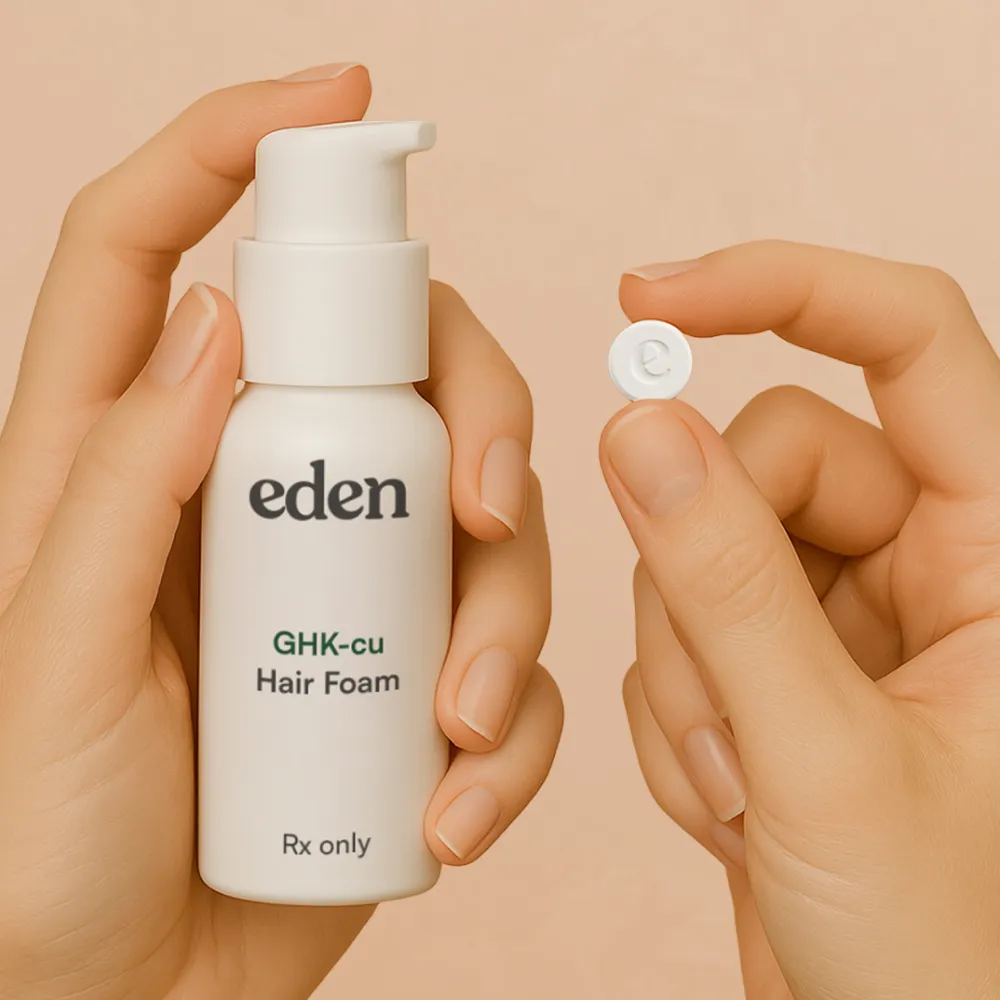
- GHK-Cu (copper peptide): This is a topical ingredient being studied for its potential role in supporting follicle health, though evidence remains limited and evolving.
If pattern hair loss is the cause, a licensed provider can evaluate your situation and recommend prescription hair growth treatments specific to your pattern and goals.
Signs Your Hair Loss May Need More Than a Supplement
A few signs may suggest it’s time to move from trial-and-error to a provider evaluation. These include:
- Visible scalp at the crown or a widening part (These are classic signs of pattern hair loss, which respond to prescription treatment rather than supplements.)
- Rapid or sudden shedding (This may point to telogen effluvium from stress, illness, or a hormonal shift; the root cause is worth investigating.)
- Shedding lasting more than three to six months (Persistent loss deserves evaluation, not another supplement bottle.)
- No improvement after six-plus months of consistent supplementing (If you’ve been consistent and seen nothing, the cause may not be nutritional.)
- A family history of hair loss (This is a strong indicator of androgenetic alopecia, where supplements are rarely enough.)
- Recent hormonal changes (This includes postpartum, perimenopause, and stopping birth control; these often respond best to targeted care, such as hormone therapy for women.)
Noticing these signs doesn’t mean your hair loss is untreatable. It usually means a targeted, provider-guided approach may serve you better than supplements for thinning hair.
How Provider-Guided Hair Treatment Works at Eden
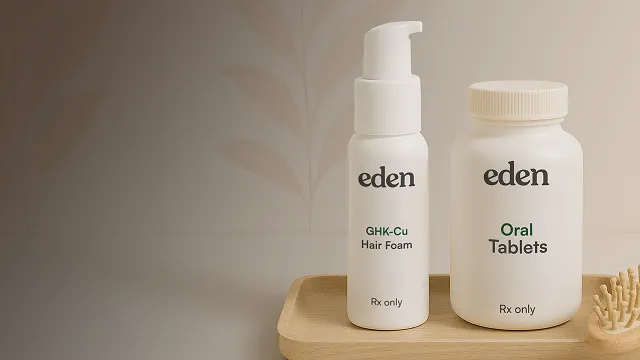
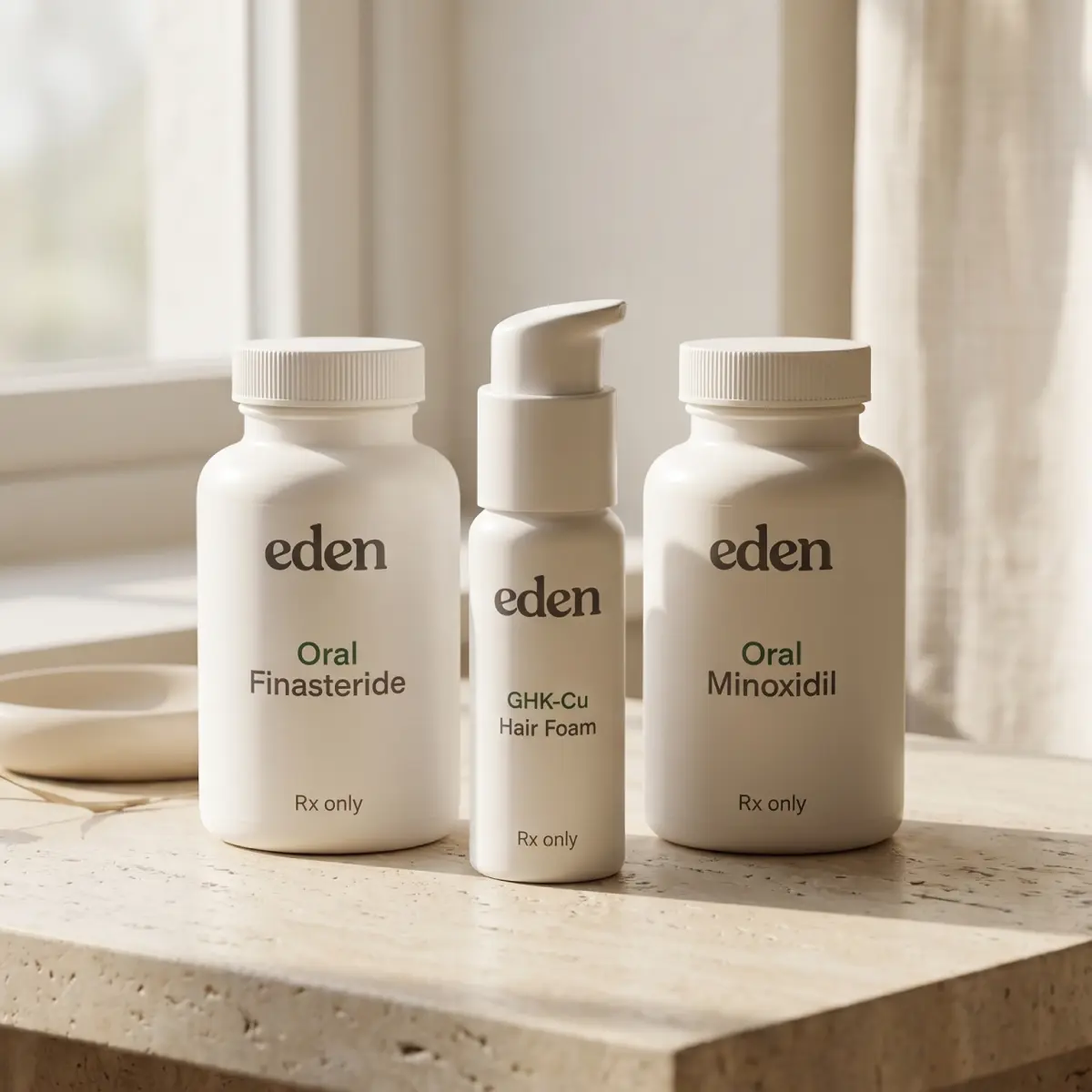
Eden offers various hair growth paths for men and women, including prescription options, such as Finasteride Rˣ, Minoxidil Rˣ, GHK-Cu Foam Rˣ, and Eden’s Custom Hair Growth Kit Rˣ, which combines treatments based on your specific pattern (whether that is a receding hairline, crown thinning, or more diffuse loss).
The process is fully online: complete a brief intake questionnaire. From there, Eden connects you with a licensed provider via telehealth. If prescribed, medications may be shipped from a state-licensed pharmacy. There are no in-person visits or insurance required, and treatments are FSA- and HSA-eligible. Ongoing provider messaging may also allow eligible patients to ask follow-up questions about their treatment plan.
Ultimately, treatment decisions should be made in consultation with a licensed healthcare provider, who can evaluate which options may be appropriate based on your specific medical history and hair loss pattern.









The FDA does not approve compounded medications for safety, quality, or manufacturing. Prescriptions and a medical evaluation are required for certain products. The information provided on this blog is for general informational purposes only. It is not intended as a substitute for professional advice from a qualified healthcare professional and should not be relied upon as personal health advice. The information contained in this blog is not meant to diagnose, treat, cure, or prevent any disease. Readers are advised to consult with a qualified healthcare professional for any medical concerns, including side effects. Use of this blog's information is at your own risk. The blog owner is not responsible for any adverse effects or consequences resulting from the use of any suggestions or information provided in this blog.
Eden is not a medical provider. Eden connects individuals with independent licensed healthcare providers who independently evaluate each patient to determine whether a prescription treatment program is appropriate. All prescriptions are written at the sole discretion of the licensed provider. Medications are filled by state-licensed pharmacies. Please consult a licensed healthcare provider before making any medical decisions.
Frequently asked questions
How long do hair growth supplements take to show results?

Since hair grows slowly, most studies run for at least three to six months before measuring change, which may offer an estimated timeframe. With any treatment path, you generally won’t see overnight changes. However, a lack of results after six consecutive months may indicate that the cause is not nutritional (or at least not the specific nutritional gap you’re trying to address with supplementation).
Are hair growth supplements safe to take every day?
Many are well tolerated at standard doses, but more is not always better. For instance, high-dose biotin may interfere with lab tests, excess zinc may disrupt copper balance, and too much iron can be harmful. Checking with a licensed provider before using any supplement daily is always the safest approach.
Can supplements regrow hair I have already lost?
For thinning tied to a confirmed deficiency, correcting it may reduce shedding over time. For pattern hair loss, supplements are not reliably able to regrow miniaturized follicles, whereas prescription treatments tend to have stronger evidence.
Do I need a blood test before starting a hair supplement?
This is often more worthwhile than playing a guessing game. Testing markers, including ferritin, vitamin D, and zinc, can tell you whether a deficiency is actually present, which is the difference between a supplement that may help and one that likely won’t.
Can I take supplements alongside prescription hair loss treatment?
Sometimes, but it depends on the specifics. A licensed provider can review what you are taking, flag any interactions or lab concerns, and help you focus on the combination most likely to address your cause.
Related articles




Alanazi, R., Alshammari, S., Aldossari, K., Alwatban, R., Aljeribah, D., Alanazi, S., Alsalhi, A., Alhumam, A., & Alajlan, A. (2026). Evaluating the Effectiveness of Commercial Oral Supplements for Hair Growth: A Systematic Review and Meta-Analysis. Journal of cosmetic dermatology, 25(4), e70817. https://pmc.ncbi.nlm.nih.gov/articles/PMC13063204/
Evron, E., Juhasz, M., Babadjouni, A., & Mesinkovska, N. A. (2020). Natural Hair Supplement: Friend or Foe? Saw Palmetto, a Systematic Review in Alopecia. Skin appendage disorders, 6(6), 329–337. https://pubmed.ncbi.nlm.nih.gov/33313047/
Forrest, K. Y., & Stuhldreher, W. L. (2011). Prevalence and correlates of vitamin D deficiency in US adults. Nutrition research (New York, N.Y.), 31(1), 48–54. https://pubmed.ncbi.nlm.nih.gov/21310306/
Ho, C. H., Sood, T., & Zito, P. M. (2024b, January 7). Androgenetic alopecia. StatPearls - NCBI Bookshelf. https://www.ncbi.nlm.nih.gov/books/NBK430924/
Kong, Y., Shang, Y., & Zhang, L. (2025). Association between androgenetic alopecia and psychological well-being: a systematic review and meta-analysis. Frontiers in psychiatry, 16, 1705957. https://pmc.ncbi.nlm.nih.gov/articles/PMC12690262/
Martin-Biggers, J., & Barbosa Bueno de Campos, M. E. (2024). A Randomized, Placebo-controlled Clinical Study Evaluating a Dietary Supplement for Hair Growth. The Journal of clinical and aesthetic dermatology, 17(11), 34–38. https://pmc.ncbi.nlm.nih.gov/articles/PMC11694638/
Patel, D. P., Swink, S. M., & Castelo-Soccio, L. (2017). A Review of the Use of Biotin for Hair Loss. Skin appendage disorders, 3(3), 166–169. https://pmc.ncbi.nlm.nih.gov/articles/PMC5582478/
Shin, J. W., Chung, E. H., Kim, M. B., Kim, T. O., Kim, W. I., & Huh, C. H. (2019). Evaluation of long-term efficacy of finasteride in Korean men with androgenetic alopecia using the basic and specific classification system. The Journal of dermatology, 46(2), 139–143. https://pubmed.ncbi.nlm.nih.gov/30536893/
Thamotharan, N., Harikumar, M. V., Sundaram, M., Swaminathan, A., & Rangarajan, S. (2025). Assessment of Serum Ferritin Levels in Female Patients With Telogen Effluvium. Cureus, 17(12), e100249. https://pmc.ncbi.nlm.nih.gov/articles/PMC12839778/
Viviscal. (2015). Viviscal Professional Hair Growth Program. https://www.viviscal.nl/media/downloads/ClinicalTrialsBooklet_LR.pdf
Thank you!
We'll be in touch.
Thank you!