



IGF-1 Testing: What It Measures and Why Providers Monitor It




IGF-1 testing measures growth hormone activity through a blood marker. Learn what your levels mean and how providers use results to personalize your care.
- IGF-1 testing measures insulin-like growth factor 1—a hormone primarily produced by your liver in response to the growth hormone—which carries out many of the growth hormone’s effects on your muscles, bones, and metabolism.
- Since IGF-1 stays relatively steady throughout the day, it’s the preferred marker for assessing growth hormone activity—unlike the growth hormone itself, which is released in unpredictable pulses.
- IGF-1 levels naturally peak in adolescence and decline with age, which is one reason adults may notice shifts in muscle mass, body composition, and recovery over time.
- Low or high IGF-1 results are signals, not diagnoses; they should always be interpreted by a licensed healthcare provider alongside your symptoms and full health profile.
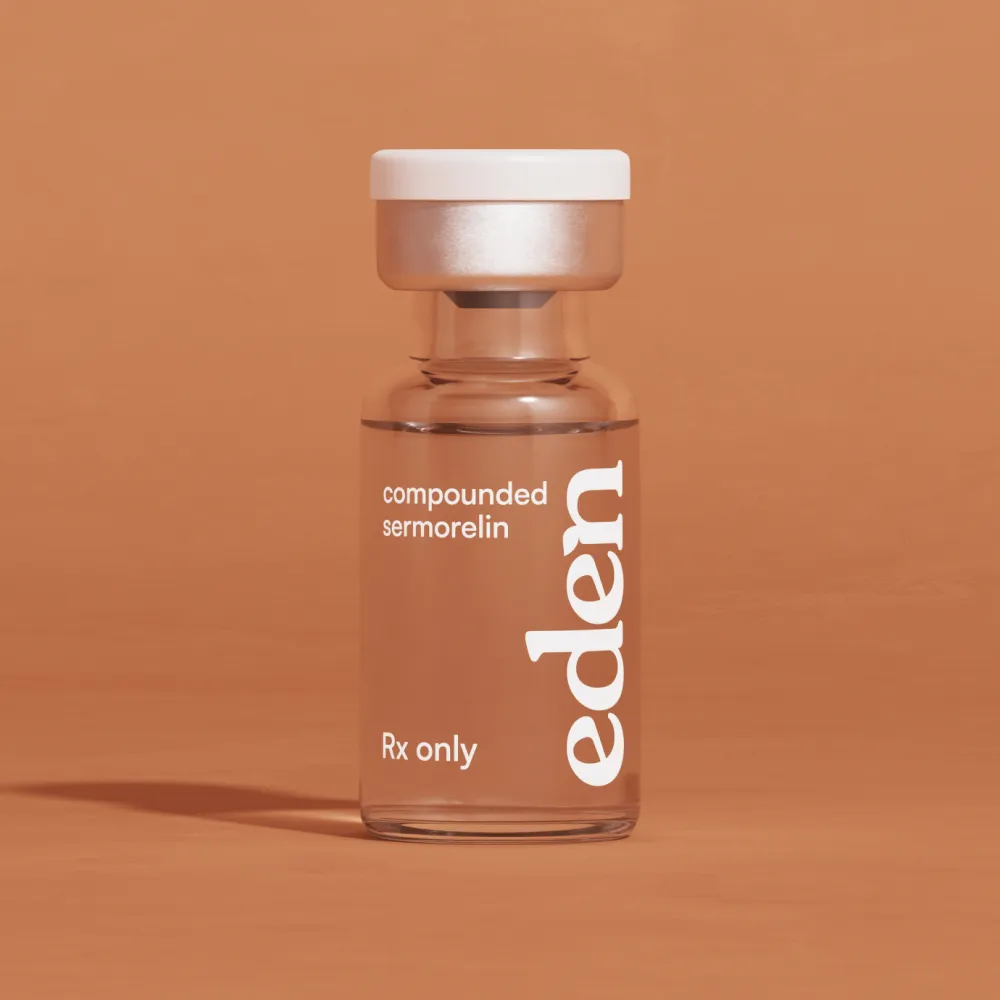
- For adults on growth hormone support therapy, such as sermorelin, repeat IGF-1 testing is one of the primary tools providers may use, alongside clinical evaluation, to help inform dosing decisions and monitor therapy.
- An IGF-1 test is a simple blood draw, with results measured against age- and sex-specific reference ranges.
This article is intended for general informational purposes only and is not a substitute for professional medical advice, diagnosis, or treatment. Always talk with a licensed healthcare provider before starting, changing, or stopping any medication or therapy.
During a sermorelin consultation or while researching growth-hormone-support therapies, you may have come across “IGF-1.” But what does it mean? And why does it matter?
IGF-1 gives your provider one of the most useful insights into how your growth hormone system is working. As a single blood marker, IGF-1 testing is often ordered before, during, and after growth hormone-support therapy.
This article covers what IGF-1 is, why it’s used as a stand-in for growth hormone activity, what your results may indicate, and how healthcare providers use the test to safely manage and adjust your program.
What Is IGF-1?
IGF-1 (insulin-like growth factor 1) is a hormone produced mainly by your liver. And despite the name, it isn’t insulin.
The “insulin-like” label refers to a structural resemblance similar to insulin, meaning the two molecules look somewhat alike. However, IGF-1 and insulin have very different functions within the human body. So what does IGF-1 do?
IGF-1 is one of the main messengers behind tissue growth and repair. It helps maintain muscle and bone, helps regulate metabolism, and supports the everyday maintenance of your tissues throughout adulthood.
Your pituitary gland—a small gland at the base of your brain—releases growth hormone (GH), which signals your liver to produce IGF-1. In other words, IGF-1 is the downstream messenger that carries out many of the growth hormone’s instructions.
How IGF-1 Relates to Growth Hormone
Growth hormone (GH) is released in pulses. Your pituitary gland releases it in bursts throughout the day and night, with the largest surges occurring during deep sleep. And this release pattern makes GH itself difficult to measure accurately from a single blood draw.
Healthcare providers usually order an IGF-1 blood test over direct growth hormone testing when they want to assess growth hormone activity in adults. This is because IGF-1 is produced steadily by the liver in response to GH stimulation and remains relatively stable throughout the day.
Simply put, a single IGF-1 measurement reflects cumulative activity over a longer window, making it a far more reliable and practical marker of overall GH activity.
Why IGF-1 Levels Change With Age
IGF-1 doesn’t remain the same throughout your lifespan. Levels climb to their highest point during puberty and early adulthood, then decline gradually over time. Research suggests IGF-1 may fall by about 14-15% per decade, so by the time many adults reach their 60s, their levels may be a fraction of what they were in their 20s.
This may be one reason some adults notice changes in muscle mass, body composition, energy, and recovery as they get older.
At the same time, IGF-1 reference ranges are age- and sex-adjusted, which means a result that’s perfectly normal at 55 might be considered low at 25.
This age-related decline is one reason why a baseline IGF-1 test can be a meaningful starting point for adults exploring growth hormone-support options like sermorelin—it captures where you’re starting from before anything changes.
(And if you’re wondering “what is sermorelin,” our guide provides more insights into how it works, its benefits, and more.)
What Does an IGF-1 Blood Test Involve?
An IGF-1 blood test is a standard blood draw—a single venous sample, the same kind you’d give for most lab work. It’s typically done at a lab or through a provider-ordered test.
For this test, fasting generally isn’t required. However, if you take biotin supplements (often found in hair, skin, and nail products), standard lab guidance is to stop taking them at least 72 hours beforehand; biotin can interfere with certain hormone immunoassays (the antibody-based tests many labs use to measure hormone levels). When in doubt, always ask your provider.
Results usually come back within a few business days. They’re reported in ng/mL (nanograms per milliliter) and compared against age- and sex-specific reference ranges.
Understanding Your IGF-1 Results
Once your results are back, the number on the page may pose even more questions. So, here’s what you should know.
What Low IGF-1 May Indicate
An IGF-1 level below your age-adjusted reference range may suggest reduced growth hormone activity. In adults, low IGF-1 has been associated with reduced muscle mass, increased body fat (especially around the abdomen), fatigue, lower exercise capacity, and changes in bone density.
However, keep in mind that low IGF-1 is a signal, not a diagnosis. It doesn’t confirm growth hormone deficiency, which requires additional clinical evaluation.
On top of this, nutrition, thyroid function, and liver health may also influence the number; your provider will interpret the result in the context of your full health picture, symptoms, and history.
If you’re curious about what reduced growth hormone activity can look like day to day, this overview of How Fast Sermorelin Works & What Happens When You Stop may add some helpful context.
What High IGF-1 May Indicate
An IGF-1 level above your specific reference range may point to excessive growth hormone activity. In rare cases, this can be associated with conditions like acromegaly (excess growth hormone from a pituitary tumor).
In the context of growth hormone-support therapy, however, an elevated result may simply indicate that a dose is running too high. Symptoms that sometimes accompany high IGF-1 levels include joint discomfort, headaches, and soft-tissue swelling.
If you’re on a growth hormone-support program and your IGF-1 comes back elevated, don’t adjust your dose on your own. Contact your healthcare provider, and they’ll guide you through any necessary changes.
What “Normal” IGF-1 Looks Like
“Normal” depends on your age, your sex, and the specific lab running the test. Here’s an approximate, illustrative example range for adults:
- Ages 20-29: approximately 115-307 ng/mL
- Ages 40-54: approximately 66-222 ng/mL
- Ages 55-70: approximately 55-185 ng/mL
However, keep in mind that ranges differ meaningfully between labs and assays; in other words, these aren’t necessarily targets. Your provider will compare your specific result against the performing lab’s own reference range and your individual context.
How Providers Use IGF-1 Testing to Monitor GH-Support Therapy
For adults using growth hormone-support therapies such as sermorelin, IGF-1 testing is the primary sermorelin monitoring tool providers use to keep treatment safe and specific to you. You can see this reflected in real accounts like these Sermorelin Reviews: User Experiences and Benefits, where ongoing testing is part of the experience. It generally works across three phases:
Baseline Testing Before Starting Treatment
Before beginning a program, a provider typically orders a baseline IGF-1 test. This establishes your starting point and helps them decide whether treatment is appropriate, what starting dose makes sense, and what IGF-1 range may be appropriate based on the individual's clinical circumstances.
Without a baseline, there’s no objective way to measure whether treatment is doing what it’s meant to.
Follow-Up Testing During Treatment
After starting therapy, follow-up IGF-1 tests are usually done at set intervals, often around 4-6 weeks and again at 3-6 months. Yet, this may vary depending on the protocol and how you respond.
These check-ins let your provider see whether your levels are moving toward the intended range, whether the dose should be adjusted up or down, and whether anything needs attention (for instance, if levels are trending too high).
Ongoing Monitoring for Safety and Optimization
Even once a stable dose is dialed in, periodic IGF-1 monitoring continues. It serves two purposes:
- Confirming your levels stay in the intended range determined by your provider over time.
- Catching any changes, up or down, that might call for a small recalibration.
Eden’s sermorelin program is built around this kind of approach; we connect you with licensed healthcare providers who review lab results, adjust dosing plans, and stay reachable through ongoing messaging support to provide ongoing clinical follow-up, as appropriate.
Who Should Consider IGF-1 Testing?
IGF-1 testing may be relevant for:
- Adults with symptoms that may be linked to lower growth hormone activity, such as persistent fatigue, reduced muscle mass despite regular exercise, increased abdominal fat, slower recovery, or reduced sleep quality.
- Adults starting or currently on a growth hormone-support therapy like sermorelin who need baseline or follow-up monitoring.
- Adults proactively interested in understanding their hormonal health as part of a provider-guided health and wellness approach.
Either way, IGF-1 results should always be ordered and interpreted by a licensed professional.
If you’re weighing whether a growth hormone support program is a fit, the next step is a conversation with a licensed provider who can assess your baseline and build a plan around it. Start with Eden’s brief online intake. From there, Eden connects you with a licensed healthcare provider. Additionally, reading the Sermorelin Dosage Chart & Dosing Calculator may help you gain a clearer sense of what the process entails.






The FDA does not approve compounded medications for safety, quality, or manufacturing. Prescriptions and a medical evaluation are required for certain products. The information provided on this blog is for general informational purposes only. It is not intended as a substitute for professional advice from a qualified healthcare professional and should not be relied upon as personal health advice. The information contained in this blog is not meant to diagnose, treat, cure, or prevent any disease. Readers are advised to consult with a qualified healthcare professional for any medical concerns, including side effects. Use of this blog's information is at your own risk. The blog owner is not responsible for any adverse effects or consequences resulting from the use of any suggestions or information provided in this blog.
Eden is not a medical provider. Eden connects individuals with independent licensed healthcare providers who independently evaluate each patient to determine whether a prescription treatment program is appropriate. All prescriptions are written at the sole discretion of the licensed provider. Medications are filled by state-licensed pharmacies. Please consult a licensed healthcare provider before making any medical decisions.
Frequently asked questions
Can lifestyle changes affect my IGF-1 levels?

Yes, factors such as sleep quality, regular exercise, and especially dietary protein may influence IGF-1 levels, since your liver needs adequate nutrition to produce it.
How soon after starting growth hormone support therapy might my IGF-1 change?
It varies by person and protocol, but providers often schedule a follow-up test around 4-6 weeks in to see how your levels are responding. Your provider will use that result to decide whether any adjustment is needed.
Is an IGF-1 test the same as a blood sugar or insulin test?
No. Despite the “insulin-like” in its name, IGF-1 is a separate hormone measured for different reasons; it reflects growth hormone activity, not blood sugar control.
Avery, G. (2019). Biotin interference in immunoassay: a review for the laboratory scientist. Annals of Clinical Biochemistry, 56(4), 424–430. https://journals.sagepub.com/doi/10.1177/0004563219842231
Laron Z. (2001). Insulin-like growth factor 1 (IGF-1): a growth hormone. Molecular pathology: MP, 54(5), 311–316. https://pmc.ncbi.nlm.nih.gov/articles/PMC1187088/
MedlinePlus. (2024). Growth Hormone Tests. U.S. National Library of Medicine. https://medlineplus.gov/lab-tests/growth-hormone-tests/
Shah, R., Bansal, D., Rastogi, P., Sachdev, S., Devi, N., Sharma, R. R., Sachdeva, N., Agrawal, A., Das, L., Chanson, P., & Dutta, P. (2025). Normative data for insulin-like growth factor-1 and insulin-like growth factor binding protein-3 and their determinants in healthy adult males from India: the INDIIGo study. Scientific reports, 15(1), 41340. https://www.nature.com/articles/s41598-025-25235-6
Thank you!
We'll be in touch.
Thank you!