

Mounjaro® vs. Zepbound®: Same Drug, Different Brand?



Mounjaro® and Zepbound® both contain tirzepatide, but approved uses and coverage differ. Compare both, plus compounded tirzepatide. Get started today.
- Mounjaro® and Zepbound® are two brand names for tirzepatide, made by Eli Lilly, with different FDA-approved uses.
- Mounjaro® is approved for type 2 diabetes, and Zepbound® is approved for chronic weight management and obstructive sleep apnea in adults with obesity.
- Insurance coverage usually follows diagnosis, which means that the cost of these medications depends on your plan and manufacturer programs.
- Compounded tirzepatide is a separate, provider-prescribed option that may be available when a licensed provider determines a clinically significant difference is needed for an individual patient. It is not FDA-approved.
- In SURMOUNT-4, individuals who stopped tirzepatide regained much of their lost weight, while in SURMOUNT-MAINTAIN, those who stepped down to a lower dose kept most of it, making long-term planning important.
- A licensed healthcare provider should guide every decision about which option, if any, is right for you.
This article is intended for general educational purposes only and is not a substitute for professional medical advice, diagnosis, or treatment. Always talk with a licensed healthcare provider before starting, changing, or stopping any medication.
Compounded medications are not FDA-approved. State-licensed pharmacies prepare them for individual patients, and the FDA does not review them for safety, effectiveness, or quality. They may be prescribed only when a licensed prescriber determines and documents a clinically significant difference for an identified patient, consistent with applicable compounding requirements.
Mounjaro® and Zepbound® are two of the most talked-about medications in weight loss and metabolic health. They're often discussed as if they're interchangeable, because in one important way they are: Both contain tirzepatide. But they're not the same product in the eyes of the FDA, your insurance plan, or your provider. And they aren't the only way to get tirzepatide.
This article explores Mounjaro® vs. Zepbound®, including their approved uses, dosing, side effects, cost, and long-term maintenance.
The Short Answer: Same Molecule, Different Brand Names
Mounjaro® and Zepbound® both contain tirzepatide, a dual GIP and GLP-1 receptor agonist made by Eli Lilly. The difference is each brand's FDA-approved indication:
- Mounjaro® is approved for type 2 diabetes.
- Zepbound® is approved for chronic weight management in adults with obesity, or overweight with a weight-related condition, and for obstructive sleep apnea (OSA) in adults with obesity.
These approved uses influence which part of your insurance plan may cover the medication, who can be prescribed each brand on-label, and which savings programs you may qualify for.
What Is Tirzepatide? And How Does It Work?
Tirzepatide activates two receptors your body uses after eating:
- GIP (glucose-dependent insulinotropic polypeptide)
- GLP-1 (glucagon-like peptide-1)
Both help regulate blood sugar and appetite. Semaglutide, in contrast, acts on GLP-1 receptors only.
Per the Zepbound® prescribing information, tirzepatide helps release insulin when blood sugar rises, lowers glucagon, and slows gastric emptying (the speed at which food moves from your stomach to your small intestine). It also acts on appetite centers in the brain, which may reduce hunger.
In the SURMOUNT-1 trial, which used brand-name tirzepatide, adults with obesity or overweight on the 15 mg dose lost an average of 20.9% of body weight over 72 weeks, versus 3.1% on placebo. But keep in mind individual results may vary, and these results do not establish the effectiveness of compounded tirzepatide.
FDA-Approved Indications: What Each Brand Is Approved to Treat
Here's more detail about what each brand-name tirzepatide is approved to treat.
Mounjaro®
Mounjaro® was approved on May 13, 2022. Per the current label, it's used alongside diet and exercise to improve blood sugar in adults and children 10 and older with type 2 diabetes.
In August 2026, the FDA added an indication to reduce the risk of cardiovascular death, heart attack, or stroke in adults with type 2 diabetes at high risk. It was based on SURPASS-CVOT, a trial of 13,299 adults in which Mounjaro® was noninferior to (not worse than) Trulicity® (dulaglutide).
Weight loss is not an FDA-approved use of Mounjaro®, even though individuals in its trials lost weight. It's also not approved for type 1 diabetes. For a full overview, see our Mounjaro® guide.
Zepbound®
Zepbound® was approved on November 8, 2023, alongside diet and activity, to reduce excess body weight and maintain it long term in adults with:
- Obesity, defined as a BMI (body mass index, a ratio of weight to height) of 30 or higher, or
- Overweight (BMI of 27 or higher) with at least one weight-related condition, such as high blood pressure or type 2 diabetes
In December 2024, the FDA added moderate to severe OSA in adults with obesity. Zepbound® is not approved to manage type 2 diabetes.
If you're curious about this medication, learn more about how Zepbound® works or read our full Zepbound® guide.
Dosing: How Mounjaro® and Zepbound® Are Administered
Both brands are once-weekly subcutaneous injections (just under the skin) in the abdomen, thigh, or back of the upper arm. Both start at 2.5 mg weekly for four weeks, then increase in 2.5 mg steps after at least four weeks at each dose, as tolerated. Dose strengths include 2.5, 5, 7.5, 10, 12.5, and 15 mg, with 15 mg as the maximum.
But why not just start at the dose you'll maintain?
This gradual increase may help lower the risk of stomach side effects. Each brand comes in fixed strengths, while compounded tirzepatide may be prescribed at a different dose only when a licensed provider determines and documents a clinically significant need for an individual patient. View our tirzepatide dosing chart for more details.
It's also important to note that dose changes should only be made by your licensed provider. Never increase or decrease your dose alone.
Side Effects: What to Expect from Tirzepatide
Since both brands contain tirzepatide, they have similar side effects. The label rates may differ because the clinical trials involved different patient populations and study conditions.
The ranges above reflect the 5 mg, 10 mg, and 15 mg doses in each brand's prescribing information.
Most gastrointestinal symptoms happened during dose increases and eased over time. Compounded tirzepatide may carry similar risks, as well as additional risks related to formulation, potency, and dosing variability.
Read more about Zepbound® side effects.
Strategies That May Help With GI Side Effects
Here are some strategies that may help you deal with the side effects:
- Eating smaller meals
- Limiting greasy or spicy foods
- Staying hydrated
- Not lying down after eating
- A consistent injection day
Always make sure to check with your provider before using anti-nausea medication.
Serious Risks and Contraindications
Both brands carry a boxed warning; tirzepatide caused thyroid C-cell tumors in rats. While it's unknown whether it does in humans, it shouldn't be used if you have a personal or family history of medullary thyroid carcinoma (MTC) or Multiple Endocrine Neoplasia syndrome type 2 (MEN 2).
Other risks include pancreatitis, gallbladder disease, low blood sugar (especially with insulin or sulfonylureas), kidney problems from dehydration, and serious allergic reactions. Seek care right away for severe stomach pain, a neck lump, trouble swallowing, or an allergic reaction. Injection pens and syringes should never be shared.
Zepbound® vs. Mounjaro® Cost and Insurance Coverage
Despite containing the same molecule, Mounjaro® and Zepbound® may be covered under different insurance benefit categories. In turn, this may lead to differences in cost.
As of October 2026, Mounjaro® is listed at $1,112.16 per monthly fill and Zepbound® pens at about $1,086 per month.
Mounjaro® may be covered under diabetes benefits. With commercial insurance, the Mounjaro® Savings Card may lower costs to $25 a month if your plan covers it, or $499 if it doesn't. It requires a prescription for an FDA-approved use, which means off-label weight loss prescriptions generally don't qualify.
Zepbound® is typically covered under weight-management benefits, which many plans exclude. LillyDirect self-pay pricing runs $299 a month for 2.5 mg, $399 for 5 mg, and $449 for 7.5 mg to 15 mg with refills within 45 days.
Medicare Part D may also cover Mounjaro® for type 2 diabetes and Zepbound® for OSA. The temporary Medicare GLP-1 Bridge covers the Zepbound® KwikPen® for weight management at $50 a month for eligible enrollees through December 2027.
The above prices are subject to change, so always confirm coverage with your insurer and check for up-to-date pricing with your provider.
The Third Option: Compounded Tirzepatide
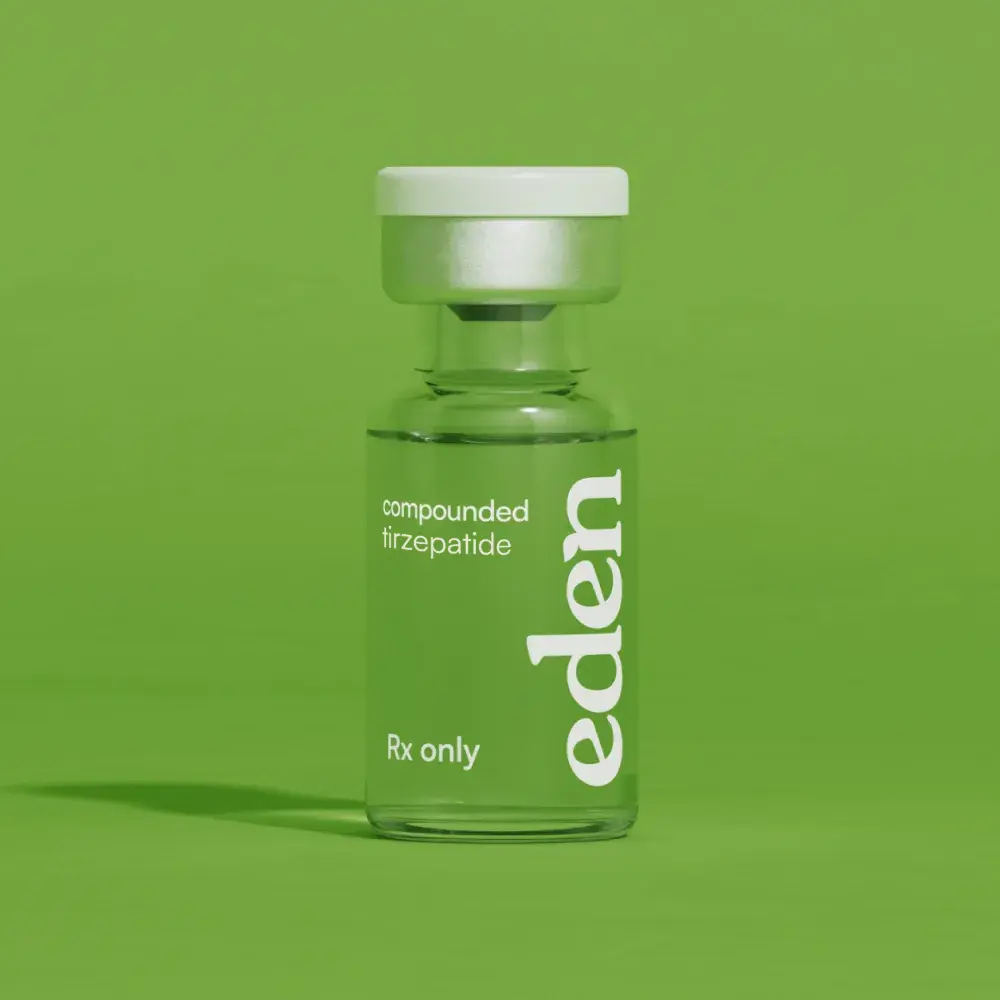
Compounded tirzepatide is a tirzepatide preparation made by a state-licensed compounding pharmacy for an individual patient, based on a licensed provider's prescription. It's not FDA-approved, is not a generic version of Mounjaro® or Zepbound®, and the FDA has not reviewed it for safety, effectiveness, or quality.
In certain circumstances, a provider may prescribe a different dose to meet an identified patient's specific clinical needs. However, the FDA notes that compounded drugs should be used only when a patient's needs can't be met by an FDA-approved drug. This is a clinical judgment for your provider.
Compounded products also weren't studied in the scientific trials mentioned above; in other words, the outcomes mentioned in relation to these trials shouldn't be assumed with compounded medication.
Compounded tirzepatide is usually self-pay. At Eden, we connect you with a licensed provider who will evaluate your full health profile and history. From there, if deemed appropriate, they may prescribe compounded tirzepatide (when a patient-specific clinical need supports compounding), with ongoing check-ins and any clinically appropriate dose adjustments. To learn more, read what compounded tirzepatide is.
Mounjaro® vs. Zepbound® vs. Compounded Tirzepatide: Side-by-Side Comparison
Which Is Better for You? It Depends on Your Situation
Neither brand is better overall. Instead, the best option for you depends on your specific situation and your provider's judgment.
If You Have Type 2 Diabetes
Mounjaro® is the brand FDA-approved for type 2 diabetes, including cardiovascular risk reduction for those at high risk. Weight loss is a documented effect but not its approved use.
If You Have Obesity or Overweight With a Weight-Related Condition
Zepbound® is FDA-approved for adults with a BMI of 30 or higher, or 27 or higher with a weight-related condition. Coverage varies, and out-of-pocket costs may be high.
If you're curious about your first step, use our BMI calculator.
If You're Paying Out of Pocket or Want a Personalized Dose
A compounded prescription may be an option if an FDA-approved medication can't meet your specific clinical needs. However, a licensed provider must review your health history, medications, and goals and determine whether a clinically significant difference supports a patient-specific compounded prescription. Cost alone does not establish eligibility.
If You Have Both Type 2 Diabetes and Obesity
Your provider will choose based on your full health profile, insurance, and goals. Using two tirzepatide products together isn't recommended.
If You've Already Reached Your Goal Weight
In the SURMOUNT-4 trial, individuals who switched to placebo after 36 weeks on tirzepatide regained about 14% of their body weight over 52 weeks, while those who continued lost about 5.5% more.
Stopping isn't the only option, though. In the SURMOUNT-MAINTAIN trial, adults who stepped down from their maximum tolerated dose of Zepbound® to 5 mg maintained all but about 5.6 kg (about 12 lbs) of their prior weight loss on average. Some providers may also consider individualized doses below the standard strengths (sometimes called microdosing) based on individual clinical needs. However, that approach is not standardized and hasn't been tested in large trials. Learn more about long-term GLP-1 weight management.
Talk to a Provider About Your Options
The right choice depends on your health history, diagnosis, insurance, and goals. With Eden, you start with a quick online intake, and a licensed provider reviews your history, goals, and medications.
If appropriate, they create a plan that may include compounded tirzepatide, which, if prescribed, is dispensed and shipped from a licensed pharmacy with free expedited shipping. You get 24/7 provider messaging, ongoing check-ins, and dose adjustments, with the same price at every dose and no insurance required. Explore Eden's GLP-1 weight loss treatment to see if a provider-guided plan is right for you.












The FDA does not approve compounded medications for safety, quality, or manufacturing. Prescriptions and a medical evaluation are required for certain products. The information provided on this blog is for general informational purposes only. It is not intended as a substitute for professional advice from a qualified healthcare professional and should not be relied upon as personal health advice. The information contained in this blog is not meant to diagnose, treat, cure, or prevent any disease. Readers are advised to consult with a qualified healthcare professional for any medical concerns, including side effects. Use of this blog's information is at your own risk. The blog owner is not responsible for any adverse effects or consequences resulting from the use of any suggestions or information provided in this blog.
Eden is not a medical provider. Eden connects individuals with independent licensed healthcare providers who independently evaluate each patient to determine whether a prescription treatment program is appropriate. All prescriptions are written at the sole discretion of the licensed provider. Medications are filled by state-licensed pharmacies. Please consult a licensed healthcare provider before making any medical decisions.
Frequently asked questions
Are Mounjaro® and Zepbound® the same drug?

Both contain tirzepatide and are made by Eli Lilly, but they're separate FDA-approved products; Mounjaro® is FDA-approved for type 2 diabetes, and Zepbound® is FDA-approved for weight management and OSA.
Is Zepbound® cheaper than Mounjaro®?
Their list prices are similar, around $1,100 a month. The price you pay depends on your insurance, diagnosis, and specific prescription.
Is compounded tirzepatide the same as Zepbound®?
No, compounded tirzepatide is prepared by a state-licensed pharmacy for one patient and is not FDA-approved or a generic of Zepbound®, whose trial results come from the brand-name drug.
Can Mounjaro® be used for weight loss?
Mounjaro® is not FDA-approved for weight loss. Tirzepatide has shown significant weight reduction in trials like SURMOUNT-1, but off-label prescribing is at a licensed provider's discretion.
Can I switch between Mounjaro®, Zepbound®, and compounded tirzepatide?
Any switch should be made with your provider. Moving between Mounjaro® and Zepbound® may be simple since both contain tirzepatide, but your provider should review dose, coverage, and health history. Switching to compounded tirzepatide is only an option if a patient-specific clinical need supports compounding, and because doses don't always translate one-to-one, your provider would set a starting dose and monitor your response.
Can tirzepatide be microdosed for maintenance?
Some providers prescribe lower tirzepatide doses for maintenance after reaching a goal. In SURMOUNT-MAINTAIN, stepping down to a standard 5 mg dose preserved most prior weight loss on average, but doses below the standard strengths haven't been studied in large trials.
Is there a generic version of either drug?
No. As of October 2026, there is no FDA-approved generic tirzepatide, and compounded tirzepatide is not a generic equivalent.
Related articles






Aronne, L. J., Sattar, N., Horn, D. B., Bays, H. E., Wharton, S., Lin, W.-Y., Ahmad, N. N., Zhang, S., Liao, R., Bunck, M. C., Jouravskaya, I., Murphy, M. A., & SURMOUNT-4 Investigators. (2024). Continued treatment with tirzepatide for maintenance of weight reduction in adults with obesity: The SURMOUNT-4 randomized clinical trial. JAMA, 331(1), 38–48. https://jamanetwork.com/journals/jama/fullarticle/2812936
Eli Lilly and Company. (2026). LillyDirect: Zepbound® (tirzepatide) self-pay pricing. https://www.lilly.com/lillydirect/zepbound
Eli Lilly and Company. (2026). Mounjaro® (tirzepatide) injection: Highlights of prescribing information. U.S. Food and Drug Administration. https://www.accessdata.fda.gov/drugsatfda_docs/label/2026/215866s044s045lbl.pdf
Eli Lilly and Company. (2026). Mounjaro® savings resources. https://mounjaro.lilly.com/hcp/savings-resources
Eli Lilly and Company. (2026). Zepbound® (tirzepatide) injection: Full prescribing information. https://uspl.lilly.com/zepbound/zepbound.html
Horn, D. B., Aronne, L. J., Wharton, S., Bays, H. E., le Roux, C. W., Srinath, R., Gomez-Valderas, E., Arad, A. D., Das, S., Dunn, J. P., Ribeiro, A., Glass, L. C., & Lee, C. J. (2026). Tirzepatide for maintenance of bodyweight reduction in people with obesity in the USA (SURMOUNT-MAINTAIN): a multicentre, double-blind, randomised, placebo-controlled trial. Lancet (London, England), 407(10545), 2305–2318. https://pubmed.ncbi.nlm.nih.gov/42119587/
Jastreboff, A. M., Aronne, L. J., Ahmad, N. N., Wharton, S., Connery, L., Alves, B., Kiyosue, A., Zhang, S., Liu, B., Bunck, M. C., Stefanski, A., & SURMOUNT-1 Investigators. (2022). Tirzepatide once weekly for the treatment of obesity. New England Journal of Medicine, 387(3), 205–216. https://www.nejm.org/doi/10.1056/NEJMoa2206038
Medicare.gov. (2026). Weight loss drugs. U.S. Centers for Medicare & Medicaid Services. https://www.medicare.gov/coverage/weight-loss-drugs
U.S. Food and Drug Administration. (2026). FDA's concerns with unapproved GLP-1 drugs used for weight loss. https://www.fda.gov/drugs/postmarket-drug-safety-information-patients-and-providers/fdas-concerns-unapproved-glp-1-drugs-used-weight-loss
Thank you!
We'll be in touch.
Thank you!