
Oral GLP-1 Pills vs. Injectable GLP-1s: Which Format May Fit Your Lifestyle?


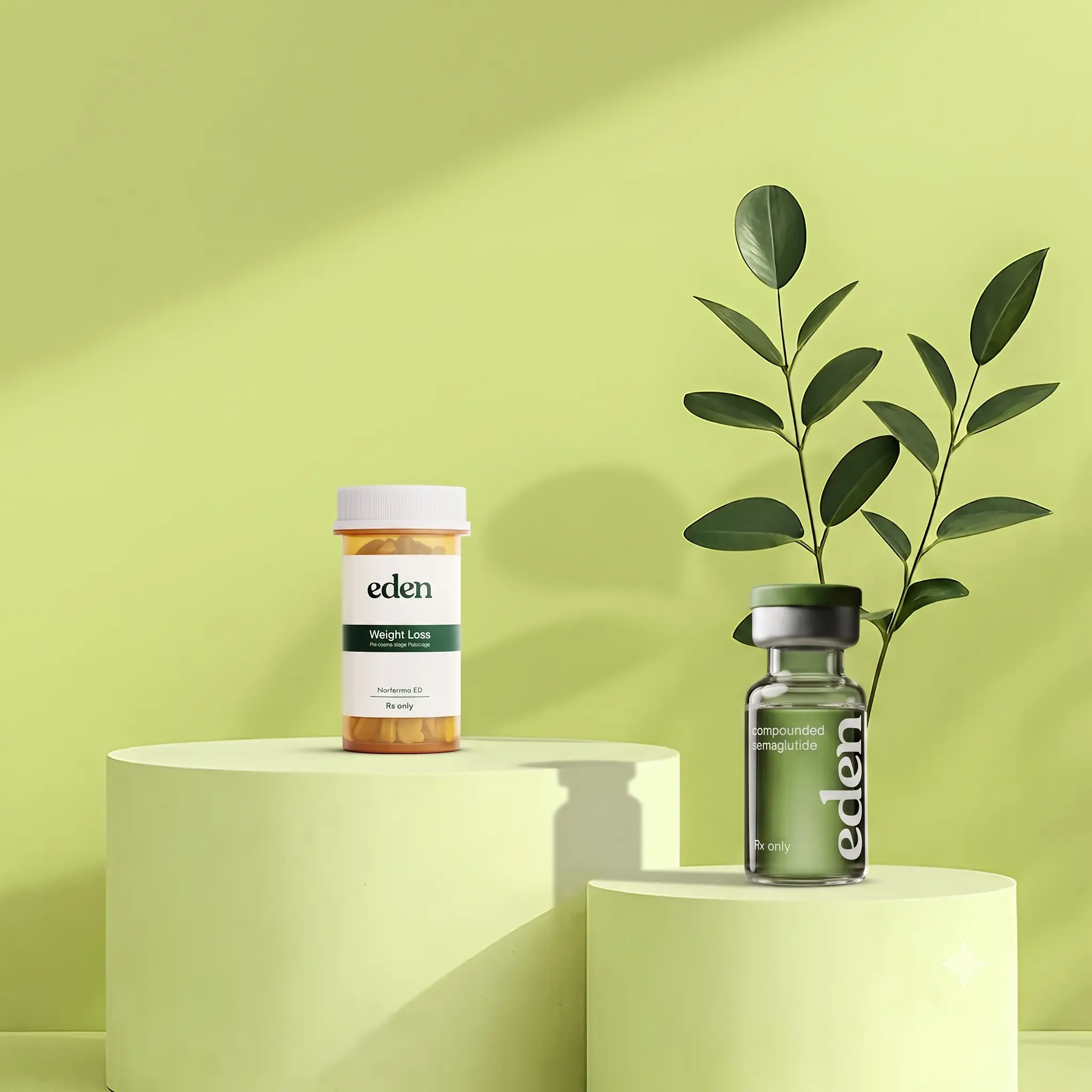

Compare oral GLP-1 pills vs injections on effectiveness, side effects, and daily routine. Find out which format may fit your lifestyle and how to get started.
- The oral GLP-1 vs injection choice comes down to delivery, not biology; both formats work through the same receptor mechanism, meaning the real difference is how the medication gets into your body, not what it does once it's there.
- Injectable GLP-1s currently have the most established weight loss evidence base, with tirzepatide showing the largest reductions in head-to-head trials, but oral options have closed much of the gap.
- As of 2026, two oral GLP-1 medications are FDA-approved for weight loss: the once-daily Wegovy® pill (oral semaglutide 25 mg) and orforglipron (Foundayo).
- Oral semaglutide requires strict fasting conditions due to its low bioavailability, whereas orforglipron can be taken at any time of day without food or water restrictions.
- Side effect profiles are broadly similar across formats and are mostly gastrointestinal, though they may differ in frequency depending on the medication and how it’s taken.
- Injectables require refrigerated storage and weekly injections; oral options are stored at room temperature and taken daily.
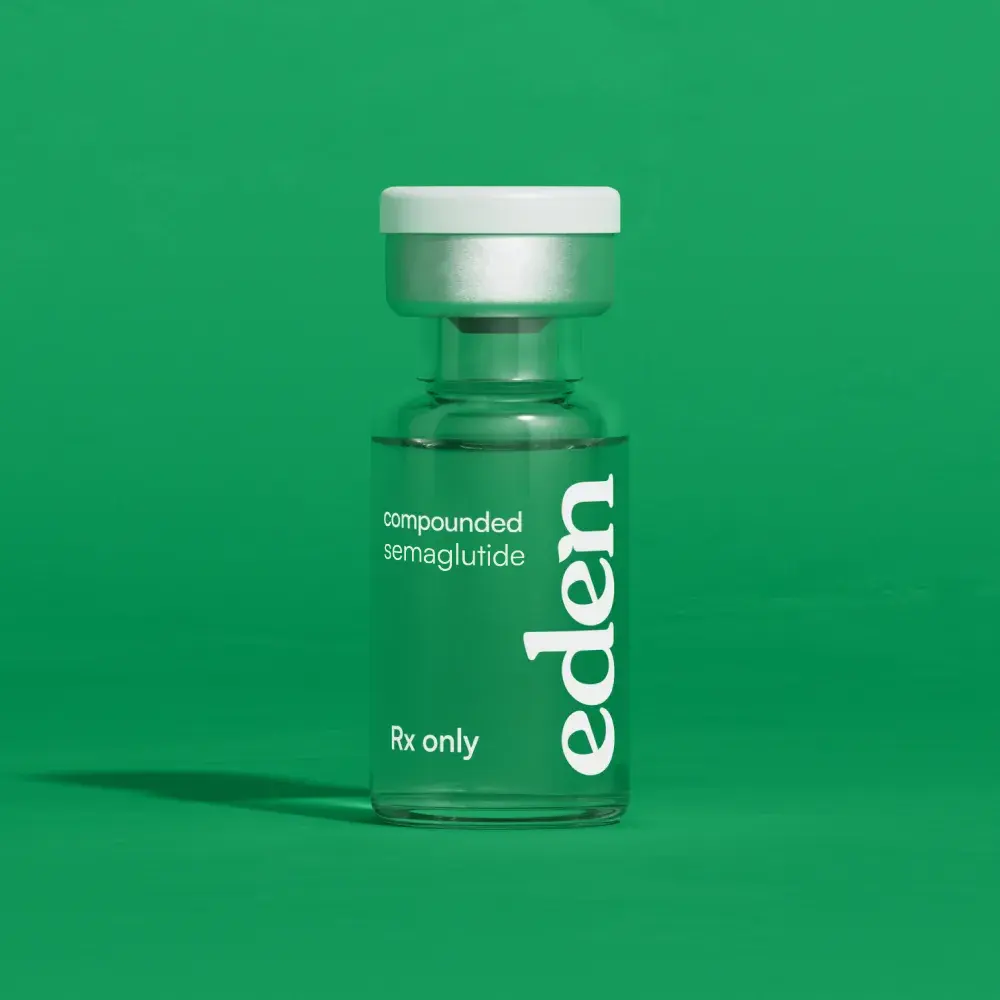
- At Eden, eligible patients may be connected with licensed healthcare providers who can determine whether compounded semaglutide or compounded tirzepatide is clinically appropriate. A licensed healthcare provider can help determine which format (if any) is right for you.
This article is intended for general educational purposes only and is not a substitute for professional medical advice, diagnosis, or treatment. Always talk with a licensed healthcare provider before starting, changing, or stopping any medication or therapy.
Compounded medications are not FDA-approved and are prepared by a licensed pharmacy for an individual patient pursuant to a prescription from a licensed clinician. They are not reviewed by the FDA for safety, effectiveness, or manufacturing quality.
The arrival of oral GLP-1 medications has potentially created more questions than answers. If you’re exploring GLP-1s, you may now be weighing the differences between the GLP-1 pill vs injection. So, why take one over the other?
At the end of the day, both formats may support weight loss. This article offers a practical comparison of oral versus injectable GLP-1 medications across effectiveness, convenience, side effects, dosing routine, storage, and lifestyle fit.
What Are GLP-1 Medications and How Do They Work?
GLP-1 (glucagon-like peptide-1) is a hormone your body releases after you eat. It signals your brain to feel full, prompts your pancreas to release insulin in response to blood sugar, and slows gastric emptying (the rate at which food leaves your stomach), which helps you feel satisfied longer.
GLP-1 receptor agonist medications mimic this signal. In turn, they may cause appetite changes and promote lower calorie intake, which may help support weight loss alongside diet and activity. For a more in-depth walkthrough, see our guide on how GLP-1 medications work.
The key difference between oral and injectable GLP-1 medications isn’t what they do; it’s how they enter your body. So, let’s take a closer look.
The Current Landscape: What Oral and Injectable GLP-1 Options Are Available?
The GLP-1 market has changed quickly, so here’s what’s actually available right now.
Injectable GLP-1 Medications
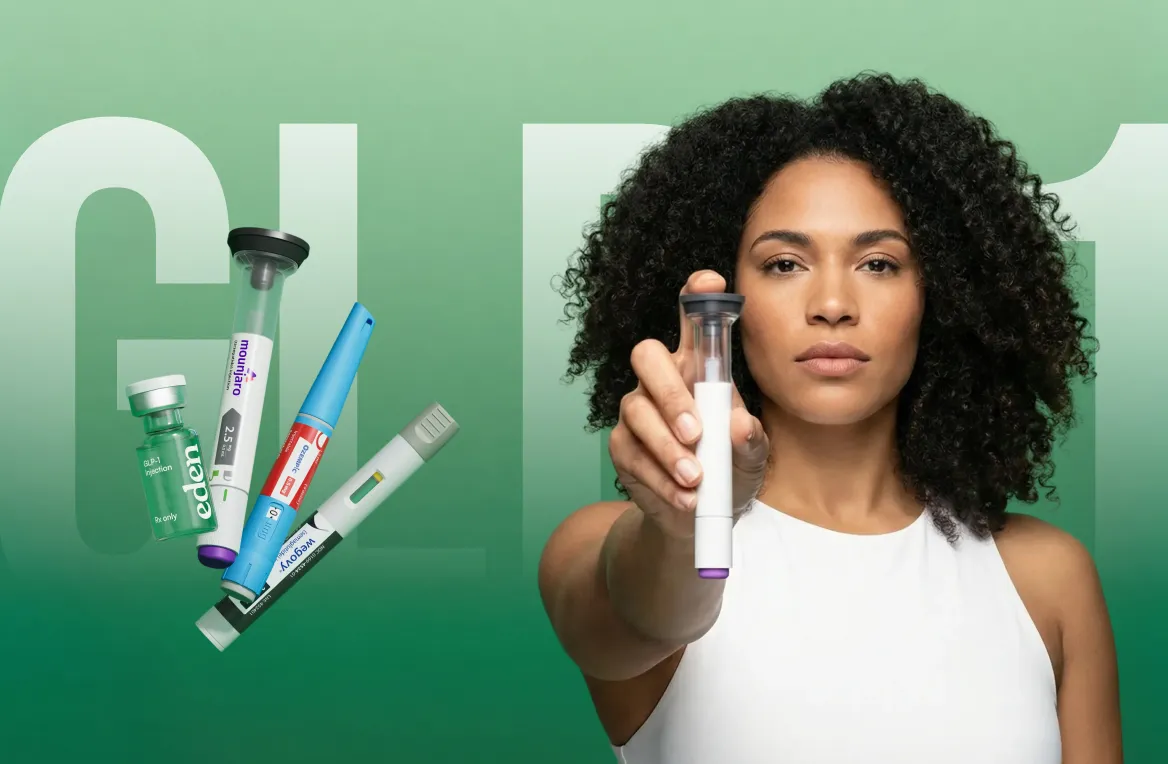
The established injectable options are semaglutide (Ozempic® for type 2 diabetes, Wegovy® for weight loss) and tirzepatide (Mounjaro® for type 2 diabetes, Zepbound® for weight loss), both given as once-weekly subcutaneous injections. Tirzepatide is a dual GIP/GLP-1 receptor agonist, meaning it activates a second hormone pathway in addition to GLP-1.
Injectables have the longest track record and the most robust evidence base for weight loss. Compounded versions of semaglutide and tirzepatide are also available through licensed telehealth providers like Eden when a provider determines they’re clinically appropriate.
Oral GLP-1 Medications
Oral semaglutide now comes in two forms:
- Rybelsus®: This is a 14 mg tablet approved for type 2 diabetes.
- The Wegovy® pill (25 mg): The FDA approved it for weight loss in December 2025.
Both require strict fasting, taken first thing in the morning on an empty stomach with no more than 4 ounces of plain water, then a 30-minute wait before eating, drinking, or taking other medications.
The other recent, major arrival is orforglipron (Foundayo™), a small-molecule oral GLP-1 from Eli Lilly that the FDA approved for chronic weight management in April 2026. Unlike oral semaglutide, it has no food or water restrictions and can be taken at any time of day.
Novo Nordisk’s amycretin, a dual GLP-1/amylin candidate still in trials, is another option on the horizon.
Effectiveness: How Do the Results Compare?
Injectable GLP-1 medications currently have a stronger and more established evidence base for weight loss, but oral options are showing meaningful results in clinical trials:
- In the head-to-head SURMOUNT-5 trial, researchers reported injectable tirzepatide had a mean weight reduction of about 20.2% at 72 weeks, compared with roughly 13.7% for injectable semaglutide.
- For oral semaglutide, the OASIS 4 trial behind the Wegovy pill reported a mean weight loss of about 16.6% at 64 weeks among participants who stayed on treatment (around 13.6% across all participants).
- Orforglipron’s ATTAIN program showed roughly 11-12% mean weight loss at 72 weeks at the highest dose.
- In 2024, Pinto and colleagues conducted a real-world study and followed individuals with type 2 diabetes who were taking either oral or injectable semaglutide. Over about six months, they reported that the injectable group lost a little more on average, around 5.26 kg (about 11.5 lbs) versus 3.64 kg (roughly 8 lbs) for the oral group.
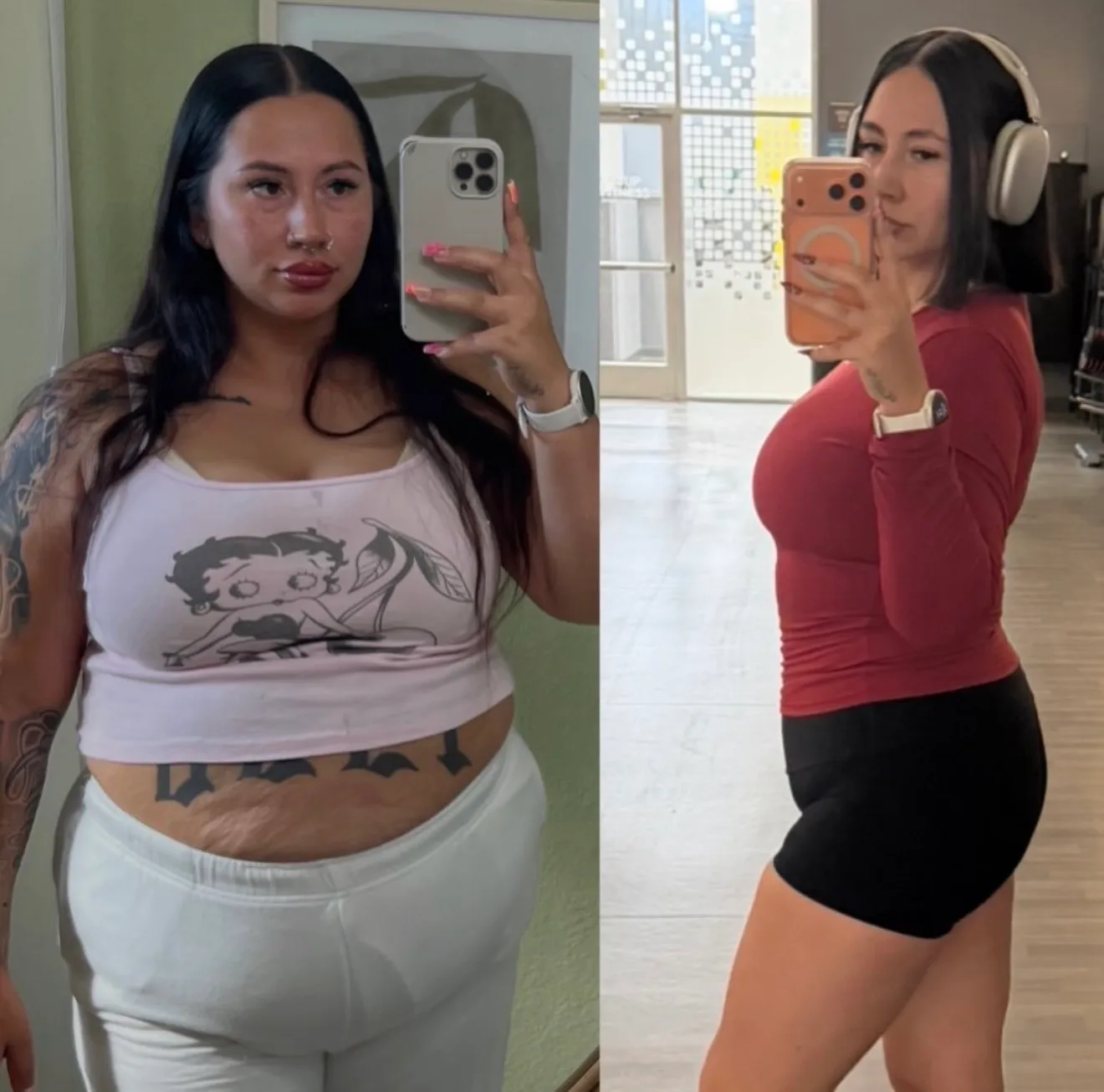
Injectable GLP-1 medications may currently offer stronger weight loss outcomes, but oral options have demonstrated meaningful weight-loss results in clinical studies and may be appropriate depending on individual circumstances. At the end of the day, a licensed healthcare provider can help you determine which format and dose (if any) is right for you.
Dosing Routine: What Does Each Format Actually Require?
While effectiveness is important, the best option for you may also depend on your day-to-day life.
What an Injectable GLP-1 Routine Looks Like
Most injectable GLP-1 medications are self-administered at home once a week, typically into the abdomen, thigh, or upper arm. The needles are short and thin, and some people describe the injection as causing only mild discomfort, although individual experiences vary. If the idea makes you nervous, however, going over how to self-inject GLP-1 medications at home may offer you more insight and answer any concerns you might have.
The appeal of injectable GLP-1s is often the “set it and forget it” cadence; you simply pick a consistent day each week, administer your dose, and the medication works in the background throughout your week until the next one.
Doses typically escalate gradually over weeks or months to help minimize any side effects. The main logistical catch is perhaps storage, since injectable pens and vials require refrigeration.
What an Oral GLP-1 Routine Looks Like
For oral semaglutide (Rybelsus® and the Wegovy® pill), the fasting protocol is an essential factor in your daily regimen. You need to take the tablet first thing in the morning on an empty stomach with no more than 4 ounces (120 mL) of plain water, then wait at least 30 minutes before eating, drinking anything else, or taking other medications. Skipping these steps can sharply reduce the amount of medication your body absorbs.
Orforglipron is more forgiving; it doesn’t carry the same fasting requirement. Either way, a daily pill depends on consistent habit formation, which some individuals may find harder to sustain than a single weekly injection.
Bioavailability: Why the Delivery Method Changes Everything
Bioavailability is the proportion of a drug that actually enters your bloodstream and is available to have an effect.
GLP-1 medications like semaglutide are peptides, protein-based molecules that are broken down by stomach acid and digestive enzymes when swallowed; in fact, this is why injectable semaglutide was developed first.
Oral semaglutide gets around this problem by using an absorption enhancer called SNAC (sodium N-[8-(2-hydroxybenzoyl)amino]caprylate). But even with this technology, oral bioavailability may be approximately 1%, compared to roughly 89% for subcutaneous injectable semaglutide. This is why oral semaglutide requires strict fasting and is dosed in milligrams (up to 14 mg daily) rather than micrograms.
Orforglipron, however, avoids this problem entirely. Since it’s a small-molecule compound, not a peptide, it’s not broken down by digestive enzymes in the same way, which is also why it doesn’t require fasting.
Side Effects: Does the Format Affect What You Experience?
Both oral and injectable GLP-1 medications share a similar side effect profile because they act on the same receptor. The most common side effects for both include:
- Nausea
- Vomiting
- Diarrhea
- Constipation
- Reduced appetite
These tend to be most noticeable during the early weeks and during dose increases. However, the format you consume GLP-1 medication may impact the frequency of these side effects.
In the Pinto et al. (2024) real-world study, adverse events were reported more often with oral semaglutide (16.7%) than with injectable semaglutide (4.9%), and discontinuation due to side effects was also more common in the oral group. This may be related to peak drug concentrations or the fasting requirement, which may add increased gastrointestinal sensitivity for some. Orforglipron also reported gastrointestinal side effects in trials, though the profile appeared manageable in study populations.
Side effects may often be eased by adjusting the dose-escalation schedule, which a licensed healthcare provider can help with. If you’re curious, read more about GLP-1 side effects and how to manage them here. If you experience severe or persistent side effects, promptly contact your provider.
Storage and Travel: Practical Considerations
Injectable GLP-1 medications typically require refrigeration at 36℉-46℉ (2℃-8℃) when not in use, though many pens can sit at room temperature for a limited window once opened; always be sure to check your specific product’s label.
However, for frequent travelers or anyone without reliable refrigeration, this could be something to seriously consider when determining what works best for your lifestyle.
Oral GLP-1 tablets are generally stored at room temperature, with no refrigeration or sharps disposal required, and this may be an advantage for some people. Either way, make sure to confirm storage requirements with your dispensing pharmacy.
Adherence and Lifestyle Fit: Which Format Works for Real Life?
The following offers general advice as to which may be better. Yet, a licensed healthcare provider always makes the final call depending on your lifestyle, health status, and specific needs.
Injectable GLP-1 May Be a Better Fit If…
- You prefer a once-weekly routine over a daily habit.
- You want the format with the most established evidence base for weight loss.
- You’re comfortable with self-injection, or willing to learn; most people find it easier than expected.
- You’re interested in discussing compounded options with a licensed healthcare provider. For some individuals without insurance coverage, compounded medications may also represent a lower-cost option.
- You have a provider who can guide dose escalation and monitor your response over time.
Oral GLP-1 May Be a Better Fit If…
- You have a strong aversion to needles that’s unlikely to resolve with education or practice.
- Your provider has recommended oral semaglutide for managing type 2 diabetes.
- You prefer the flexibility of orforglipron’s no-fasting, any-time-of-day dosing.
- You want a format that doesn’t require cold storage or sharps disposal.
- A daily oral medication fits more naturally into your existing routine.
Neither format is automatically the smarter choice. Again, the right one depends on your health history, goals, lifestyle, and what a licensed provider determines is clinically appropriate for you.
What About Compounded GLP-1 Options?
Compounded GLP-1s—including compounded semaglutide and compounded tirzepatide—are injectable options prepared by state-licensed compounding pharmacies and prescribed through licensed providers. They’re not FDA-approved and are prepared according to a prescription for an individual patient. They’re dispensed through regulated pharmacies and also may be more cost-accessible for individuals without insurance coverage for brand-name GLP-1s.
Eden’s GLP-1 weight loss treatment program connects eligible patients with licensed healthcare providers who may prescribe compounded semaglutide or compounded tirzepatide when clinically appropriate, with 24/7 messaging support and free expedited shipping. The process starts by completing a quick online intake. From there, a licensed provider determines whether compounded options, or any GLP-1 format, are right for your situation.












The FDA does not approve compounded medications for safety, quality, or manufacturing. Prescriptions and a medical evaluation are required for certain products. The information provided on this blog is for general informational purposes only. It is not intended as a substitute for professional advice from a qualified healthcare professional and should not be relied upon as personal health advice. The information contained in this blog is not meant to diagnose, treat, cure, or prevent any disease. Readers are advised to consult with a qualified healthcare professional for any medical concerns, including side effects. Use of this blog's information is at your own risk. The blog owner is not responsible for any adverse effects or consequences resulting from the use of any suggestions or information provided in this blog.
Eden is not a medical provider. Eden connects individuals with independent licensed healthcare providers who independently evaluate each patient to determine whether a prescription treatment program is appropriate. All prescriptions are written at the sole discretion of the licensed provider. Medications are filled by state-licensed pharmacies. Please consult a licensed healthcare provider before making any medical decisions.
Frequently asked questions
Can you switch between an oral and injectable GLP-1?

In many cases, yes, some individuals transition between formats under provider guidance, often with a short gap. Your provider will map out the safest way to switch based on which medications are involved.
Is the Wegovy® pill the same as Rybelsus®?
Both are oral semaglutide, but they’re different products; Rybelsus® is a 14 mg tablet approved for type 2 diabetes. The Wegovy® pill is a 25 mg tablet approved for weight loss. They share the same fasting requirements but differ in dose and indication.
How long does it take to see results with either format?
GLP-1 medications work gradually, with some people notice changes over weeks to months. Results, however, vary from person to person.
Are oral GLP-1 medications more affordable than injectables?
Cost depends heavily on the specific medication, your insurance, and whether it’s brand-name or compounded. For some individuals without coverage, compounded injectable options may represent a lower-cost option, though pricing varies.
Related articles







Aronne, L. J., Horn, D. B., Le Roux, C. W., Ho, W., Falcon, B. L., Gomez Valderas, E., Das, S., Lee, C. J., Glass, L. C., Senyucel, C., Dunn, J. P., & SURMOUNT-5 Trial Investigators (2025). Tirzepatide as Compared with Semaglutide for the Treatment of Obesity. The New England journal of medicine, 393(1), 26–36. https://pubmed.ncbi.nlm.nih.gov/40353578/
Foundayo. (2026). Highlights of prescribing information. https://www.accessdata.fda.gov/drugsatfda_docs/label/2026/220934Orig1s000lbl.pdf
Mounjaro. (2022). Highlights of prescribing information. https://www.accessdata.fda.gov/drugsatfda_docs/label/2022/215866s000lbl.pdf
Ozempic. (2017). Highlights of prescribing information. https://www.accessdata.fda.gov/drugsatfda_docs/label/2017/209637lbl.pdf
Pinto, M., Brennan, L., Diehl, K., Lin, S., & Heacock, S. (2025). Real-World Comparison of Oral Versus Injectable Semaglutide for the Reduction of Hemoglobin A1C and Weight in Patients with Type 2 Diabetes. The Journal of pharmacy technology : jPT: official publication of the Association of Pharmacy Technicians, 41(1), 22–31. https://pubmed.ncbi.nlm.nih.gov/39545243/
Rybelsus. (2017). Highlights of prescribing information. https://www.accessdata.fda.gov/drugsatfda_docs/label/2024/213051s018lbl.pdf
Solis-Herrera, C., Kane, M. P., & Triplitt, C. (2024). Current Understanding of Sodium N-(8-[2-Hydroxylbenzoyl] Amino) Caprylate (SNAC) as an Absorption Enhancer: The Oral Semaglutide Experience. Clinical diabetes: a publication of the American Diabetes Association, 42(1), 74–86. https://pubmed.ncbi.nlm.nih.gov/38230324/
Wegovy. (2017). Highlights of prescribing information. https://www.accessdata.fda.gov/drugsatfda_docs/label/2025/215256s024lbl.pdf
Wharton, S., Aronne, L. J., Stefanski, A., Alfaris, N. F., Ciudin, A., Yokote, K., Halpern, B., Shukla, A. P., Zhou, C., Macpherson, L., Allen, S. E., Ahmad, N. N., Klise, S. R., & ATTAIN-1 Trial Investigators (2025). Orforglipron, an Oral Small-Molecule GLP-1 Receptor Agonist for Obesity Treatment. The New England journal of medicine, 393(18), 1796–1806. https://pubmed.ncbi.nlm.nih.gov/40960239/
Wharton, S., Lingvay, I., Bogdanski, P., Duque do Vale, R., Jacob, S., Karlsson, T., Shaji, C., Rubino, D., Garvey, W. T., & OASIS 4 Study Group (2025). Oral Semaglutide at a Dose of 25 mg in Adults with Overweight or Obesity. The New England journal of medicine, 393(11), 1077–1087. https://pubmed.ncbi.nlm.nih.gov/40934115/
Zepbound. (2022). Highlights of prescribing information. https://www.accessdata.fda.gov/drugsatfda_docs/label/2024/217806s003lbl.pdf
Thank you!
We'll be in touch.
Thank you!