



Perimenopause Sleep Problems: Why They Start Before Menopause


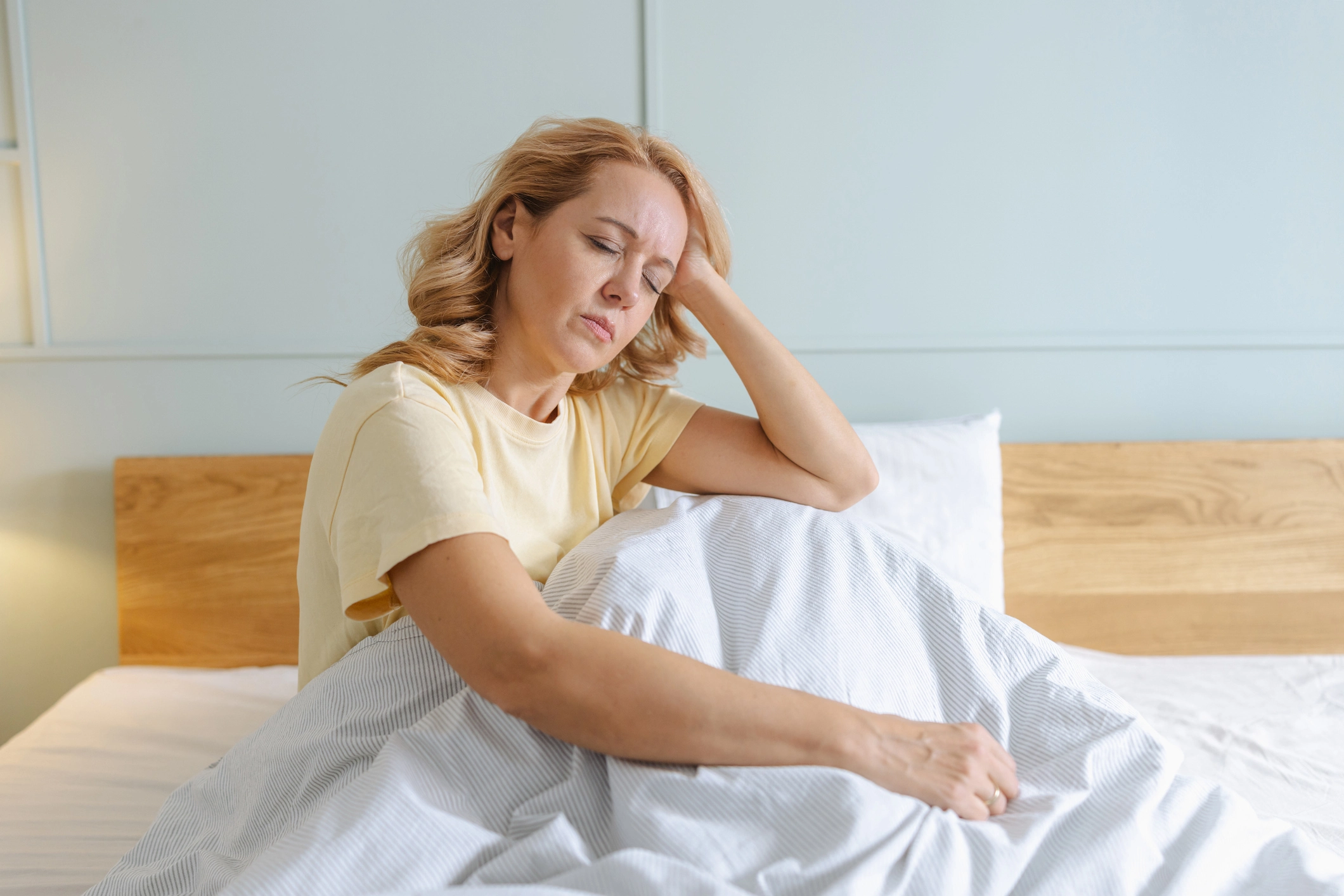

Perimenopause sleep problems affect up to 50% of women before menopause ends. Learn what causes hormone-driven insomnia and night sweats, and what may help.
- Perimenopause sleep problems often begin before menopause itself, driven by fluctuating estrogen and declining progesterone.
- Up to 50% of perimenopausal women report insomnia, and women in this transition may be up to twice as likely to report sleep issues as women who aren’t menopausal.
- Night sweats often lead to sleep disruption; a single episode may leave you awake for 20 minutes or more.
- Behavioral strategies and CBT-I may help, but they may not be enough when the disruption is primarily hormonal.
- Hormone therapy, when clinically appropriate, may address the root hormonal causes of sleep disruption rather than just the symptoms.
- If your sleep problems are persistent and affecting your daily life, a licensed healthcare provider can help you determine whether hormonal treatment is right for you.
This article is for general informational purposes only and is not a substitute for professional medical advice, diagnosis, or treatment. Always talk with a licensed healthcare provider before starting, changing, or stopping any medication or therapy.
What Is Perimenopause? And When Does It Start?
Perimenopause is the transitional phase leading up to menopause. It typically begins in a woman’s early to mid-40s, though it can start in your late 30s. During this window, ovarian hormone production, primarily estrogen and progesterone, begins to fluctuate and gradually decline.
While the terms perimenopause and menopause are frequently used interchangeably, they aren’t the same. Menopause is a single point in time, where you’ve gone 12 consecutive months without a menstrual period.
In contrast, perimenopause is the years-long transition leading up to menopause. It can last anywhere from 2 to 10 years.
Perimenopause affects an estimated 80-90% of women and brings a wide range of possible perimenopause symptoms—including physical, cognitive, urogenital, and emotional symptoms—tied to changing hormone levels. And sleep problems before menopause tend to be a common complaint, which don’t only impact your night but also spill over into your day-to-day.
How Common Are Sleep Problems During Perimenopause?
Up to 50% of perimenopausal women report insomnia symptoms. And perimenopausal and postmenopausal women may be up to two times more likely to report sleep issues than women who aren’t menopausal.
Research also confirms that the onset or worsening of sleep disturbances is common during the menopausal transition.
With that said, perimenopause insomnia may take on different forms, including:
- Difficulty falling asleep (sleep onset insomnia)
- Waking in the middle of the night and struggling to fall back asleep (sleep maintenance insomnia)
- Waking too early and being unable to return to sleep
- Waking from night sweats
These patterns may occur on their own or all at once. And they often aren’t “just stress” and you shouldn’t be expected to simply push through. But why do they happen in the first place?
Why Perimenopause Disrupts Sleep: The Hormonal Mechanisms
This type of hormone sleep disruption can be particularly jarring. After all, we need proper sleep to function throughout our day-to-day life. During perimenopause, this sleep disruption may be attributed to estrogen fluctuations or progesterone changes, as well as night sweats and social factors associated with this time of life.
Estrogen Fluctuations and Sleep Architecture
Beyond reproduction, estrogen plays a role in how your brain regulates sleep. This is partly through its influence on serotonin and other neurotransmitters involved in the sleep-wake cycle. When estrogen levels swing unpredictably, as they do during perimenopause, your sleep cycles may become fragmented and less restorative.
During this phase, estrogen tends to rise and fall erratically. And these swings may disrupt the brain’s ability to maintain consistent sleep architecture (the normal cycling through light sleep, deep sleep, and REM).
In fact, declining estrogen has been associated with reduced REM sleep and more nighttime waking, which is part of why sleep can start to feel shallow and easily interrupted.
Progesterone’s Role as a Natural Sleep Promoter
Progesterone acts on GABA receptors in the brain (the same pathways that many prescription sleep aids target), which gives it a mild sedative effect.
As progesterone levels decline during perimenopause, you may lose this natural sleep-promoting aid. In turn, this may make it harder both to fall asleep and to stay asleep.
Night Sweats and Vasomotor Symptoms
Vasomotor symptoms, including hot flashes and night sweats, happen when the brain’s internal thermostat becomes more sensitive to temperature changes as estrogen declines. At night, this may be especially disruptive, causing frequent awakenings.
During a nighttime hot flash, the body heats rapidly, often within about 30 seconds. The flash itself lasts around five minutes, but the body can take roughly 20 minutes to fully cool down. This means even a brief episode of night sweats in perimenopause may result in 20 or more minutes of wakefulness. And if it happens more than once a night, restful sleep becomes really difficult.
The Psychosocial Layer
Hormones aren’t always the whole story; women in perimenopause are often in the “sandwich generation,” building careers, raising children, and caring for aging parents, sometimes all at once. These stressors compound hormonal sleep disruption and can make insomnia self-reinforcing; poor sleep fuels anxiety, anxiety worsens sleep, and the cycle continues.
Sleep experts sometimes call this the “menopause puzzle.” Hormones, aging, your individual health, and life stress all overlap at once. It’s usually this combination, hormonal change plus life pressure, that makes perimenopausal insomnia so hard to shake. And it’s also why a provider-led approach is best, as they can determine what’s right for you and your specific symptoms.
How Sleep Disruption Affects Your Daily Life
Ongoing sleep disruption may lead to daytime fatigue, reduced concentration, and memory lapses, as well as mood changes such as irritability, reduced patience, and emotional reactivity. Over time, it can meaningfully erode your overall quality of life.
And the relationship between sleep and mood also runs in both directions: poor sleep can worsen anxiety and low mood, and anxiety or depression can, in turn, worsen sleep.
Clinically, insomnia disorder is generally defined as difficulty sleeping at least three nights a week for three months or longer, paired with daytime impairment. If this sounds like you, it’s important to bring it up with your healthcare provider.
What May Help With Perimenopause Sleep Problems
The most effective approach to addressing perimenopausal sleep problems is usually multifaceted, combining behavioral changes, evidence-based therapy, and, where appropriate, medical treatment.
Sleep Hygiene and Behavioral Adjustments
Sleep hygiene and behavioral strategies may help reduce sleep disruption and offer a low-risk option; here are a few you may want to consider:
- Keep a consistent sleep and wake time every day, including after a bad night. It’s tempting to sleep in to “catch up,” but doing so can weaken your natural sleep drive and make the next night even harder.
- Keep the bedroom cool. A cooler environment may shorten the recovery time after a night sweat and reduce how much a vasomotor episode wakes you.
- Limit alcohol and caffeine in the hours before bed. Both can worsen night sweats and fragment sleep.
- Reduce screen exposure before bed, since blue light can suppress melatonin and delay sleep onset.
- Use the 15-20 minute rule. If you wake up in the night and can’t fall back asleep within 15 to 20 minutes, get up, leave the bedroom, and do something calm and non-stimulating until you feel sleepy again.
Cognitive Behavioral Therapy for Insomnia (CBT-I)
Cognitive behavioral therapy for insomnia (CBT-I) is a first-line, evidence-based treatment for insomnia, and it has been specifically adapted for menopausal insomnia (sometimes called CBT-mi). It works by identifying and restructuring the thoughts and behaviors that perpetuate insomnia. For instance, it may help address the anxiety about not sleeping that itself makes sleep harder.
A typical course runs about 4 to 6 sessions and includes techniques such as sleep restriction, stimulus control, and cognitive restructuring.
Research reports that CBT-I may improve both sleep and mood, including in people with co-occurring insomnia and depression. But it can also complement other treatment methods. If you’re interested in finding a provider specifically trained on this approach, The Society of Behavioral Sleep Medicine maintains a directory of qualified CBT-I professionals.
When to Talk to a Provider About Hormone Therapy
Since hormone therapy helps address hormonal changes associated with both vasomotor symptoms and sleep disruption, it may address the underlying contributor to your issues. Progesterone, in particular, has been studied for its sleep-promoting effects.
Eligibility for hormonal therapy, however, depends on your individual health history. This is why discussing your options with a licensed healthcare provider is important. They can review your symptoms, health history, and goals, and discuss potential approaches, such as provider-led hormone therapy options, suited to your needs.
And if you’ve been told your symptoms are “normal” or that you just need to manage stress better, it may be worth seeking a second opinion from a provider who specializes in hormonal health.
Other Supportive Approaches
Other options may further include:
- Melatonin may ease you into sleep, but it won’t address the hormonal drivers behind perimenopausal sleep disruption. It’s best for short-term use, but always check with your provider before adding any supplement.
- Mind-body practices, such as yoga, meditation, and relaxation techniques, have some evidence for reducing hot flashes and improving sleep. They’re also low-risk and may be worth adding alongside other strategies.
- Regular moderate exercise is linked to better sleep and may ease vasomotor symptoms. However, keep in mind that a vigorous workout close to bedtime may potentially backfire and make sleep harder.
When Should You Seek Medical Support?
You don’t have to wait until things feel unbearable to ask for help. In fact, early support can keep sleep disruption from becoming an ongoing pattern. It may be time to talk to a provider if:
- Your sleep disruption has persisted for 3 or more months and is affecting your daytime functioning, including your work, mood, relationships, or concentration.
- Your night sweats are frequent enough to regularly interrupt your sleep.
- Sleep hygiene and behavioral changes haven’t produced meaningful improvement after 4 to 6 weeks.
- Your sleep problems come with significant mood changes, anxiety, or symptoms of depression.
- You’re simply unsure whether your symptoms are hormonally driven and want a professional assessment.
If you’re ready to take a next step, Eden’s process starts with a brief online intake. From there, we connect you with a licensed provider who can perform a thorough assessment and determine what’s best for you, which may involve a provider-guided HRT program.






The FDA does not approve compounded medications for safety, quality, or manufacturing. Prescriptions and a medical evaluation are required for certain products. The information provided on this blog is for general informational purposes only. It is not intended as a substitute for professional advice from a qualified healthcare professional and should not be relied upon as personal health advice. The information contained in this blog is not meant to diagnose, treat, cure, or prevent any disease. Readers are advised to consult with a qualified healthcare professional for any medical concerns, including side effects. Use of this blog's information is at your own risk. The blog owner is not responsible for any adverse effects or consequences resulting from the use of any suggestions or information provided in this blog.
Eden is not a medical provider. Eden connects individuals with independent licensed healthcare providers who independently evaluate each patient to determine whether a prescription treatment program is appropriate. All prescriptions are written at the sole discretion of the licensed provider. Medications are filled by state-licensed pharmacies. Please consult a licensed healthcare provider before making any medical decisions.
Frequently asked questions
How do you treat perimenopause insomnia?

Treatment is usually multi-modal; it may include sleep hygiene and behavioral adjustments, CBT-I, and provider-led hormonal therapy (if appropriate). The right combination depends on your health history and symptoms, which is why discussing your options with a licensed healthcare provider is important.
Does insomnia go away after menopause?
For some women, sleep improves once hormone levels stabilize in the postmenopausal years, since the erratic fluctuations of perimenopause settle down. For others, sleep problems may persist due to night sweats or ongoing insomnia.
How do you sleep through the night in perimenopause?
Start with a cool bedroom, a consistent wake time, and limiting alcohol and caffeine before bed. If you wake in the night, use the 15-20 minute rule (get up and do something calm rather than lying awake in bed). When night sweats or hormonal shifts are driving your wake-ups, behavioral steps alone may not be enough, and it may be worth exploring CBT-I or hormone therapy with a licensed provider.
Is hormone therapy safe for sleep problems in perimenopause?
Hormone therapy may help when sleep disruption is tied to hormonal changes, but it isn’t right for everyone. Whether it’s a safe and appropriate option depends on your individual health history, including personal and family medical factors. A licensed provider can review your history, weigh the potential benefits and risks, and determine if it makes sense for your situation.
Let’s Talk Menopause. (n.d.). Insomnia [Interview with Dr. Sara Nowakowski]. https://www.letstalkmenopause.org/our-articles/insomnia
Ntikoudi, A., Owens, D. A., Spyrou, A., Evangelou, E., & Vlachou, E. (2024). The Effectiveness of Cognitive Behavioral Therapy on Insomnia Severity Among Menopausal Women: A Scoping Review. Life (Basel, Switzerland), 14(11), 1405. https://pmc.ncbi.nlm.nih.gov/articles/PMC11595697/
Proserpio, P., Marra, S., Arnaldi, D., Andreose, A., Casoni, F., Ferini-Strambi, L., & Nobili, L. (2024). Sleep disturbance associated with the menopause. Menopause, 31(8), 726–736. https://journals.lww.com/menopausejournal/fulltext/10.1097/gme.0000000000002386~sleep-disturbance-associated-with-the-menopause
San, L., & Arranz, B. (2024). The Night and Day Challenge of Sleep Disorders and Insomnia: A Narrative Review. Actas espanolas de psiquiatria, 52(1), 45–56. https://pmc.ncbi.nlm.nih.gov/articles/PMC10926017/
The Society of Behavioral Sleep Medicine. (2026). Directory: All Listings. https://www.behavioralsleep.org/index.php/directory/all
Troìa, L., Garassino, M., Volpicelli, A. I., Fornara, A., Libretti, A., Surico, D., & Remorgida, V. (2025). Sleep Disturbance and Perimenopause: A Narrative Review. Journal of Clinical Medicine, 14(5), 1479. https://pmc.ncbi.nlm.nih.gov/articles/PMC11901009/
Thank you!
We'll be in touch.
Thank you!