




Qsymia® for Weight Loss: How It Works, Who Qualifies, and What It Costs



Learn how Qsymia® works for weight loss, who qualifies, what side effects to expect, and what it costs, plus non-stimulant alternatives to explore.
- Qsymia® is an FDA-approved oral weight loss medication that combines phentermine (a stimulant appetite suppressant) and topiramate extended-release (an anticonvulsant that may reduce appetite and cravings).
- Qsymia® is approved for adults and adolescents aged 12+ with a BMI of 30 or higher, or 27+ with a weight-related condition such as hypertension, type 2 diabetes, or high cholesterol.
- Clinical trials showed an average loss of approximately 10.9% of body weight at the top dose over 56 weeks, alongside a reduced-calorie diet and increased physical activity.
- Qsymia® may have serious risks, including birth defects, suicidal ideation, cognitive effects, metabolic acidosis, and elevated heart rate, and requires close provider supervision.
- Cash payers can expect the cost to be around $70 to $98 per month, depending on the pharmacy and supply length. Insurance coverage varies, and it’s recommended to check with your specific insurance plan beforehand.
- For individuals who do not qualify for Qsymia® or prefer a non-stimulant approach, GLP-1 medications offered through telehealth programs, such as Eden, may be another option, but this should always be explored with a licensed provider.
- All prescription weight loss decisions should be made with a licensed healthcare provider who knows your full medical history.
This article is intended for general informational purposes only and is not a substitute for professional medical advice, diagnosis, or treatment. Always talk with a licensed healthcare provider before starting, changing, or stopping any medication.
What Is Qsymia®?
Qsymia® is a once-daily oral prescription medication approved by the FDA for chronic weight management. It pairs two active ingredients in a single capsule: phentermine (a sympathomimetic stimulant and appetite suppressant) and topiramate extended-release (an anticonvulsant that independently produces weight loss as a side effect).
The FDA approved Qsymia® on July 17, 2012, originally under the name Qnexa, and is manufactured by VIVUS LLC. Today, it’s the most commonly prescribed branded oral weight-management medication among U.S. adults. It’s also FDA-approved for adolescents aged 12 to 17 who meet specific clinical criteria.
Since Qsymia® contains phentermine, it’s classified as a Schedule IV controlled substance. Separately, because the topiramate component carries a risk of serious birth defects, Qsymia® is available only through the REMS (Risk Evaluation and Mitigation Strategy) program, meaning it can be dispensed only by certified pharmacies.
How Qsymia® Works for Weight Loss
Phentermine-topiramate weight loss works through two main mechanisms, including appetite and craving pathways. Here’s how each ingredient contributes.
Phentermine’s Role: Appetite Suppression
Phentermine is a centrally acting sympathomimetic amine that stimulates the release of norepinephrine in the hypothalamus. In turn, it suppresses appetite and often reduces food intake.
Phentermine has been used for short-term weight loss since the 1950s and is structurally related to amphetamines, which is why it falls under controlled substance regulations and carries cardiovascular and abuse-potential considerations.
In Qsymia®, phentermine is used at lower doses than when prescribed as a standalone medication. This is part of the rationale for the combined approach with topiramate. At lower doses, phentermine may have less intense stimulant-related side effects while still preserving appetite changes.
Topiramate’s Role: Appetite and Cravings
Topiramate is an anticonvulsant originally developed to treat seizures and prevent migraines. Clinicians noticed early on that patients taking topiramate often lost weight as a side effect, which sparked interest in its potential role in weight management.
However, its exact mechanism for weight loss is not fully understood. Research suggests that topiramate may reduce appetite and food cravings by acting on the neurotransmitters GABA and glutamate, and it may also subtly alter taste perception, making certain foods less rewarding.
In Qsymia®, topiramate is delivered in extended-release form to reduce peak blood levels and the cognitive side effects that often accompany higher, faster-acting doses used in epilepsy care.
Why the Combination?
Since each drug works through a different pathway, combining them at lower doses may produce greater weight loss than either drug alone, but with fewer dose-related side effects. And there’s clinical evidence to support this.
In the EQUIP trial, patients taking the top-approved dose (15 mg phentermine/92 mg topiramate ER) lost an average of 10.9% of body weight over 56 weeks, compared to 1.6% for placebo. A second pivotal trial, CONQUER, showed similar results, with around 9.8% weight loss at the top dose. These results were achieved alongside a reduced-calorie diet and increased physical activity, meaning Qsymia® is not a standalone solution.
Who Qualifies for Qsymia®?
Qsymia® is FDA-approved for adults and adolescents aged 12 and older who meet one of the following:
- A BMI of 30 kg/m2 or higher (classified as obesity), or
- A BMI of 27 kg/m2 or higher with at least one weight-related health condition, such as hypertension, dyslipidemia, type 2 diabetes or prediabetes, or abdominal obesity.
If you’re not sure where you fall, Eden’s BMI calculator can give you a quick starting point. At the same time, BMI is only a screening tool, not a complete clinical assessment. A licensed provider will look at your full clinical picture and history before recommending any prescription medication.
Qsymia® should not be taken by:
- Individuals who are pregnant, planning to become pregnant, or who could become pregnant without consistent contraception. (Qsymia® is known to cause serious birth defects, specifically cleft lip and cleft palate, and the REMS program requires monthly pregnancy testing for people of childbearing potential.)
- Individuals with glaucoma.
- Individuals with hyperthyroidism (overactive thyroid).
- Individuals currently taking MAOIs or who have taken them within the past 14 days.
- Individuals with a known allergy to phentermine, topiramate, or any other ingredient in Qsymia®.
- Individuals with unstable heart or blood vessel disease.
- Individuals with end-stage kidney disease on dialysis or severe liver disease.
If you have a history of depression, substance use disorder, kidney stones, metabolic acidosis, or seizures, you may still be a candidate, but you should carefully examine your full history with a licensed provider beforehand; Qsymia® may worsen these conditions in some individuals.
Qsymia® Dosing: How It's Taken
Taking Qsymia® later in the day may cause insomnia due to phentermine’s stimulant effects. As such, it’s taken once a day in the morning. The dose is gradually increased over time to help the body adjust, with a usual starting dose of 3.75 mg phentermine/23 mg topiramate ER for 14 days.
After the first 14 days, the typically recommended dosage is 7.5 mg/46 mg ER. The top dosage, if needed, is 11.25 mg/69 mg ER for 14 days, then up to 15 mg/92 mg ER.
After 12 weeks at the recommended dose, providers will assess your progress. If you haven’t lost at least 3% of your starting body weight, the medication is typically either discontinued or escalated to the top dose.
However, Qsymia® should never be stopped abruptly. Because of the topiramate component, a gradual tapering is needed to reduce the risk of seizures, even in people without a seizure history. All dosing and discontinuation decisions should be made by a licensed healthcare provider.
Qsymia® Side Effects: What to Expect
Like all prescription medications, Qsymia® may have side effects. Some are common and tend to ease as the body adjusts; others are more serious and require immediate attention.
Common Side Effects
The most frequently reported Qsymia® side effects in clinical trials include:
- Dry mouth
- Constipation
- Tingling or numbness in the hands and feet (paresthesia, a well-known topiramate effect)
- Insomnia
- Dizziness
- Altered taste (especially of carbonated drinks)
- Upper respiratory tract infections
These are generally mild to moderate and may improve over the first several weeks. If they persist, worsen, or interfere with daily life, make sure to bring them up with your provider, who can make adjustments if necessary.
Serious Side Effects That Require Immediate Attention
Serious side effects may occur and include:
- Birth defects: Qsymia® is known to cause cleft lip and cleft palate in babies exposed in utero. This is why monthly pregnancy testing is required for individuals who can become pregnant.
- Suicidal thoughts or actions: Topiramate carries an FDA warning for an increased risk of suicidal ideation. Anyone experiencing new or worsening depression, anxiety, agitation, or thoughts of self-harm should contact their provider immediately.
- Cognitive effects: Topiramate is associated with memory problems, difficulty concentrating, and word-finding difficulties (sometimes described as “brain fog”). These effects may be dose-dependent.
- Metabolic acidosis: Topiramate can lower blood bicarbonate levels, which may cause fatigue, loss of appetite, rapid breathing, or an irregular heartbeat. This risk is higher in individuals with kidney disease, ongoing diarrhea, or those on a ketogenic diet.
- Elevated heart rate: Phentermine is a stimulant and may raise your heart rate. The long-term cardiovascular safety profile of Qsymia® has not been fully established.
- Eye problems: Acute angle-closure glaucoma has been reported. Thus, sudden vision changes or eye pain warrant immediate medical care.
- Kidney stones: Topiramate increases the risk of kidney stone formation.
If you experience any of these symptoms, contact your healthcare provider right away.
How Much Does Qsymia® Cost?
Qsymia® cost varies based on dose, pharmacy, and whether insurance is involved. Here is what the current 2026 pricing looks like for cash payers:
- Home delivery (90-day supply): This may make Qsymia® accessible at approximately $70/month, or $2.33/day, through the QsymiaEngage.com home delivery program. Shorter 30-day fills and titration packs are priced closer to $89/month.
- Costco (30-day supply): This may come in at approximately $98/month for Costco members.
- GoodRx manufacturer discount: This discount may bring the cost to under $3/day at participating retail pharmacies.
- Insurance: Some commercial insurance plans cover Qsymia®, but coverage is inconsistent and often requires prior authorization. The LifeLine Specialty Pharmacy program can help with benefits investigation.
Prices may change, so make sure to always verify these details directly with the pharmacy or manufacturer. FSA and HSA funds may also apply to prescription weight loss medications, but you’ll need to confirm this with your plan administrator.
Qsymia® vs. Other Prescription Weight Loss Options
Qsymia® is one of several FDA-approved weight loss medications. Other options may include:
- Phentermine alone (Adipex-P®): Alone, phentermine for weight loss is approved only for short-term use, usually up to 12 weeks. Phentermine may produce 0.6 to 6.0 kg of weight loss; Qsymia®’s combination approach tends to produce greater weight loss.
- Orlistat (Xenical®/Alli®): This is a non-stimulant option that works by blocking fat absorption in the gut. Average weight loss is 2.2-3.3 kg. However, it’s often accompanied by gastrointestinal side effects such as diarrhea and flatulence. It’s available over the counter in lower doses, including under the brand name Alli®.
- GLP-1 receptor agonists (semaglutide, tirzepatide): These medications work by mimicking the action of the gut hormone GLP-1, which slows gastric emptying, reduces appetite, and improves insulin sensitivity. Clinical trials show meaningfully greater average weight loss than Qsymia® (semaglutide 2.4 mg reportedly produced ~15% body weight loss in the STEP 1 trial; tirzepatide reportedly produced up to ~22.5% in SURMOUNT-1). GLP-1s are non-stimulant, aren’t Schedule IV controlled substances, and don’t carry the same REMS-level pregnancy monitoring as Qsymia®. These medications are primarily injectable, though an oral semaglutide formulation now exists, and they have their own list of side effects.
In some cases deemed clinically appropriate, a licensed provider may prescribe compounded semaglutide or tirzepatide for an identified patient. However, compounded medications are not FDA-approved and differ from commercially manufactured products.
At the end of the day, what’s best varies from person to person. A licensed provider is the right resource to help determine what the most appropriate option (if any) is for you.
Is Qsymia® Right for You? What to Ask Your Provider
If you’re considering Qsymia®, the following questions may help guide your provider consultation and help you make a more informed decision.
- Do I meet the BMI or comorbidity criteria for Qsymia®?
- Do I have any contraindications, such as glaucoma, hyperthyroidism, pregnancy plans, or current MAOI use?
- Am I at an increased cardiovascular risk from a stimulant-containing medication?
- Have I tried non-stimulant options, and what were the results?
- What ongoing monitoring will be required (pregnancy testing, heart rate, metabolic panels, etc.)?
- Would a GLP-1 medication, or a non-injectable, non-stimulant program, be a better fit for my health profile?
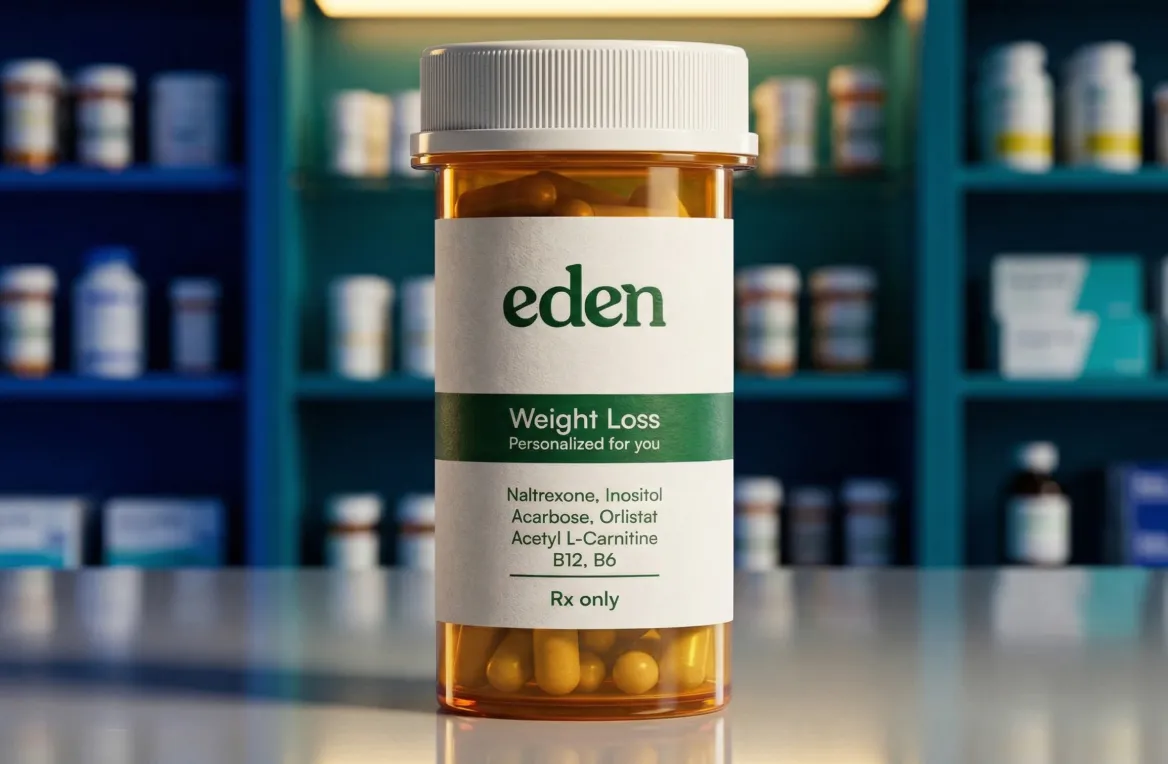
Qsymia® requires a consultation with a licensed provider and is only dispensed through REMS-certified pharmacies. Self-prescribing is not possible. If you’re not a candidate for Qsymia® (or would rather pursue a non-stimulant, fully online care pathway), other medically supervised options may be worth exploring, including Eden’s Custom Weight Loss Kit for those who specifically want oral medications without the stimulant profile.
Exploring Non-Stimulant Alternatives: GLP-1 Medications
If Qsymia® doesn’t feel like the right fit, whether that’s because of the stimulant profile, pregnancy restrictions, or simply a preference for something different, GLP-1 receptor agonists may be worth discussing with a provider.
GLP-1 medications work through a fundamentally different mechanism than Qsymia®. They mimic naturally occurring gut hormones, GLP-1, and in the case of tirzepatide, GIP, which reduce appetite, slow gastric emptying, and support more stable blood sugar. They’re non-stimulants, aren’t classified as controlled substances, and don’t carry the same REMS-level pregnancy monitoring as Qsymia®. At the same time, all prescription weight loss medications, including GLP-1s, require provider oversight and are contraindicated in pregnancy.
Eden offers a fully online, medically supervised path to compounded semaglutide and compounded tirzepatide through its GLP-1 weight-loss treatments, when prescribed by a licensed provider for an identified patient. Compounded medications are not FDA-approved and are not reviewed by the FDA for safety, efficacy, or quality.
This program includes a licensed provider consultation, provider-directed dosing, 24/7 provider messaging, and free expedited shipping. Eden currently provides access to care across all 50 states, subject to provider licensure and pharmacy availability, and FSA/HSA funds may be used toward eligible prescriptions.
If you’re ready to find out what may work for your specific situation and health, whether that includes GLP-1 weight loss treatments or Eden’s custom weight loss kit, you can start with a quick online intake. From there, a licensed provider will review your history and help you determine what makes the most sense for you.







The FDA does not approve compounded medications for safety, quality, or manufacturing. Prescriptions and a medical evaluation are required for certain products. The information provided on this blog is for general informational purposes only. It is not intended as a substitute for professional advice from a qualified healthcare professional and should not be relied upon as personal health advice. The information contained in this blog is not meant to diagnose, treat, cure, or prevent any disease. Readers are advised to consult with a qualified healthcare professional for any medical concerns, including side effects. Use of this blog's information is at your own risk. The blog owner is not responsible for any adverse effects or consequences resulting from the use of any suggestions or information provided in this blog.
Eden is not a medical provider. Eden connects individuals with independent licensed healthcare providers who independently evaluate each patient to determine whether a prescription treatment program is appropriate. All prescriptions are written at the sole discretion of the licensed provider. Medications are filled by state-licensed pharmacies. Please consult a licensed healthcare provider before making any medical decisions.
Frequently asked questions
How long can I stay on Qsymia®?

Qsymia® is approved for chronic, long-term use as long as it remains effective and well-tolerated. Typically, providers reassess progress and side effects regularly to decide whether to continue, adjust, or taper off.
How quickly does Qsymia® start working?
Some people may notice a reduced appetite within the first few weeks, but meaningful weight changes are usually assessed at the 12-week mark on the recommended dose, at which point your provider decides whether to continue, escalate, or stop the medication.
Will I regain weight after stopping Qsymia®?
Weight regain is a possibility once any weight loss medication is discontinued, particularly without ongoing lifestyle support. Maintaining the nutrition and physical activity habits built during treatment may help, though individual results vary.
Can I drink alcohol while taking Qsymia®?
Alcohol is generally not recommended on Qsymia®. It may intensify cognitive and central nervous system side effects from topiramate and can also raise the risk of dizziness or impaired thinking.
Is Qsymia® the same thing as phentermine?
No, phentermine is one of two active ingredients in Qsymia®; the other is topiramate extended-release. Phentermine alone is also prescribed (often as Adipex-P®) but only for short-term use, while Qsymia® is approved for long-term weight management.
Related articles





.webp)
.webp)
.webp)
.webp)


Adipex-P. (1959). HIGHLIGHTS OF PRESCRIBING INFORMATION. https://www.accessdata.fda.gov/drugsatfda_docs/label/2012/085128s065lbl.pdf
Alli. (2008). ALLI. https://www.accessdata.fda.gov/drugsatfda_docs/label/2007/021887lbl.pdf
Allison, D. B., Gadde, K. M., Garvey, W. T., Peterson, C. A., Schwiers, M. L., Najarian, T., Tam, P. Y., Troupin, B., & Day, W. W. (2012). Controlled-release phentermine/topiramate in severely obese adults: a randomized controlled trial (EQUIP). Obesity (Silver Spring, Md.), 20(2), 330–342. https://pmc.ncbi.nlm.nih.gov/articles/PMC3270297/
Bomberg, E. M., Clark, J., Rudser, K. D., Gross, A. C., Kelly, A. S., & Fox, C. K. (2024). Clinical effectiveness and predictors of response to topiramate plus lifestyle modification in youth with obesity seen in a weight management clinical setting. Frontiers in endocrinology, 15, 1369270. https://www.frontiersin.org/journals/endocrinology/articles/10.3389/fendo.2024.1369270/full
Gadde, K. M., Allison, D. B., Ryan, D. H., Peterson, C. A., Troupin, B., Schwiers, M. L., & Day, W. W. (2011). Effects of low-dose, controlled-release, phentermine plus topiramate combination on weight and associated comorbidities in overweight and obese adults (CONQUER): a randomised, placebo-controlled, phase 3 trial. Lancet (London, England), 377(9774), 1341–1352. https://pubmed.ncbi.nlm.nih.gov/21481449/
Jastreboff, A. M., Aronne, L. J., Ahmad, N. N., Wharton, S., Connery, L., Alves, B., Kiyosue, A., Zhang, S., Liu, B., Bunck, M. C., Stefanski, A., & SURMOUNT-1 Investigators (2022). Tirzepatide Once Weekly for the Treatment of Obesity. The New England journal of medicine, 387(3), 205–216. https://pubmed.ncbi.nlm.nih.gov/35658024/
Johnson, D. B., & Quick, J. (2023b, March 27). Topiramate and phentermine. StatPearls - NCBI Bookshelf. https://www.ncbi.nlm.nih.gov/books/NBK482165/
QsymiaEngage. (2026). Qsymia Engage. https://qsymiaengage.com/
Qsymia. (2026). Lifeline Speciality Pharmacy. https://qsymia.com/patient/lifeline-specialty-pharmacy
Qsymia. (2012). HIGHLIGHTS OF PRESCRIBING INFORMATION. https://www.accessdata.fda.gov/drugsatfda_docs/label/2022/022580s021lbl.pdf
Wilding, J. P. H., Batterham, R. L., Calanna, S., Davies, M., Van Gaal, L. F., Lingvay, I., McGowan, B. M., Rosenstock, J., Tran, M. T. D., Wadden, T. A., Wharton, S., Yokote, K., Zeuthen, N., Kushner, R. F., & STEP 1 Study Group (2021). Once-Weekly Semaglutide in Adults with Overweight or Obesity. The New England journal of medicine, 384(11), 989–1002. https://pubmed.ncbi.nlm.nih.gov/33567185/
Xenical. (1999). HIGHLIGHTS OF PRESCRIBING INFORMATION. https://www.accessdata.fda.gov/drugsatfda_docs/label/2022/020766s038lbl.pdf
Thank you!
We'll be in touch.
Thank you!