


Can You Take Sermorelin and Testosterone Together? What Providers Consider



Wondering if you can take sermorelin and testosterone together? Learn how the two therapies work and whether you may be a candidate. Get started today.
- Can you take sermorelin and testosterone together? Sermorelin and testosterone work through entirely different hormonal pathways and don’t directly interfere with each other, meaning they may be used together in specific circumstances.
- Sermorelin stimulates the pituitary gland to produce growth hormone naturally; it doesn’t replace testosterone.
- Combining the two therapies may offer complementary benefits for body composition, recovery, sleep, and energy, but individual candidacy depends on a comprehensive evaluation by a healthcare provider.
- A licensed provider will review labs, symptoms, and health history before recommending either or both therapies.
- Self-prescribing hormone-related therapies is never appropriate; instead, a telehealth consultation may offer guidance on what’s best for you.
This article is for general informational purposes only and is not a substitute for professional medical advice, diagnosis, or treatment. Always talk with a licensed healthcare provider before starting, changing, or stopping any medication or therapy. Compounded medications are not FDA-approved and are prepared by a pharmacy for an individual patient pursuant to a prescription from a licensed clinician. They are not reviewed by the FDA for safety, effectiveness, or manufacturing quality.
If you’ve been researching hormone optimization, you may now be asking whether you can take sermorelin and testosterone together. After all, both therapies often come up in conversations about age-related hormone decline, and at first glance, their goals appear to overlap.
But the answer isn’t a simple yes or no.
Whether these two therapies belong in the same protocol depends entirely on what a licensed healthcare provider evaluates about your individual health profile. This article explores how sermorelin and testosterone work, why some providers may consider them complementary, and the factors that go into that decision before either is recommended.
How Sermorelin and Testosterone Work: Two Different Pathways
Sermorelin and testosterone don’t work through the same mechanism. And this is why they may be used together. So, what is sermorelin exactly?
Sermorelin is a synthetic peptide that mimics growth hormone-releasing hormone (GHRH), the signal your hypothalamus naturally produces. When administered, it tells the anterior pituitary gland to make and release more of your body’s own growth hormone (GH) in a natural, pulsatile pattern.
Essentially, sermorelin stimulates your body’s own GH production rather than directly replacing GH. Because of this, your natural feedback systems—including somatostatin, which acts as a brake—remain intact and may help prevent excessive GH release.
In contrast, testosterone is the primary androgen responsible for muscle protein synthesis, libido, bone density, mood, and energy. Testosterone replacement therapy (TRT) restores testosterone to a normal physiological range in individuals with a documented deficiency.
In summary, sermorelin acts on the GH/IGF-1 axis, while testosterone acts on androgen receptors. These are separate systems, which is why hormone therapy combinations like this may be considered together.
What Sermorelin Does (and Doesn’t Do)
Sermorelin works upstream on growth hormone, not on the testes or the hypothalamic-pituitary-gonadal (HPG) axis that governs testosterone production.
With that said, the relationship isn’t entirely separate. GH and its downstream mediator, IGF-1, may indirectly support the broader hormonal environment. Some research also suggests IGF-1 may influence luteinizing hormone (LH) and follicle-stimulating hormone (FSH) activity, which in turn, may help signal testosterone production.
But this is an indirect relationship, not a proven mechanism for boosting testosterone. At the end of the day, sermorelin’s primary job is GH stimulation, not testosterone augmentation.
What Testosterone Replacement Therapy Does
Testosterone Replacement Therapy (TRT) directly restores testosterone to a normal physiological range in individuals with clinically low levels (hypogonadism).
For context, testosterone in men tends to decline roughly 1-2% per year after age 30, a pattern documented in long-running research such as the Massachusetts Male Aging Study.
While TRT is prescribed only after bloodwork confirms a deficiency, it comes in many forms, including injections, gels, patches, and pellets. However, a licensed provider should always determine whether it makes sense for you and your situation, along with the aforementioned blood testing.
Why Providers May Consider Both Therapies Together
Since sermorelin and testosterone address different hormonal systems, GH/IGF-1 and androgens, some providers may consider them complementary in select cases. At the end of the day, aging rarely affects just one hormonal axis. And this means that optimizing only one system may leave specific symptoms unaddressed.
Considering the stats, GH secretion declines about 14% per decade after age 30—a gradual process sometimes called somatopause. Meanwhile, testosterone declines about 1-2% per year. While these are two separate processes, they may occur in parallel. When a provider sees evidence of decline on both fronts, sermorelin with TRT may be considered.
Potential Complementary Effects on Body Composition
Testosterone supports muscle protein synthesis through androgen receptor activation. But GH, stimulated by sermorelin, may promote fat metabolism through lipolysis and support muscle repair via IGF-1-mediated satellite cell activity. Specifically in fat tissue, testosterone may help limit visceral fat storage, and GH may stimulate fat breakdown.
Together, these effects may support body composition goals in some individuals when prescribed and monitored by a licensed healthcare provider. Yet, it’s worth noting that individual results vary widely and depend heavily on diet, exercise, and overall health. If you’re curious where your own baseline sits, Eden’s BMI calculator provides a simple starting point; however, always keep in mind that no therapy can replace the fundamentals.
Potential Effects on Recovery and Sleep
Both low testosterone and low GH may contribute to poor recovery and disrupted sleep, but through different routes. GH is mostly released during deep sleep, which is why sermorelin is usually taken at bedtime to line up with your body’s natural release window. Testosterone, meanwhile, plays a role in muscle maintenance and recovery.
This means that someone already on TRT who reports poor sleep or sluggish recovery may have a concurrent GH decline that testosterone alone doesn’t address. In this scenario, a healthcare provider may consider adding sermorelin, though a proper evaluation ultimately determines whether it’s appropriate.
Potential Effects on Bone Density and Metabolic Health
Both testosterone and GH/IGF-1 help keep your bones strong, but they do it in different ways; testosterone signals the cells that build bone, and IGF-1 helps your body lay down new bone tissue. If you’re worried about bone health on top of declining hormones, a licensed healthcare provider may look at whether further evaluation is appropriate.
Similarly, both hormones also influence insulin sensitivity and metabolic function. As with everything else here, however, a licensed provider is your best resource for looking at your full health profile and making recommendations that are right for you.
What Providers Evaluate Before Recommending Combination Therapy
Combining hormone-related therapies is not a default protocol. It’s an individualized clinical decision. A licensed provider considers several factors before recommending either therapy, including your baseline lab work, symptom profile, health history, and more.
Baseline Lab Work
Before recommending sermorelin, TRT, or both, a provider will typically review your bloodwork. Relevant markers may include:
- Total and free testosterone
- IGF-1 (used as a practical proxy for GH activity, since GH itself is released in pulses and hard to measure directly)
- LH and FSH (to determine whether low testosterone is primary or secondary)
- A complete metabolic panel
- And sometimes thyroid function
But this alone isn’t enough information to dictate treatment. Lab results are always interpreted alongside your symptoms.
Symptom Profile and Health History
Your provider will also map your symptoms, including which ones are present, how long they’ve persisted, and whether they point more toward GH decline, testosterone decline, or both.
Ultimately, some symptoms tend to overlap, such as fatigue, reduced muscle mass, and weight gain, and occur in both GH and testosterone decline. But there are other symptoms that may be more specific. For instance, libido and sexual function tend to be more testosterone-related, while sleep quality and recovery speed lean more GH-related.
Your health history will also be taken into account, including cardiovascular health, any hormone-sensitive conditions, current medications, and lifestyle factors. And all of the above is why a thorough intake and consultation with a licensed healthcare provider is essential.
Monitoring During Combination Therapy
If your provider does recommend both therapies, ongoing monitoring is an important part of the process. This may include periodic bloodwork to track IGF-1, testosterone, and hematocrit (a known consideration with TRT), along with dose adjustments over time.
In fact, Eden’s model may include regular check-ins and 24/7 messaging with providers. Our process starts with a brief online intake. From there, Eden connects you with a licensed healthcare provider who will review your health history, symptoms, and more.
Who May Be a Candidate (And Who May Not Be)
A licensed healthcare provider may consider whether further evaluation is appropriate if you have:
- A documented or suspected decline in both testosterone and GH markers
- Symptoms spanning both axes (such as low libido, poor sleep, slow recovery, and body composition changes)
- No contraindications to either therapy
Yet, it may not be appropriate for:
- Individuals with normal testosterone and no clinical hypogonadism
- Individuals with certain cardiovascular or metabolic contraindications
- Individuals whose symptoms are already fully addressed by one therapy alone
With that said, individual candidacy is case-based and provider-determined.
A Note on Safety and the Importance of Medical Supervision
A licensed healthcare provider can ultimately help evaluate the potential benefits and risks of either therapy based on your individual circumstances.
Sermorelin’s mechanism (stimulating your own pituitary to release GH with somatostatin feedback still intact) may result in different safety considerations than direct HGH replacement because it stimulates the body’s natural growth hormone signaling pathway rather than replacing growth hormone directly. TRT, when prescribed for confirmed deficiency and properly monitored, requires ongoing medical supervision and monitoring.
However, both therapies require proper clinical oversight. Without it, you risk inappropriate dosing, failure to identify contraindications, and missing early signs of adverse effects (such as sermorelin side effects). Eden’s model, in which we connect you with a licensed healthcare provider, is designed to provide this level of oversight. So, how do we do that?
How Eden Approaches Sermorelin Therapy
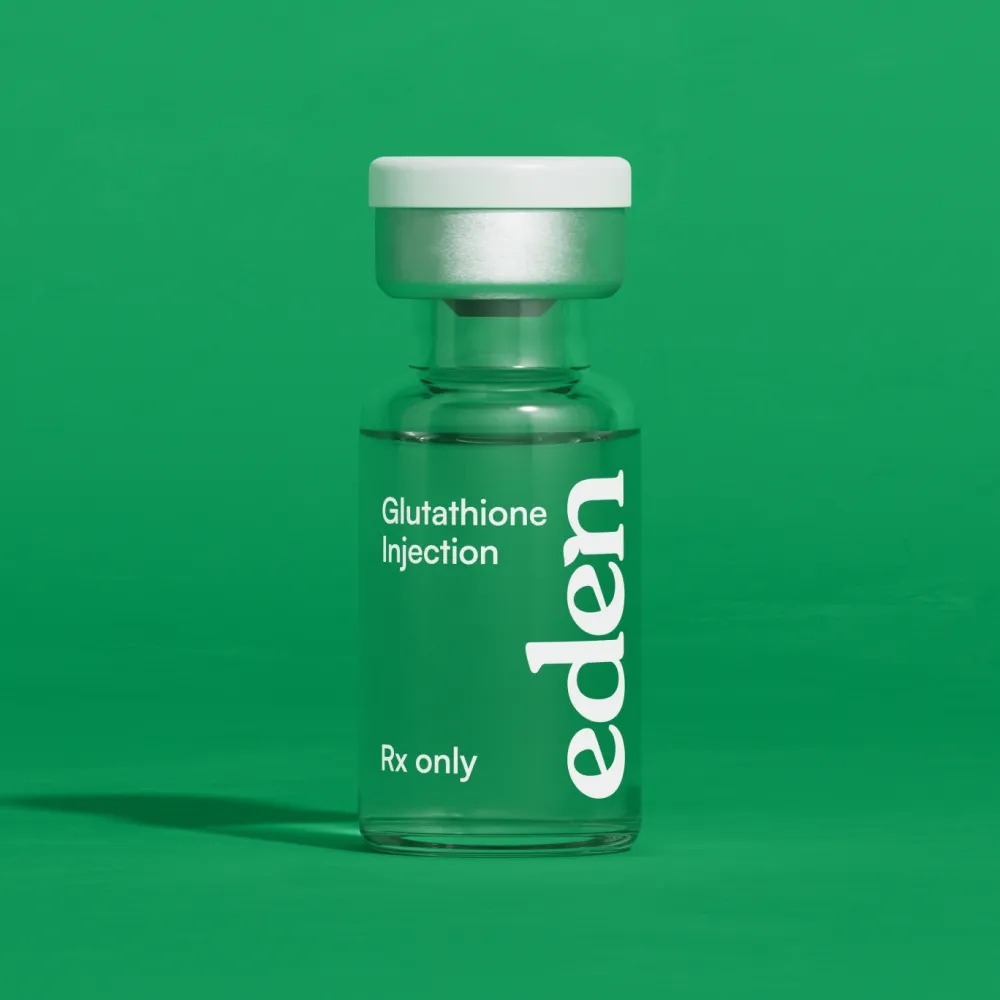
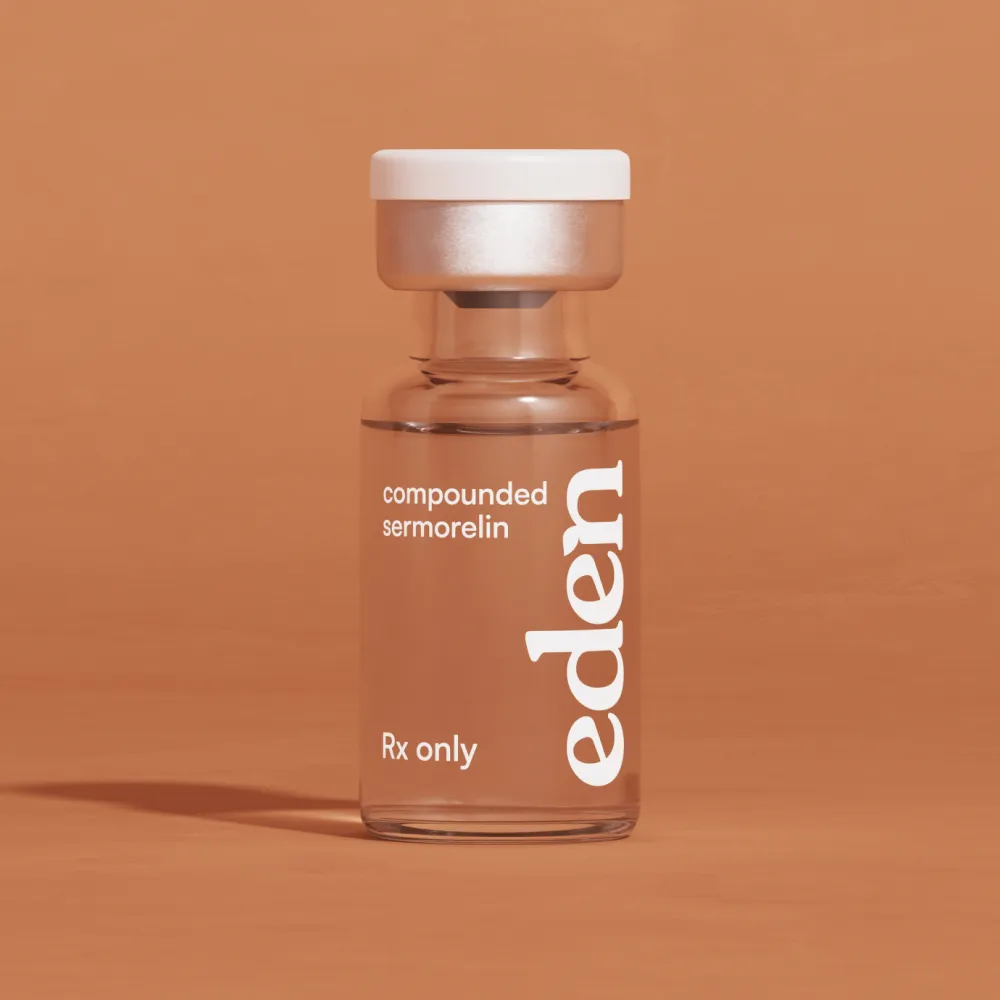
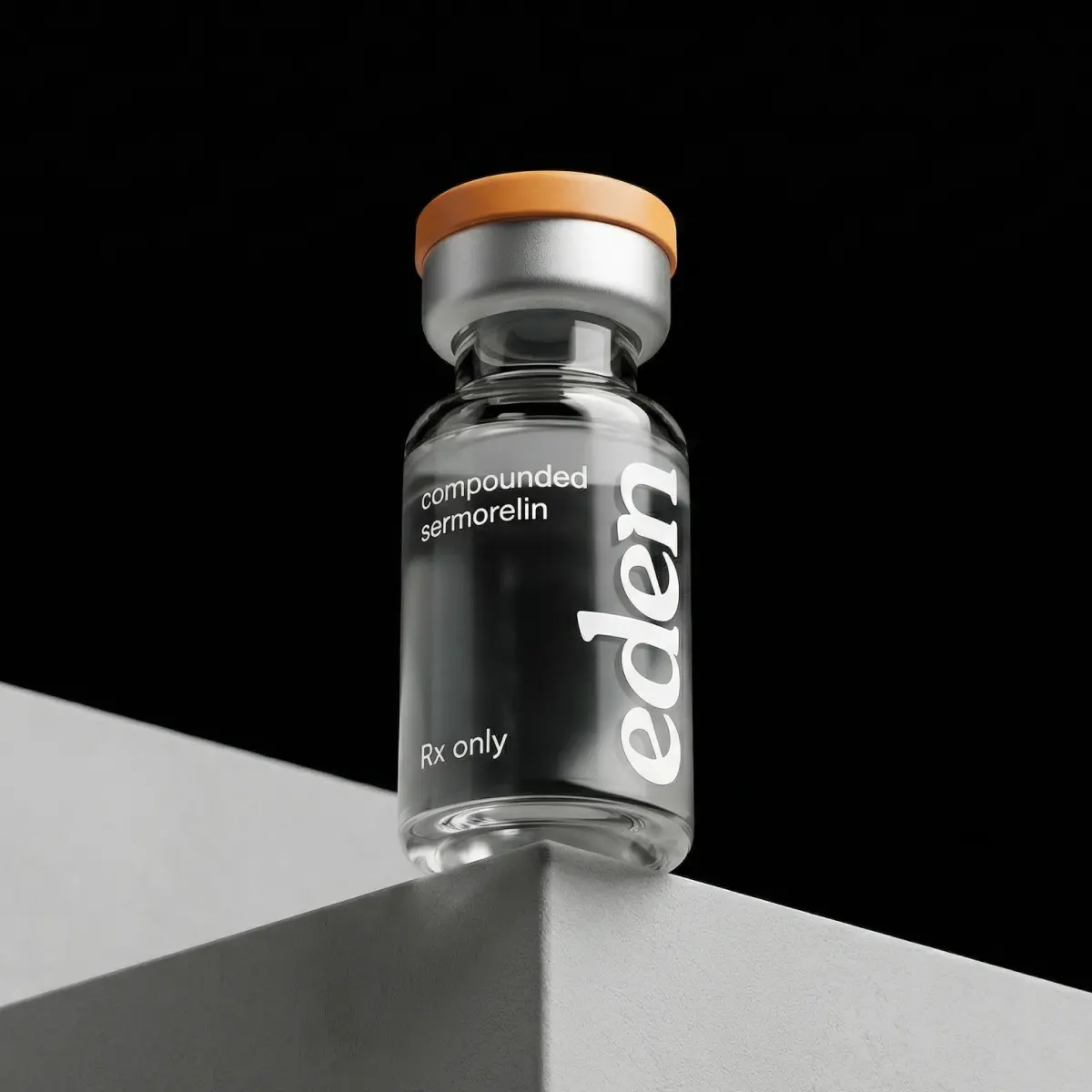
Eden’s Sermorelin Injections program is a prescription, compounded peptide therapy dispensed through state-licensed U.S. pharmacies and delivered as a 5 mL (10 mg) vial with a home injection kit via free expedited shipping. At the same time, it’s worth noting that compounded medications are not FDA-approved and are prepared for an individual patient per a prescription from a licensed clinician.
The process is fully online, from intake and prescription to delivery. You complete an online consultation with a licensed provider, and, if prescribed, receive dosing instructions determined by your licensed healthcare provider, and get medication that’s lab-tested for potency, sterility, endotoxins, and pH.
While learning how sermorelin and testosterone work is a smart first step, the next step is to have a conversation with a licensed provider who can review your labs, symptoms, and health history. From there, they’ll determine what’s best for you.




The FDA does not approve compounded medications for safety, quality, or manufacturing. Prescriptions and a medical evaluation are required for certain products. The information provided on this blog is for general informational purposes only. It is not intended as a substitute for professional advice from a qualified healthcare professional and should not be relied upon as personal health advice. The information contained in this blog is not meant to diagnose, treat, cure, or prevent any disease. Readers are advised to consult with a qualified healthcare professional for any medical concerns, including side effects. Use of this blog's information is at your own risk. The blog owner is not responsible for any adverse effects or consequences resulting from the use of any suggestions or information provided in this blog.
Eden is not a medical provider. Eden connects individuals with independent licensed healthcare providers who independently evaluate each patient to determine whether a prescription treatment program is appropriate. All prescriptions are written at the sole discretion of the licensed provider. Medications are filled by state-licensed pharmacies. Please consult a licensed healthcare provider before making any medical decisions.
Frequently asked questions
What not to take with sermorelin?

Common considerations when taking sermorelin include glucocorticoids and certain thyroid medications, which may affect your GH response. Always share a full list of medications and supplements you’re taking during your consultation. This way, your provider can flag any concerns.
Does sermorelin shut down testosterone?
No, sermorelin works on the growth hormone pathway, not the testosterone pathway. This means that it doesn’t suppress your natural testosterone production. Instead, it acts upstream on the pituitary’s GH release, not on the testes or the HPG axis that governs testosterone.
Is it safe to take sermorelin and testosterone at the same time?
Because the two therapies work through separate hormonal pathways, a licensed healthcare provider may determine that they can be used together in certain individuals under appropriate medical supervision.
Does sermorelin increase testosterone?
Not directly, sermorelin stimulates the growth hormone, not testosterone. Some research suggests IGF-1 may indirectly influence the hormonal signals tied to testosterone production, but sermorelin should not be viewed as a testosterone-boosting therapy.
Do you need a prescription for sermorelin and TRT?
Yes, both are prescription therapies that require an evaluation by a licensed provider.
Cruickshank, M., Hudson, J., Hernández, R., Aceves-Martins, M., Quinton, R., Gillies, K., Aucott, L. S., Kennedy, C., Manson, P., Oliver, N., Wu, F., Bhattacharya, S., Dhillo, W. S., Jayasena, C. N., & Brazzelli, M. (2024). The effects and safety of testosterone replacement therapy for men with hypogonadism: the TestES evidence synthesis and economic evaluation. Health technology assessment (Winchester, England), 28(43), 1–210. https://pmc.ncbi.nlm.nih.gov/articles/PMC11404359/
O'Donnell, A. B., Araujo, A. B., & McKinlay, J. B. (2004). The health of normally aging men: The Massachusetts Male Aging Study (1987-2004). Experimental gerontology, 39(7), 975–984. https://www.sciencedirect.com/science/article/abs/pii/S0531556504001275?via=ihub
Toogood, A. A., O'Neill, P. A., & Shalet, S. M. (1996). Beyond the somatopause: growth hormone deficiency in adults over the age of 60 years. The Journal of clinical endocrinology and metabolism, 81(2), 460–465. https://pubmed.ncbi.nlm.nih.gov/8636250/
Walker R. F. (2006). Sermorelin: a better approach to management of adult-onset growth hormone insufficiency?. Clinical interventions in aging, 1(4), 307–308. https://pmc.ncbi.nlm.nih.gov/articles/PMC2699646/
Wolfe, A., Divall, S., & Wu, S. (2014). The regulation of reproductive neuroendocrine function by insulin and insulin-like growth factor-1 (IGF-1). Frontiers in neuroendocrinology, 35(4), 558–572. https://pmc.ncbi.nlm.nih.gov/articles/PMC4175134/
Thank you!
We'll be in touch.
Thank you!