
Female Pattern Hair Loss: Signs, Causes, and Treatment Options



Learn what female pattern hair loss looks like, why it happens, and which prescription treatments, including minoxidil, may help slow or reverse thinning.
- Female pattern hair loss is the most common form of hair loss in women, affecting approximately 40% of women by age 50.
- It typically presents as gradual thinning along the part line and crown, unlike the typical receding hairline reported in male pattern baldness.
- Most women with this condition have normal androgen levels; genetics and age are the primary drivers, not a hormonal imbalance.
- Female pattern hair loss is progressive, which is why early treatment tends to produce better outcomes than waiting.
- Minoxidil is the first-line, FDA-approved treatment; GHK-Cu foam and custom combination kits may also offer complementary support.
- A licensed healthcare provider can help determine the right treatment path based on your pattern, severity, and health history.
This article is intended for general educational purposes only and is not a substitute for professional medical advice, diagnosis, or treatment. Always talk with a licensed healthcare provider before starting, changing, or stopping any medication or therapy.
Approximately 40% of women show signs of hair loss by age 50, and as many as two-thirds of postmenopausal women experience thinning or bald spots.
Hair loss in women often carries a heavier emotional weight than it does for men, in part because it is less socially expected and less openly discussed. Feeling frustrated, self-conscious, or anxious about it is a completely valid response. But it doesn’t mean your situation is hopeless.
In this article, we explore how to recognize female pattern hair loss, its causes, how it differs from other types of hair loss, and which treatment options may help.
What is Female Pattern Hair Loss?
Female pattern hair loss (also called female androgenetic alopecia, or simply androgenetic alopecia in women) is the most common form of hair loss in women. It’s characterized by progressive thinning across the crown and the top of the scalp.
The term “androgenetic” refers to the “genetic” and hormonal factors (“andro”) involved. But interestingly, many women with this condition have normal androgen levels (such as testosterone) in their blood.
Female pattern hair loss may begin at any point after puberty. But many women first notice it around perimenopause or menopause, and it tends to develop very gradually.
How Does Female Pattern Hair Loss Look Different From Male Pattern Baldness?
Male pattern baldness usually starts with a receding frontal hairline and often progresses to a distinct bald patch at the crown. Female pattern hair loss, on the other hand, often involves a largely preserved hairline. Instead, the thinning begins at the part line and radiates outward across the top of the scalp. In fact, a widening part is often the first thing women notice.
The Ludwig Classification is sometimes used to describe severity. Type I involves minimal thinning that may still be camouflaged with styling. Type II shows noticeably decreased volume and a wider part. Type III shows more diffuse thinning with a “see-through” appearance at the top of the scalp. Complete baldness, however, is rare in women with this condition.
How is Female Pattern Hair Loss Different From Other Types of Hair Loss?
Here’s how female pattern hair loss compares to three other common types.
Female Pattern Hair Loss vs. Telogen Effluvium
Telogen effluvium is a temporary condition triggered by a physical or emotional stressor, such as illness, surgery, childbirth, crash dieting, or significant psychological stress. It causes a sudden, diffuse increase in shedding (the kind that clogs the shower drain or comes out in clumps), typically beginning two to three months after the triggering event. It usually resolves on its own once the stressor is removed.
Female pattern hair loss, by contrast, is gradual and progressive and doesn’t resolve without treatment. The key clinical difference is what happens to the hair: telogen effluvium causes increased shedding of full-length hairs, while female pattern hair loss causes miniaturization, in which hairs become progressively finer and shorter over time. Both can occur simultaneously, which is where an evaluation with a licensed healthcare provider can be beneficial.
Female Pattern Hair Loss vs. Traction Alopecia
Traction alopecia is caused by repeated mechanical tension on the follicle from tight hairstyles, such as braids, weaves, high ponytails, or extensions worn consistently over time. It usually appears as thinning along the hairline or temples.
Unlike female pattern hair loss, traction alopecia is often preventable and, if caught early, may be reversible with changes in styling habits. If the follicle is damaged long-term, however, the loss may become permanent.
Female Pattern Hair Loss vs. Alopecia Areata
Alopecia areata is an autoimmune condition that causes patchy, well-defined circular bald spots. It can affect any area of the scalp and, in some cases, may progress to more extensive scalp or body hair loss. And since it has a different underlying cause when compared to female pattern hair loss, it requires a different diagnostic and treatment approach.
What Causes Female Pattern Hair Loss?
The main factors contributing to female pattern hair loss include:
- Genetics: Female pattern hair loss has a strong hereditary component. It’s polygenic, meaning multiple genes are involved, and those genes can be inherited from either parent. A family history of hair loss on either side may increase your risk. However, at-home genetic testing for hair loss risk is not currently considered reliable or clinically recommended.
- Hormones: The relationship between androgens and hair loss is more complex in women than in men. In male pattern baldness, elevated androgens clearly drive follicle miniaturization. In women, most cases occur despite normal androgen levels. Estrogen may play a protective, hair-supportive role, which may be why women’s hair thinning often becomes more noticeable after menopause (as estrogen declines). Yet, the exact hormonal mechanism is not fully understood. In some cases, elevated androgens from conditions such as polycystic ovary syndrome (PCOS) or adrenal disorders may contribute. In these cases, a licensed healthcare provider may recommend hormonal testing when clinically appropriate.
- Age and the hair growth cycle: Each hair moves through the hair cycle, including anagen (active growth), catagen (short transition), and telogen (resting and shedding). In female pattern hair loss, the anagen phase shortens over time and follicles miniaturize, producing progressively thinner, shorter hairs, until some follicles may stop producing visible hair altogether. This is why early evaluation and treatment may improve the likelihood of maintaining existing hair density; once a follicle is fully miniaturized, it becomes much harder to restore.
On top of the above, studies have associated greater severity with a sedentary lifestyle, systemic arterial hypertension, and urban living. Nutritional deficiencies, including iron, ferritin, and vitamin D, may also play a role, and should be discussed with a licensed provider.
When Should You See a Provider About Hair Loss?
If you’re noticing a widening part, increased scalp visibility at the crown, or increased daily shedding that has persisted for more than a few months, discuss your options with a licensed provider. Early evaluation and treatment tend to produce better outcomes, and waiting until the loss is more advanced makes it harder to restore hair density.
However, some signs warrant more prompt medical attention, as they may point to a different or hormonal condition, including:
- Sudden or patchy hair loss
- Scalp pain, itching, or redness alongside hair loss
- Hair loss accompanied by irregular periods, acne, or unexpected weight changes
A licensed healthcare provider can help determine the underlying cause and recommend an appropriate treatment path based on your specific situation.
Treatment Options for Female Pattern Hair Loss
Female pattern hair loss is a chronic condition, meaning treatment is typically ongoing. The goals include slowing progression, maintaining your current hair density, and, in some cases, stimulating regrowth. Any treatment should be guided by a licensed provider, who can help match the appropriate approach to your pattern and history.
Minoxidil for Women
Minoxidil is the only FDA-approved topical treatment for female pattern hair loss and remains the first-line recommendation in clinical guidelines. Its exact mechanism is not fully understood, but it’s thought to prolong the anagen (growth) phase of the hair cycle and may help increase hair diameter and support hair growth in some people.
Topical minoxidil (2% or 5% solution or foam) has some of the strongest clinical evidence among FPHL treatments and is considered the first-line option. A systematic review found that women using minoxidil were about twice as likely as those using a placebo to experience at least moderate hair regrowth, with no meaningful difference in effect between the 2% and 5% strengths.
Yet the response still varies from person to person: many women may see reduced shedding, maintained or improved density, and, in some cases, visible regrowth, while about 40% may not show improvement with topical minoxidil alone. This is why it’s important to discuss your options with a licensed provider; they can determine what’s best for you.
Results require patience and consistency. It typically takes four to six months to see visible improvement, with fuller results often evident at around 12 months. At the same time, stopping treatment may lead to further hair loss.
On top of the above, low-dose oral minoxidil is an emerging option that some providers prescribe when topical application is not tolerated or preferred. Eden offers Minoxidil for Women as part of its hair treatment programs. A provider can help you decide whether minoxidil may be appropriate for you.
GHK-Cu Peptide Foam
GHK-Cu is a naturally occurring copper peptide that has drawn growing interest in hair restoration. It has been studied for its potential role in supporting scalp health and hair follicle biology, although clinical evidence for female pattern hair loss remains limited. It’s worth noting, though, that GHK-Cu is often used as a complementary treatment alongside minoxidil.
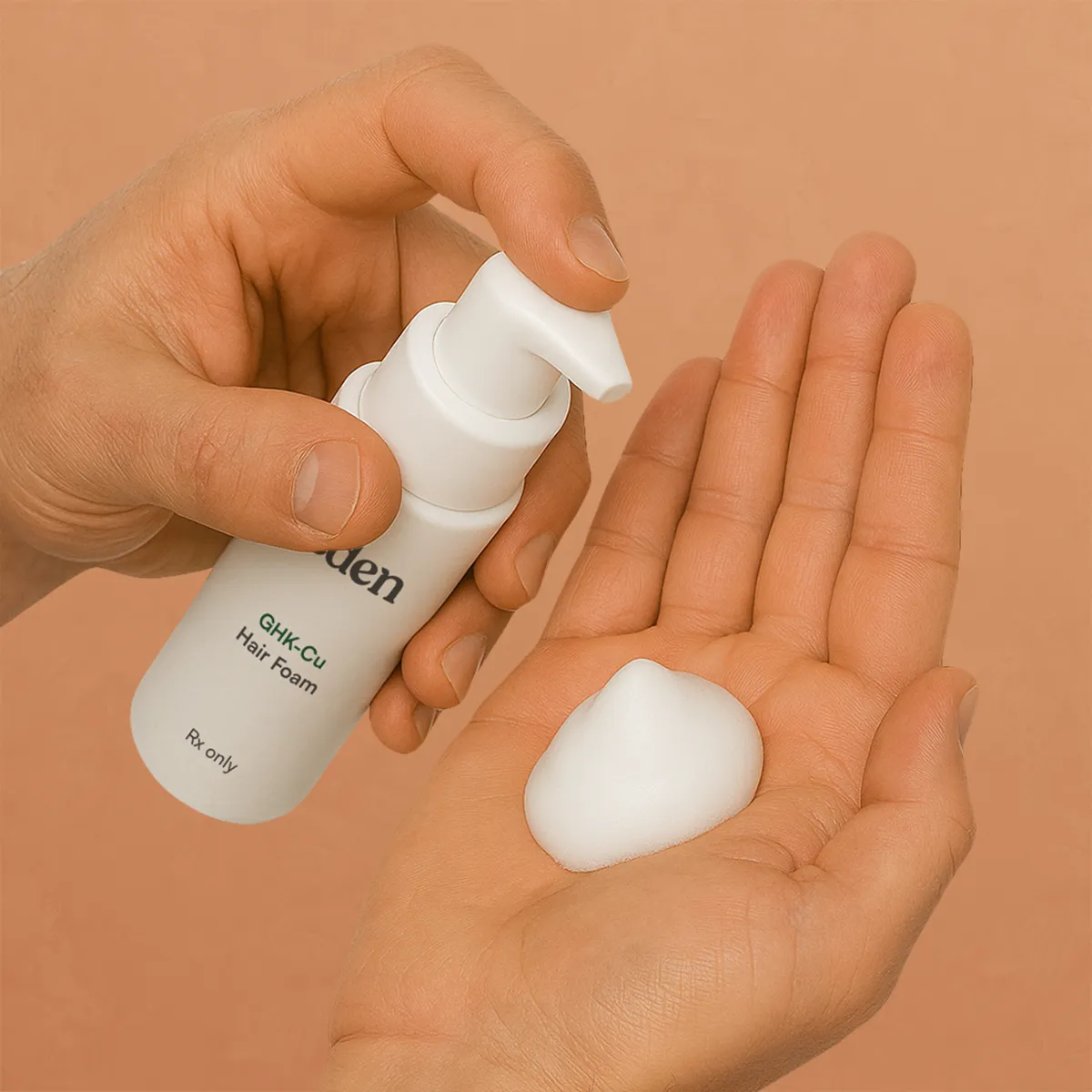
While the clinical evidence for GHK-Cu is still developing compared with minoxidil, copper peptides have generally been well tolerated in available studies, although additional research is needed to better understand their effectiveness for female pattern hair loss. At Eden, we connect you with a licensed healthcare provider; if appropriate, they may recommend our GHK-Cu Foam for Women.
Custom Hair Treatment Kits
For many women, a combination approach may produce better outcomes. Eden’s Custom Hair Growth Kit for Women allows a licensed healthcare provider to determine whether a combination regimen may be appropriate based on your hair loss pattern, severity, and treatment history.
At the end of the day, what works well for diffuse thinning across the crown may differ from what is appropriate for thinning concentrated at the part line. And a provider-guided plan is designed around your specific presentation.
Other Treatment Considerations
Depending on your specific situation, your provider may discuss additional options, including:
- Antiandrogen medications (such as spironolactone, used off-label in women with elevated androgens)
- Finasteride (used off-label in some postmenopausal women and contraindicated in women who may become pregnant)
- Platelet-rich plasma (PRP) therapy
- Low-level laser therapy (LLLT)
Each of these requires evaluation by a licensed healthcare provider to determine whether it may be appropriate for your situation.
What to Expect From Treatment
Treatments for female pattern hair loss tend to work best when started early. This means that it’s important to seek out an evaluation as soon as you notice any changes.
For most treatments, results are gradual, typically taking about four to six months of consistent use before they become visible. And often, treatment is ongoing; stopping may result in resumed progression.
Not every treatment works equally for every woman. Roughly 30-40% of women may not respond to topical minoxidil alone, which is why combination approaches or alternative options may be considered.
At the end of the day, monitoring your progress with a licensed healthcare provider is the most effective approach. And many women do see meaningful improvement with the right plan and consistent follow-through.






Prescriptions and a medical evaluation are required for certain products. The information provided on this blog is for general informational purposes only. It is not intended as a substitute for professional advice from a qualified healthcare professional and should not be relied upon as personal health advice. The information contained in this blog is not meant to diagnose, treat, cure, or prevent any disease. Readers are advised to consult with a qualified healthcare professional for any medical concerns, including side effects. Use of this blog's information is at your own risk. The blog owner is not responsible for any adverse effects or consequences resulting from the use of any suggestions or information provided in this blog.
Eden is not a medical provider. Eden connects individuals with independent licensed healthcare providers who independently evaluate each patient to determine whether a prescription treatment program is appropriate. All prescriptions are written at the sole discretion of the licensed provider. Medications are filled by state-licensed pharmacies. Please consult a licensed healthcare provider before making any medical decisions.
Frequently asked questions
Can female pattern hair loss be reversed?

Female pattern hair loss is progressive and generally not fully “cured,” but treatment may slow its progression, help maintain existing density, and, in some cases, stimulate regrowth. Outcomes tend to be better the earlier treatment begins, since a fully miniaturized follicle is much harder to restore. A licensed healthcare provider can help set realistic expectations for your situation.
Does female pattern hair loss mean I have a hormone imbalance?
Not usually. Most women with female pattern hair loss have normal androgen levels, and the condition is primarily driven by genetics and age. With that said, in some cases, elevated androgens (from conditions like PCOS) may contribute, which is why a provider may recommend hormone testing to rule these out.
How can I tell female pattern hair loss apart from regular shedding?
Everyday shedding involves losing full-length hairs and is normal. Sudden, heavy, diffuse shedding a few months after a stressor may point to telogen effluvium, which often resolves on its own. Female pattern hair loss, by contrast, is gradual and progressive, involving miniaturization where the hairs become finer and shorter over time.
Harvard Health Publishing. (2024). Treating female pattern hair loss. https://www.health.harvard.edu/healthy-aging-and-longevity/treating-female-pattern-hair-loss
Ho, C. Y., Chen, J. Y., Hsu, W. L., Yu, S., Chen, W. C., Chiu, S. H., Yang, H. R., Lin, S. Y., & Wu, C. Y. (2023). Female Pattern Hair Loss: An Overview with Focus on the Genetics. Genes, 14(7), 1326. https://pmc.ncbi.nlm.nih.gov/articles/PMC10379895/
Hughes, E. C., Syed, H. A., & Saleh, D. (2024d, May 1). Telogen effluvium. StatPearls - NCBI Bookshelf. https://www.ncbi.nlm.nih.gov/books/NBK430848/
Müller Ramos, P., Melo, D. F., Radwanski, H., de Almeida, R. F. C., & Miot, H. A. (2023). Female-pattern hair loss: therapeutic update. Anais brasileiros de dermatologia, 98(4), 506–519. https://pmc.ncbi.nlm.nih.gov/articles/PMC10334345/
Ramos, P. M., Melo, D. F., Radwanski, H., de Almeida, R. F. C., & Miot, H. A. (2023). Female-pattern hair loss: Therapeutic update. Anais Brasileiros de Dermatologia, 98(4), 506–519. https://www.sciencedirect.com/science/article/pii/S0365059623000533?via%3Dihub
Syed, H. A., & Kaliyadan, F. (2025c, May 4). Traction alopecia. StatPearls - NCBI Bookshelf. https://www.ncbi.nlm.nih.gov/books/NBK470434/
Tsutsui, G. M., Ramos, P. M., & Miot, H. A. (2022). Prevalence of female pattern hair loss in a multiracial population. Journal of the American Academy of Dermatology, 86(4), 962–964. https://pubmed.ncbi.nlm.nih.gov/33823196/
van Zuuren, E. J., Fedorowicz, Z., & Schoones, J. (2016). Interventions for female pattern hair loss. Cochrane Database of Systematic Reviews, 2016(5), CD007628. https://www.cochranelibrary.com/cdsr/doi/10.1002/14651858.CD007628.pub4/full
Yip, L. (2015). Female pattern hair loss. DermNet. https://dermnetnz.org/topics/female-pattern-hair-loss
Thank you!
We'll be in touch.
Thank you!