




GLP-1 Therapy and Cardiovascular Health: What the Research Shows



Wondering about GLP-1 cardiovascular benefits? Learn what major outcomes trials show about semaglutide, heart health, and benefits. Get started today.
- GLP-1 cardiovascular benefits have emerged from large clinical trials of medications originally developed to treat type 2 diabetes, which may also reduce the risk of heart attack, stroke, and cardiovascular death in certain patients.
- The SELECT trial extended these findings to individuals with obesity or overweight and established heart disease, even without diabetes, making it relevant to a broader population.
- GLP-1 cardiovascular benefits were associated with continuous use in a 2026 study, and stopping treatment, even temporarily, was associated with higher cardiovascular risk in that study population.
- The proposed mechanisms likely go beyond weight loss and may include lower blood pressure, reduced inflammation, and other effects on the heart.
- The evidence is strongest for specific groups, meaning a licensed healthcare provider should help determine whether GLP-1 therapy is right for your situation—and medically supervised, ongoing care matters for both safety and sustained benefit.
This article is for general informational purposes only and is not a substitute for professional medical advice, diagnosis, or treatment. Always talk with a licensed healthcare provider before starting, changing, or stopping any medication or therapy.
You’ve probably heard that GLP-1 medications, such as Ozempic® and Wegovy®, might do more than help with weight loss. In fact, recent research reports that they may be good for your heart, too.
GLP-1 medications were first developed to manage type 2 diabetes, but during large clinical trials, researchers noticed fewer heart attacks, strokes, and cardiovascular deaths among the participants taking them. And this observation opened a major area of GLP-1 research. In this article, we take a closer look at the most important studies, what those findings mean in plain terms, who they may apply to, and what the research still can’t tell us.
What Are GLP-1 Medications, and How Do They Work?
GLP-1 (glucagon-like peptide-1) is a hormone your body produces naturally. It helps regulate blood sugar, signals fullness to your brain, and slows how quickly your stomach empties. GLP-1 medications, formally called GLP-1 receptor agonists, are designed to mimic this hormone.
The two most widely discussed options are semaglutide (sold as Ozempic® and Wegovy®) and tirzepatide (sold as Mounjaro® and Zepbound®). Their primary approved uses are management of type 2 diabetes and, more recently, chronic weight management in adults who meet certain criteria.
However, these medications are not right for everyone. Eligibility depends on your medical history, goals, and other factors and is determined in consultation with a licensed healthcare provider.
How GLP-1s Affect the Body Beyond Blood Sugar
GLP-1 receptors aren’t limited to the pancreas. They’re also found in the heart, blood vessels, kidneys, and brain, which is why researchers began investigating possible cardiovascular effects.
In fact, some studies report GLP-1 medications may be associated with reduced inflammation, modestly lower blood pressure, and improved cholesterol levels.
What the Major Cardiovascular Outcomes Trials Found
A cardiovascular outcomes trial, or CVOT, is a large, long-term study designed to determine whether a medication increases or decreases the risk of serious heart events. After safety concerns around some diabetes drugs in the early 2000s, regulators began requiring these trials. And GLP-1s produced some surprising results.
LEADER Trial (liraglutide)
The LEADER trial, published in 2016, enrolled around 9,340 people with type 2 diabetes and high cardiovascular risk. Compared with placebo, liraglutide (Victoza®) reduced the risk of major adverse cardiovascular events (MACE), such as heart attack, stroke, and death from cardiovascular causes, by about 13% over a median of 3.8 years. It was the first large trial to demonstrate a clear cardiovascular benefit for a GLP-1 medication, setting the stage for what followed.
SUSTAIN-6 Trial (semaglutide)
Published the same year, SUSTAIN-6 enrolled about 3,297 people with type 2 diabetes and high cardiovascular risk. Over 104 weeks, semaglutide was associated with a 26% reduction in MACE compared with placebo, driven largely by fewer nonfatal strokes.
At the same time, it’s worth noting that SUSTAIN-6 was a smaller trial designed to test whether semaglutide was non-inferior to placebo on safety, so this benefit was an exploratory finding.
SELECT Trial (semaglutide in people without diabetes)
In 2023, SELECT was the first large CVOT to test semaglutide in obese or overweight individuals without type 2 diabetes. It included 17,604 participants aged 45 or older with established cardiovascular disease, including a prior heart attack, stroke, or peripheral artery disease, and a BMI of 27 or higher.
The trial reported that once-weekly semaglutide 2.4 mg (the Wegovy® dose) reduced the risk of MACE by about 20% compared with placebo over about 3.3 years—extending the potential benefit to a much broader group (not solely those with diabetes). But again, every participant already had an established cardiovascular disease, which means these findings can’t be extended to individuals with no cardiac history.
What These Trials Have In Common (And What They Don’t Tell Us)
Taken together, these trials are encouraging, but they also have limitations, including:
- All enrolled people had type 2 diabetes or established cardiovascular disease, which means the findings don’t automatically apply to someone with no cardiac history or metabolic risk factors.
- Each studied a specific medication at a specific dose; results may not translate directly across all GLP-1 drugs.
- These are population-level averages; individual results vary, and the mechanisms (weight loss, blood pressure, inflammation, and cardiac effects) are still being studied.
-
What Happens to Your Heart Health If You Stop GLP-1 Therapy?
A study published in March 2026, in BMJ Medicine, followed more than 333,000 U.S. veterans with type 2 diabetes for up to three years. It reported that stopping or interrupting GLP-1 treatment was associated with a meaningful increase in cardiovascular risk compared with continuous use.
In other words, the risk was duration-dependent. And stopping for two years without resuming was associated with roughly a 22% higher risk of major cardiovascular events versus continuous use; a one-year gap corresponded to about a 14% increase. Even a six-month interruption before restarting appeared to erode the benefit by an estimated 4-8%. By contrast, continuous use over the full three years was associated with an approximately 18% reduction in MACE, equating to about 4 fewer major cardiovascular events per 100 people over that period.
Researchers describe the effect as a kind of “metabolic whiplash.” When people stop GLP-1 therapy, inflammation, blood pressure, and cholesterol may rebound—sometimes before the scale moves much at all. As senior author Dr. Ziyad Al-Aly put it, “Weight regain is visible; the metabolic reversal is not.”
All of the above means that it’s important to discuss these concerns with your provider, particularly if you’re considering stopping GLP-1 therapy due to cost, side effects, or supply issues.
Why People Stop GLP-1 Therapy (And What That Means for Heart Health)
Individuals may discontinue GLP-1 medications for various valid reasons, including out-of-pocket cost, common GLP-1 side effects (such as nausea or other gastrointestinal discomfort), periodic shortages, and a common but mistaken belief that the benefits are “locked in” after a while. In fact, about half of GLP-1 users stop taking it within the first year.
So, why is this the case?
For many people, discontinuation is influenced by factors such as cost, access, side effects, and medication availability. However, programs built around ongoing support from healthcare providers, side-effect management, and transparent pricing are designed to remove the common barriers that lead many people to discontinue.
Do GLP-1 Cardiovascular Benefits Apply to You?
The benefits observed in the major trials were limited to specific groups: individuals with type 2 diabetes and high cardiovascular risk (LEADER, SUSTAIN-6), and individuals with obesity or overweight plus established cardiovascular disease (SELECT). They weren’t studied in individuals with no cardiovascular risk factors or metabolic disease.
This simply means that the cardiovascular evidence is strongest for these profiles:
- Adults with type 2 diabetes and high cardiovascular risk.
- Adults with overweight or obesity (BMI ≥27) and a history of heart attack, stroke, or peripheral artery disease.
GLP-1 therapy may still be appropriate for other individuals for weight management reasons. At the end of the day, a licensed healthcare provider can evaluate whether the overall benefit-and-risk balance makes sense for you.
The Role of BMI and Obesity in Cardiovascular Risk
Obesity and cardiovascular risk go hand-in-hand. Excess weight contributes to high blood pressure, unhealthy cholesterol, insulin resistance, and chronic, low-grade inflammation, which each raise the risk of a heart attack or stroke.
Research analyzing GLP-1 cardiovascular and kidney outcomes by BMI category in individuals with type 2 diabetes reported benefits across BMI groups, though the magnitude may vary. In short, addressing obesity medically can be a cardiovascular health intervention in its own right. If you’re curious where you stand, you can check your BMI as a starting point, while keeping in mind it is only one piece of a larger picture.
Beyond the Trials: Proposed Mechanisms for GLP-1 Heart Health Benefits
So, how might these medications protect the heart? Researchers point to several overlapping mechanisms:
- Weight and fat reduction: Reducing visceral (abdominal) fat may ease the metabolic strain excess weight places on the cardiovascular system.
- Blood pressure reduction: GLP-1 medications are consistently associated with modest drops in systolic blood pressure.
- Anti-inflammatory effects: GLP-1 receptors in blood vessel walls may help reduce arterial inflammation, a key driver of the plaque buildup behind atherosclerosis.
- Direct cardiac effects: Since GLP-1 receptors are present in heart muscle itself, these medications may influence heart rate, cardiac output, and resilience to reduced blood flow.
Researchers are still working to understand the relative contribution of each mechanism, and it’s likely that several pathways are supporting these effects.
What This Means If You’re Considering GLP-1 Therapy
So, how can you use this research wisely? Here are a few things to consider:
- The cardiovascular evidence is growing, but strongest for specific patient profiles; a provider can help you understand whether it applies to you.
- If you’re already on GLP-1 therapy, the discontinuation data suggests staying on it consistently for sustained benefit, with support to manage side effects and cost.
- If you’re considering GLP-1 therapy for weight loss, the cardiovascular data adds another dimension worth discussing with your provider, and the research suggests that ongoing, monitored care may be important when therapy is prescribed.
This is where a medically supervised GLP-1 therapy program may be considered, depending on what a licensed healthcare provider determines is appropriate for you.
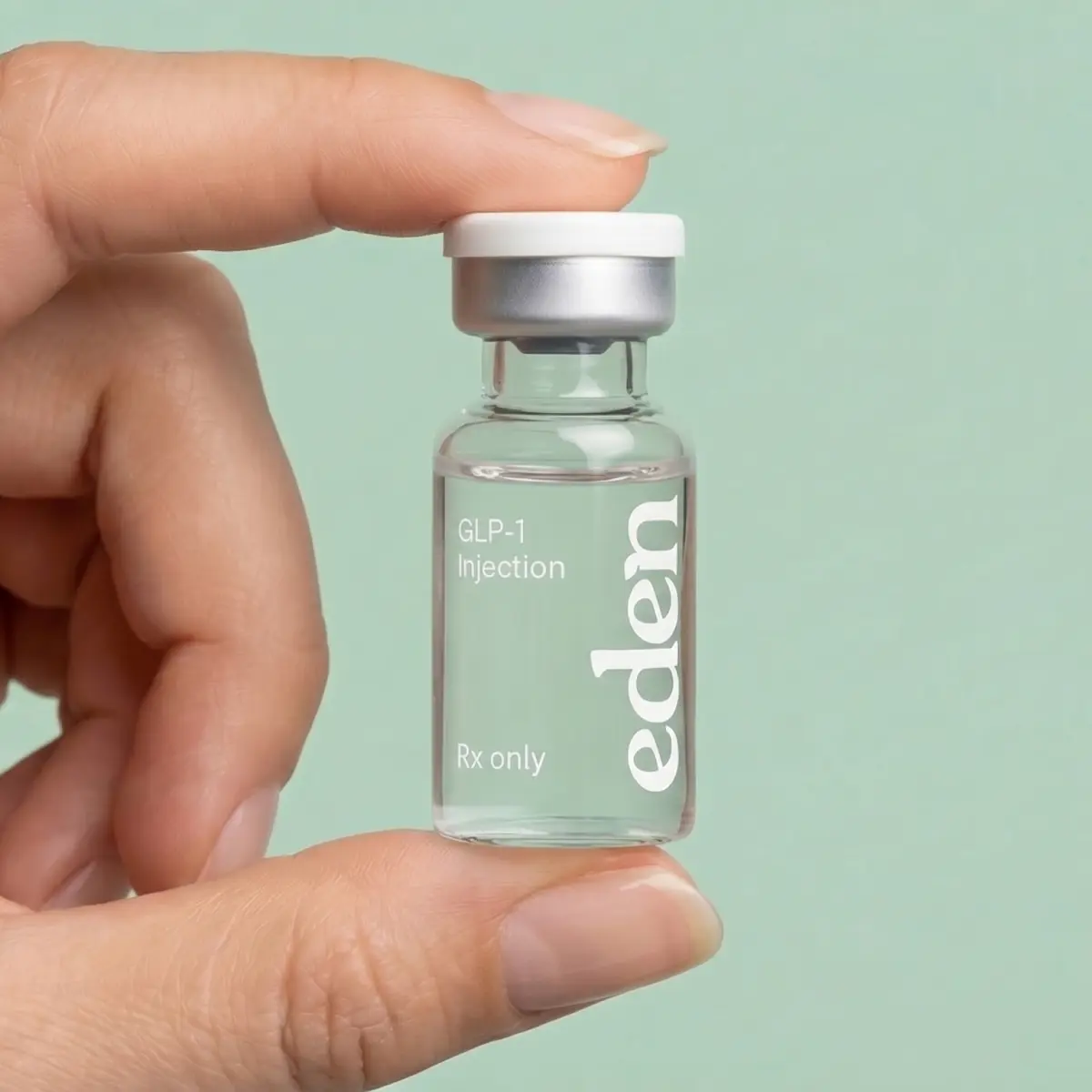
With Eden, you start with a quick online intake. We then connect you with a licensed provider who reviews your health history, cardiovascular risk factors, and goals to determine whether treatment makes sense. If treatment is prescribed, medication may be dispensed by a licensed pharmacy, and you have access to provider messaging and ongoing check-ins that can help support continuity of care.












*Price includes medication only, if prescribed. An active Eden Membership is required ($39 for the first month, auto-renews at $99/month thereafter). Membership does not include or guarantee a prescription. Medication is not available without a membership. Membership fee is not included.
The FDA does not approve compounded medications for safety, quality, or manufacturing. Prescriptions and a medical evaluation are required for certain products. The information provided on this blog is for general informational purposes only. It is not intended as a substitute for professional advice from a qualified healthcare professional and should not be relied upon as personal health advice. The information contained in this blog is not meant to diagnose, treat, cure, or prevent any disease. Readers are advised to consult with a qualified healthcare professional for any medical concerns, including side effects. Use of this blog's information is at your own risk. The blog owner is not responsible for any adverse effects or consequences resulting from the use of any suggestions or information provided in this blog.
Eden is not a medical provider. Eden connects individuals with independent licensed healthcare providers who independently evaluate each patient to determine whether a prescription treatment program is appropriate. All prescriptions are written at the sole discretion of the licensed provider. Medications are filled by state-licensed pharmacies. Please consult a licensed healthcare provider before making any medical decisions.
Frequently asked questions
Which GLP-1 has cardiovascular benefits?

In large trials, liraglutide and semaglutide cardiovascular outcomes were reported as reduced major cardiovascular events, with semaglutide also showing benefit in individuals with obesity without diabetes in the SELECT trial. A provider can help determine which option, if any, fits your situation.
Does GLP-1 remove plaque from arteries?
There is no strong evidence that GLP-1 medications actively remove existing arterial plaque. They may, however, help slow the processes that drive plaque buildup, such as inflammation, high blood pressure, and excess weight.
Do you have to take GLP-1 medication forever for heart benefits?
The 2026 discontinuation research suggests that cardiovascular benefits depend on continuous use and that stopping, even briefly, may increase risk. However, how long to stay on therapy is a decision best made with a licensed healthcare provider who knows your situation best.
Related articles





Chen, T. H., Hu, E. H., Chen, D. Y., Lin, Y., Chou, T. S., Lin, M. S., Yang, N. I., Wang, C. Y., Hung, M. J., & Tsai, M. L. (2025). GLP-1 RAs and Cardiovascular and Kidney Outcomes by Body Mass Index in Type 2 Diabetes. JAMA network open, 8(9), e2530952. https://jamanetwork.com/journals/jamanetworkopen/fullarticle/2838602
Lincoff, A. M., Brown-Frandsen, K., Colhoun, H. M., Deanfield, J., Emerson, S. S., Esbjerg, S., Hardt-Lindberg, S., Hovingh, G. K., Kahn, S. E., Kushner, R. F., Lingvay, I., Oral, T. K., Michelsen, M. M., Plutzky, J., Tornøe, C. W., Ryan, D. H., & SELECT Trial Investigators (2023). Semaglutide and Cardiovascular Outcomes in Obesity without Diabetes. The New England journal of medicine, 389(24), 2221–2232. https://www.nejm.org/doi/full/10.1056/NEJMoa2307563
Marso, S. P., Bain, S. C., Consoli, A., Eliaschewitz, F. G., Jódar, E., Leiter, L. A., Lingvay, I., Rosenstock, J., Seufert, J., Warren, M. L., Woo, V., Hansen, O., Holst, A. G., Pettersson, J., Vilsbøll, T., & SUSTAIN-6 Investigators (2016). Semaglutide and Cardiovascular Outcomes in Patients with Type 2 Diabetes. The New England journal of medicine, 375(19), 1834–1844. https://www.nejm.org/doi/full/10.1056/NEJMoa1607141
Marso, S. P., Daniels, G. H., Brown-Frandsen, K., Kristensen, P., Mann, J. F., Nauck, M. A., Nissen, S. E., Pocock, S., Poulter, N. R., Ravn, L. S., Steinberg, W. M., Stockner, M., Zinman, B., Bergenstal, R. M., Buse, J. B., LEADER Steering Committee, & LEADER Trial Investigators (2016). Liraglutide and Cardiovascular Outcomes in Type 2 Diabetes. The New England journal of medicine, 375(4), 311–322. https://www.nejm.org/doi/full/10.1056/NEJMoa1603827
Mounjaro. (2022). Highlights of prescribing information. https://www.accessdata.fda.gov/drugsatfda_docs/label/2022/215866s000lbl.pdf
Ozempic. (2017). Highlights of prescribing information. https://www.accessdata.fda.gov/drugsatfda_docs/label/2017/209637lbl.pdf
Xie, Y., Choi, T., & Al-Aly, Z. (2026). Glucagon-like peptide 1 receptor agonist discontinuation and risks of major adverse cardiovascular events in adults with type 2 diabetes: target trial emulation. BMJ medicine, 5(1), e002150. https://bmjmedicine.bmj.com/content/5/1/e002150
Victoza. (2010). Highlights of prescribing information. https://www.accessdata.fda.gov/drugsatfda_docs/label/2023/022341s039lbl.pdf
Wegovy. (2017). Highlights of prescribing information. https://www.accessdata.fda.gov/drugsatfda_docs/label/2025/215256s024lbl.pdf
Zepbound. (2022). Highlights of prescribing information. https://www.accessdata.fda.gov/drugsatfda_docs/label/2024/217806s003lbl.pdf
Ziyad Al-Aly, MD, FASN. (2025, April 15). Division of General Medicine & Geriatrics. https://generalmedicinegeriatrics.wustl.edu/people/ziyad-al-aly-md-fasn/
Thank you!
We'll be in touch.
Thank you!