Vitamin D and Hair Health: Can Low Vitamin D Contribute to Shedding?




Low vitamin D may contribute to hair shedding by disrupting follicle cycling. Learn what the research shows, how to test your levels, and when to seek treatment.
- Vitamin D and hair health may be biologically linked; vitamin D receptors are present in hair follicles, and low levels may be associated with changes in the hair growth cycle.
- Research shows an association between low vitamin D and certain types of hair loss; however, deficiency is rarely the only factor.
- Symptoms alone aren’t enough to diagnose a vitamin D deficiency; a serum 25(OH)D blood test may be used to confirm it.
- Correcting a confirmed deficiency may support healthier hair cycling over time, but changes may take many months and are never guaranteed.
- If shedding continues or follows a visible pattern, supplements alone may not address the underlying cause; a licensed provider can help pinpoint other potential causes.
- Eden’s Hair Growth Treatments offer access to provider-guided care for individuals experiencing hair loss.
This article is intended for general educational purposes only and is not a substitute for professional medical advice, diagnosis, or treatment. Always talk with a licensed healthcare provider before starting, changing, or stopping any supplement or treatment.
Finding more hair than usual in the shower drain or wrapped around your brush may be concerning and even unsettling. And many sources cite vitamin D as playing a part.
But the relationship between vitamin D and hair health is actually more nuanced than “take vitamin D and your hair grows back.” So, what’s fact and what’s fiction? What does the research suggest?
This article explores how vitamin D may play a role in the hair growth cycle, what the research actually says about deficiency and shedding, how to test your levels the right way, what supplementation can realistically do, and when it makes sense to consult with a licensed healthcare provider.
How Vitamin D Affects Hair Follicle Cycling
The hair growth cycle goes through three phases:
- Anagen (active growth): This is the longest phase, which typically lasts 2-6 years.
- Catagen (transition): This phase involves a brief wind-down of growth, lasting around two weeks.
- Telogen (resting and shedding): This phase lasts around three months and is where the follicle rests before the hair falls out and the cycle begins again.
At any given time, most of your hair is in the anagen phase; this is why healthy hair usually stays put. So, where exactly does vitamin D enter the picture?
Vitamin D receptors (VDRs), which are the docking sites that let cells respond to vitamin D, are present in hair follicles. Research suggests this signaling may play a role in the anagen growth phase.
When vitamin D levels run low, this signaling may be affected, which may affect normal hair cycling. This may help explain the observed association between low vitamin D levels and hair shedding. However, it’s worth noting that low vitamin D is rarely the sole factor involved.
What Does the Research Say About Vitamin D Deficiency and Hair Loss?
Multiple observational studies report that people with certain hair loss conditions—including telogen effluvium (a type of temporary, diffuse shedding often triggered by stress, illness, or hormonal shifts) and alopecia areata (an autoimmune form of patchy hair loss)—tend to have lower serum vitamin D levels than people without hair loss.
A 2021 review reported that most studies show an inverse relationship between vitamin D levels and non-scarring alopecias, meaning lower levels tended to be associated with hair loss.
Yet, association is not causation. Low vitamin D is common in the general population, and plenty of individuals who are deficient never experience hair loss.
Some small-scale studies suggest that correcting a deficiency may improve hair density over time, but results are limited, and more research is needed to understand whether vitamin D supplementation improves hair-loss outcomes.
Key takeaway: Low vitamin D is associated with increased shedding in some studies, but correcting it may not fully address hair loss if other causes, such as genetics, hormonal changes, or autoimmune conditions, are also playing a part.
Who Is Most at Risk of Vitamin D Deficiency?
You may be at higher risk if you experience or have any of the following factors:
- Limited sun exposure: This refers to spending most of your time indoors, living at higher latitudes, or getting through winter when UVB rays are weaker.
- Darker skin tone: Higher melanin reduces the skin’s ability to synthesize vitamin D from sunlight.
- Over 50 years of age: Vitamin D production in the skin can decline with age.
- Higher body weight: Vitamin D is fat-soluble and can be stored in fat tissue, which may lower circulating levels.
- Gastrointestinal conditions (such as celiac disease, Crohn's disease, or a history of bariatric surgery): These conditions may impair absorption of fat-soluble vitamins (like vitamin D).
- Kidney or liver disease: Both of these organs support vitamin D metabolism.
- Strict plant-based diets with few fortified foods: Dietary vitamin D comes mostly from fatty fish, egg yolks, and fortified foods and beverages.
If multiple risk factors apply to you, it may be worthwhile to discuss testing with your provider rather than assuming deficiency or self-supplementing based on symptoms alone.
Symptoms of Low Vitamin D (And Why Hair Shedding Is Just One Signal)
Hair shedding is rarely the only sign or symptom of a Vitamin D deficiency. Common other symptoms may include:
- Persistent fatigue or low energy
- Muscle weakness, aches, or bone pain
- Frequent illness or slow recovery from infections
- Mood changes, including low mood or increased irritability
- Brain fog or trouble concentrating
- Slow wound healing
If you’re experiencing increased shedding and have risk factors or other symptoms that could be associated with vitamin D deficiency, a licensed healthcare provider can help determine whether testing is appropriate. However, hair loss on its own, particularly if it follows a specific pattern like a receding hairline or thinning at the crown, may have causes unrelated to vitamin D status and should be evaluated accordingly.
How to Test Your Vitamin D Levels
The standard vitamin D test is a serum 25-hydroxyvitamin D test (25(OH)D). It measures the total vitamin D circulating in your blood, capturing both D2 and D3.
If you’ve recently had this test, here’s generally what the numbers mean:
- 20-29 ng/mL: considered insufficient by many clinical guidelines
- 30-60 ng/mL: generally considered the optimal range
The interpretation of 25(OH)D results can vary based on the clinical context and the guidance being used. A licensed healthcare provider can help interpret your result and determine whether supplementation is appropriate. Very high vitamin D intake can cause toxicity, so high-dose supplementation should not be started without appropriate medical guidance.
The good news is this test is widely available and can be ordered by a primary care provider, a dermatologist, or through telehealth.
Ultimately, a blood test can help confirm a deficiency, and a licensed provider can interpret the result in the context of your full health profile.
Can Vitamin D Supplements Help With Hair Loss?
If your shedding is partly driven by a confirmed deficiency, correcting it may support healthier follicle cycling over time. Some studies have reported improvements in hair measures among some deficient individuals after supplementation, but as noted earlier, individual results may vary and evidence remains limited.
At the end of the day, hair growth is slow. Even when vitamin D may be helping, noticeable changes in density or a drop in shedding typically take several months or longer. On top of this, shedding may not stop the moment you start supplementing.
If your hair loss is primarily androgenetic (the genetic, hormonal pattern kind), vitamin D supplementation alone may not address the underlying cause. And if you’re not deficient, taking extra vitamin D isn’t supported by evidence as a hair growth strategy. In fact, it can be risky since vitamin D may be toxic at high doses.
Beyond supplementation, you may also want to consider supporting your vitamin D levels through diet and sunlight. Food sources of vitamin D include fatty fish (salmon, mackerel, sardines), egg yolks, fortified dairy and plant milks, and UV-exposed mushrooms.
Other Vitamins and Nutrients That May Affect Hair Health
If a deficiency is present, vitamin D is usually only one piece of the puzzle. And when researching vitamins for hair loss, a few other notable supplements may pop up, including:
- Iron: Ferritin (stored iron) levels below 30 ng/mL were associated with increased telogen effluvium in one study.
- Zinc: Involved in hair tissue growth and repair, zinc deficiency has been studied in connection with hair loss, while excessive zinc intake can also cause health problems, meaning it’s important to not supplement unnecessarily.
- Biotin (Vitamin B7): Biotin is heavily marketed in hair growth supplements, yet evidence for improving hair growth in individuals without an underlying deficiency is limited, and biotin deficiency is uncommon.
- Vitamin B12: A deficiency, more common with plant-based diets or absorption issues, may also play a role.
Depending on your symptoms and medical history, a licensed provider may recommend laboratory testing to evaluate nutritional factors that could be relevant to hair loss. For more about specific hair growth supplements, see our guide about vitamins and nutrients for hair health.
When Supplements Aren’t Enough (And What to Do Next)
Nutritional corrections address deficiency-driven shedding. But they may not address hair loss caused by androgenetic alopecia (the most common form of hair loss), alopecia areata, or other structural causes of follicle miniaturization.
If you’ve been supplementing for several months with no improvement, or your shedding follows a visible pattern (such as a receding hairline, thinning at the crown, or a widening part), there may be more at play.
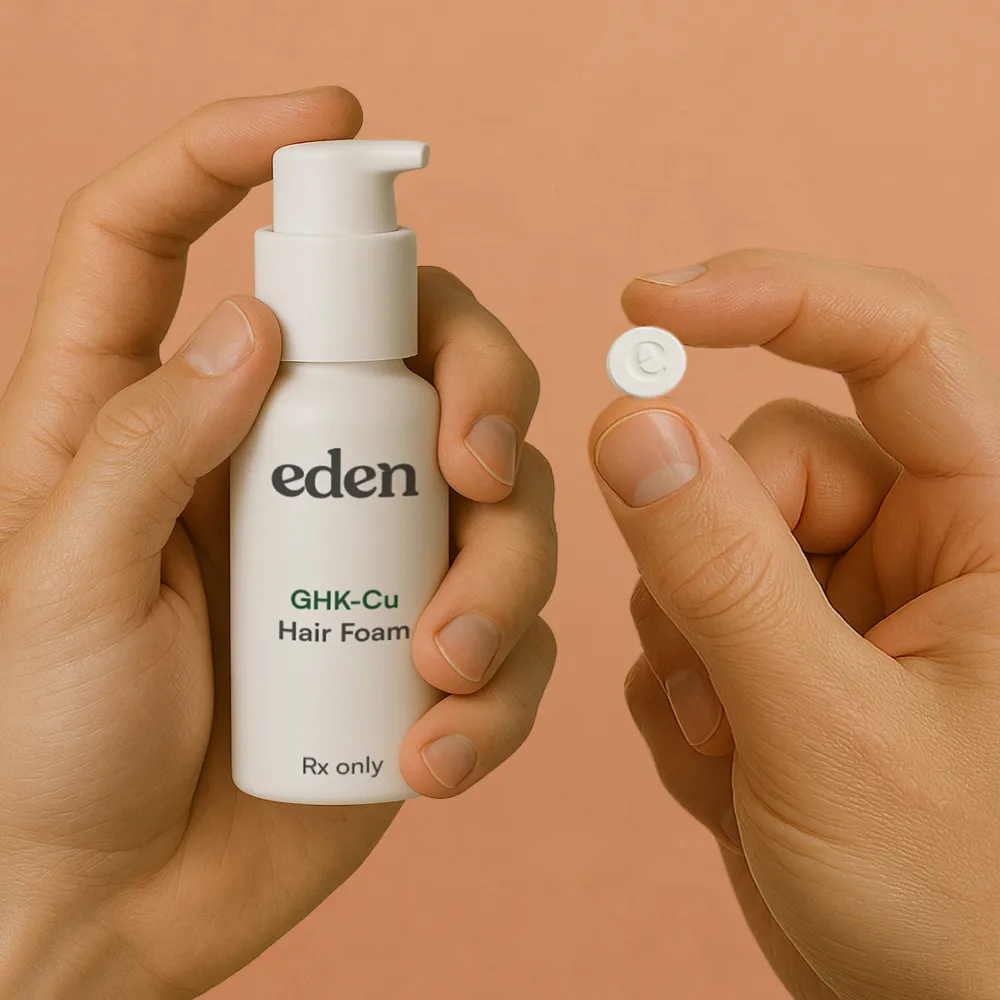
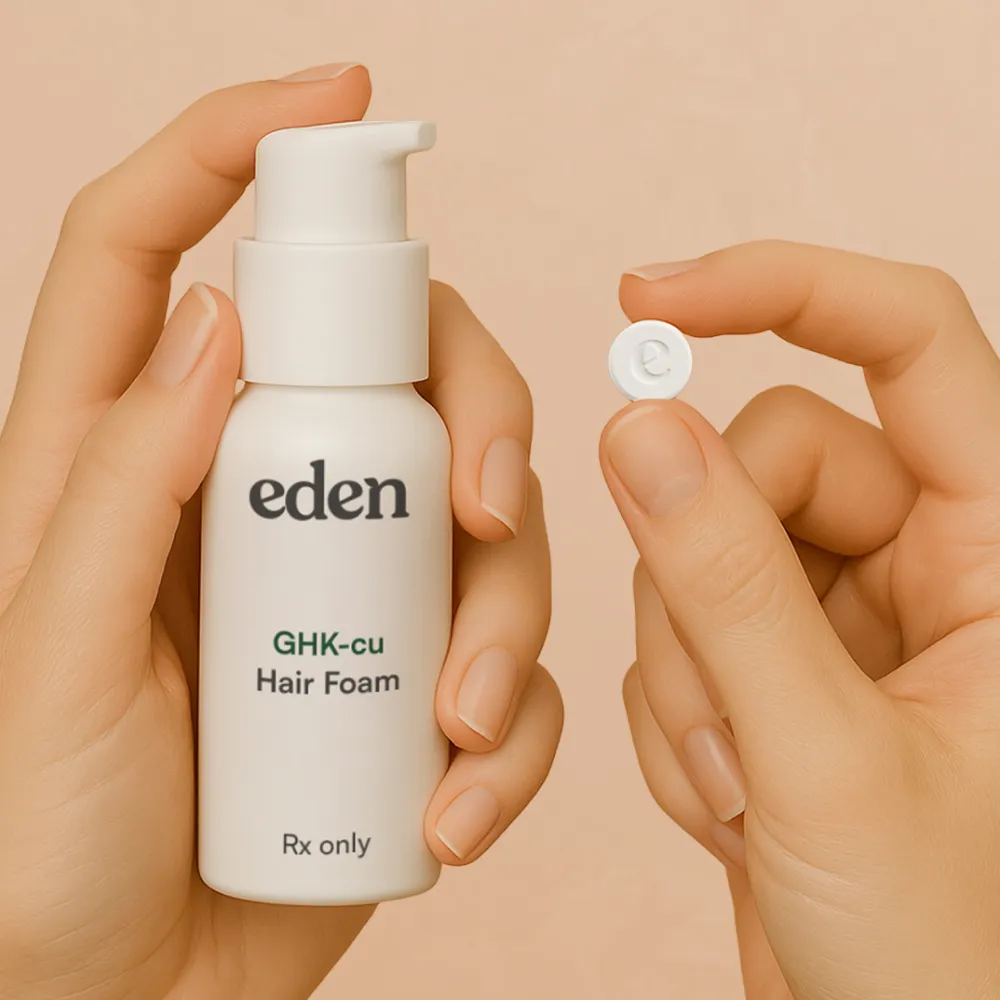
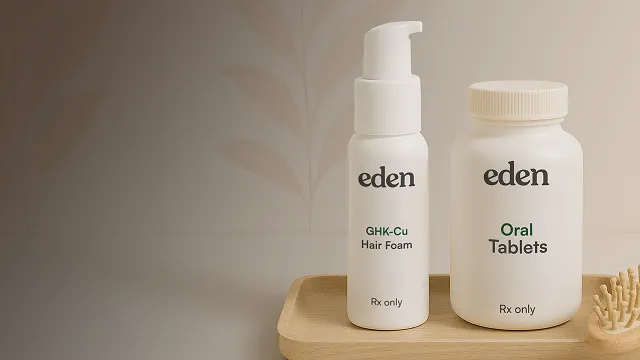
In either case, a licensed provider can help evaluate what’s going on. Provider-guided care for pattern hair loss may include prescription options such as oral minoxidil, oral finasteride (for men), or GHK-Cu foam, depending on your health profile and your provider’s clinical judgment. With Eden, we can connect you with a licensed healthcare provider who can evaluate your health information and determine whether treatment is clinically appropriate. Our process starts with a quick online intake.




The FDA does not approve compounded medications for safety, quality, or manufacturing. Prescriptions and a medical evaluation are required for certain products. The information provided on this blog is for general informational purposes only. It is not intended as a substitute for professional advice from a qualified healthcare professional and should not be relied upon as personal health advice. The information contained in this blog is not meant to diagnose, treat, cure, or prevent any disease. Readers are advised to consult with a qualified healthcare professional for any medical concerns, including side effects. Use of this blog's information is at your own risk. The blog owner is not responsible for any adverse effects or consequences resulting from the use of any suggestions or information provided in this blog.
Eden is not a medical provider. Eden connects individuals with independent licensed healthcare providers who independently evaluate each patient to determine whether a prescription treatment program is appropriate. All prescriptions are written at the sole discretion of the licensed provider. Medications are filled by state-licensed pharmacies. Please consult a licensed healthcare provider before making any medical decisions.
Frequently asked questions
Can low vitamin D cause hair loss?

Low vitamin D is associated with increased shedding in several studies and vitamin D signaling may play a role in hair follicle cycling, but it’s usually not the sole factor associated with hair loss. Confirming a deficiency with a blood test is the only way to know if it’s relevant to you.
How much vitamin D should I take for hair loss?
A licensed healthcare provider can recommend an appropriate dose based on your confirmed blood levels and overall health. Vitamin D at high doses can be toxic, which is why a discussion and evaluation with a licensed provider is so important.
What vitamin deficiency causes the most hair loss?
Several nutritional deficiencies, including iron, vitamin D, zinc, and vitamin B12 deficiencies, have been studied in connection with hair loss, but there is no single deficiency responsible for most cases. Blood testing can help identify which, if any, may apply to you.
Do hair growth supplements actually work?
Supplements are most likely to be relevant when they correct a confirmed deficiency. For pattern hair loss, a licensed healthcare provider can evaluate the underlying cause and discuss treatment options that may be appropriate.
Banihashemi, M., Nahidi, Y., Meibodi, N. T., Jarahi, L., & Dolatkhah, M. (2016). Serum Vitamin D3 Level in Patients with Female Pattern Hair Loss. International journal of trichology, 8(3), 116–120. https://pmc.ncbi.nlm.nih.gov/articles/PMC5007917/
El-Tatawy, R. A., Gheida, S., Soliman, G. A. M., & Ismail, M. (2023). Oral Vitamin D Treatment in Patients with Telogen Effluvium: Clinical and Dermoscopic Evaluation. International journal of trichology, 15(5), 183–190. https://pmc.ncbi.nlm.nih.gov/articles/PMC11335050/
Guan, L., Yang, F., Li, M., Chen, Y., Zhao, Z., Li, H., Luo, D., Li, Q., & Chen, Y. (2025). The role of vitamin D receptor signaling in hair follicle health and alopecia: Current understanding and therapeutic implications. Journal of cell communication and signaling, 20(1), e70060. https://pmc.ncbi.nlm.nih.gov/articles/PMC12747802/
Moeinvaziri, M., Mansoori, P., Holakooee, K., Safaee Naraghi, Z., & Abbasi, A. (2009). Iron status in diffuse telogen hair loss among women. Acta dermatovenerologica Croatica : ADC, 17(4), 279–284. https://pubmed.ncbi.nlm.nih.gov/20021982/
Patel, D. P., Swink, S. M., & Castelo-Soccio, L. (2017). A Review of the Use of Biotin for Hair Loss. Skin appendage disorders, 3(3), 166–169. https://pmc.ncbi.nlm.nih.gov/articles/PMC5582478/
Saini, K., & Mysore, V. (2021). Role of vitamin D in hair loss: A short review. Journal of cosmetic dermatology, 20(11), 3407–3414. https://doi.org/10.1111/jocd.14421
Webb, A. R., Kazantzidis, A., Kift, R. C., Farrar, M. D., Wilkinson, J., & Rhodes, L. E. (2018). Colour Counts: Sunlight and Skin Type as Drivers of Vitamin D Deficiency at UK Latitudes. Nutrients, 10(4), 457. https://pmc.ncbi.nlm.nih.gov/articles/PMC5946242/
Zufishan, S., Haque, Z., Nazar, S., Afaq, E., Aamir, E., & Rafique, S. (2024). Role of zinc in chronic telogen effluvium in serum and hair of patients with alopecia. JPMA. The Journal of the Pakistan Medical Association, 74(1 (Supple-2)), S47–S50. https://pubmed.ncbi.nlm.nih.gov/38385471/
Thank you!
We'll be in touch.
Thank you!