


Women’s Hormone Health: Symptoms, Testing, and Treatment Conversations




Struggling with mood swings, poor sleep, or unexplained weight gain? Learn how women’s hormone health affects your whole body and which care options may help
- Women’s hormone health depends on an interconnected system of chemical messengers, including estrogen, progesterone, testosterone, cortisol, thyroid hormones, FSH, and LH, that fluctuate across every life stage; a change in one hormone may ripple outward, impacting your sleep, mood, weight, and energy.
- Hormone imbalance in women is common and frequently underdiagnosed. Symptoms are often chalked up to stress or aging, when a more thorough evaluation may be warranted.
- Perimenopause can begin years before your final period, and its fluctuating hormones may produce some of the most disruptive symptoms.
- Hormone testing is most useful when your results are interpreted alongside your symptoms and life stage.
- Medical understanding of HRT for women has evolved significantly since 2002, and current guidance from major medical organizations supports it as an effective option for many women with moderate to severe menopause symptoms.
- Telehealth has made provider-guided hormone care and menopause support more accessible than ever.
- Decisions about starting, changing, or stopping any therapy should always be made with a licensed healthcare provider. If you're ready to explore your options, Eden’s online hormone evaluation connects you with a licensed provider from the comfort of your own home.
This article is for general informational purposes only and is not a substitute for professional medical advice, diagnosis, or treatment. Always talk with a licensed healthcare provider before starting, changing, or stopping any medication or therapy. Compounded medications are not FDA-approved and are prepared by a pharmacy for an individual patient pursuant to a prescription from a licensed clinician. They are not reviewed by the FDA for safety, effectiveness, or manufacturing quality.
It can be frustrating when you’re maybe sleeping worse than you used to, you’re more emotionally reactive than usual, your energy is flat, and you notice weight accumulating around your midsection — but your recent bloodwork is normal.
Your hormones influence nearly every system in your body, and even subtle changes may produce wide-ranging symptoms. This often means that a single snapshot via blood testing rarely shows what’s happening beneath the surface. But it doesn’t mean your symptoms aren’t related to hormonal changes or fluctuations.
This article takes a closer look at which hormones matter the most for women’s hormone health, what imbalance may look like at different life stages, how testing works, and what care options (including HRT) are available today.
What Are Female Hormones and What Do They Do?
Hormones are chemical messengers produced by glands throughout the body, including the ovaries, adrenal glands, thyroid, and pituitary among them. They travel through your bloodstream and help regulate a range of functions, such as metabolism, mood, sleep, bone density, skin, and reproductive health — to name a few.
Your hormones work as an interconnected system. This means that a change in one often affects several others as well. And this is part of why a single hormonal change can manifest as a cluster of seemingly unrelated symptoms (potentially confusing you and your doctor).
The main hormones impacting women’s health include:
- Estrogen
- Progesterone
- Testosterone (yes, women produce it too)
- Follicle-stimulating hormone (FSH)
- Luteinizing hormone (LH)
- Cortisol
- And the thyroid hormones.
And your hormonal system also changes significantly across your lifespan, through puberty, your reproductive years, perimenopause, and postmenopause. Those transitions are normal, but when your hormones change faster than your body can adapt, you may notice new and disruptive symptoms.
Key Hormones That Affect Women’s Health
Each hormone plays a distinct role, and knowing what each does may help you make sense of your own experience and symptoms.
Estrogen
Estrogen is actually a group of related hormones, with estradiol being the most active and clinically relevant during the reproductive years.
Produced mainly by the ovaries, estrogen helps regulate the menstrual cycle, supports bone density, influences cholesterol levels, and plays a role in mood, cognition, skin elasticity, and cardiovascular health. It also affects blood sugar regulation and muscle mass, which may be why certain body composition changes occur in midlife.
Estradiol levels decline significantly during perimenopause and menopause, and this is when many women experience various symptoms (which often tend to settle after menopause).
Progesterone
Progesterone rises during the second half of the menstrual cycle, after ovulation. Its primary job is to prepare the uterine lining for a potential pregnancy and to balance estrogen’s effects.
When progesterone is low relative to estrogen (sometimes referred to as “estrogen dominance”), you may experience heavy or irregular periods, disrupted sleep, anxiety, and mood swings.
Progesterone also declines with age and often drops sharply during perimenopause, frequently before estrogen does, potentially impacting sleep and mood.
Testosterone
Testosterone isn’t only a male hormone. Women produce it in smaller amounts through the ovaries and adrenal glands. This hormone contributes to libido, energy, muscle tone, and mood.
Low testosterone in women, however, may show up as fatigue, reduced sex drive, difficulty building or maintaining muscle, and low motivation. And these symptoms can be easy to overlook since testosterone isn’t always included in standard women's hormone panels.
Similar to other hormones, testosterone levels naturally decline with age and may drop more drastically due to surgical menopause.
FSH and LH
Follicle-stimulating hormone (FSH) and luteinizing hormone (LH) are produced by the pituitary gland and work together to regulate ovulation and the menstrual cycle.
As ovarian function declines with age, FSH levels rise, which is why elevated FSH is often used as a marker for perimenopause or menopause.
LH surges just before ovulation and is commonly tracked for fertility. An elevated LH level relative to FSH, however, may point toward PCOS. Meanwhile, a rising FSH is the more typical marker of declining ovarian reserve. These two hormones are frequently tested together to thoroughly assess overall reproductive and hormonal health.
Cortisol and the Stress Connection
Cortisol, produced by the adrenal glands, is the body’s primary stress hormone. And chronically elevated levels may disrupt the entire hormonal system.
High cortisol may suppress progesterone production, interfere with thyroid function, contribute to insulin resistance, and worsen sleep. This can create a feedback loop in which stress worsens hormonal symptoms, and hormonal imbalance increases your sensitivity to stress. This is why sleep, nutrition, and stress management should always be included in a comprehensive conversation about hormone health with your provider.
Thyroid Hormones
While thyroid hormones (T3, T4, and TSH) aren’t sex hormones, they’re deeply intertwined with women’s hormonal health. Thyroid dysfunction, particularly hypothyroidism, is significantly more common in women than in men. It may also produce symptoms nearly identical to estrogen or progesterone imbalance, such as:
- Fatigue
- Weight gain
- Brain fog
- Mood changes
- Hair thinning
- Irregular periods
Since an undiagnosed thyroid condition may mask or complicate other hormonal issues, thyroid function is often best evaluated alongside sex hormones when the above symptoms are present.
Signs and Symptoms of Hormone Imbalance in Women
Unfortunately, hormone imbalance in women and the associated symptoms are commonly dismissed, with many attributing these changes to stress, aging, or even mental health. But these hormone symptoms are real, varied, and frequently treatable.
Below are common symptoms grouped by category, so you can cross-reference them against your own experience.
Sleep and Energy Symptoms
These are some of the most frustrating and common complaints, including:
- Insomnia or difficulty staying asleep
- Waking between 2 and 4 am regularly
- Persistent fatigue despite adequate sleep
- Afternoon energy crashes
Mood and Cognition Symptoms
Mood and cognition changes involved in hormonal issues may include:
- Anxiety or irritability
- Low mood
- Brain fog and difficulty concentrating
- Memory lapses
Weight and Metabolism
Hormonal weight changes are complex, and you may be a candidate for medically guided support, such as Eden’s weight loss options. However, this decision must always be made alongside a licensed healthcare provider.
With that in mind, weight and metabolism shifts may include:
- Unexplained weight gain, especially around the abdomen
- Difficulty losing weight despite diet and exercise
- Changes in how your body responds to insulin
Reproductive and Menstrual Signs
These are sometimes the most obvious, especially if you track your cycle regularly:
- Irregular or skipped periods
- Heavy bleeding
- Worsening PMS
- Painful periods or changes in cycle length
Sexual Health Symptoms
Sexual health signs of hormonal fluctuations may involve:
- Low libido
- Vaginal dryness
- Discomfort during sex
Physical Changes
These frequently occur during perimenopause but may also be due to underlying hormonal imbalances:
- Hot flashes and night sweats
- Joint stiffness
- Hair thinning and dry skin
- Loss of muscle tone
Keep in mind that these symptoms overlap with many other conditions. In other words, their presence doesn’t confirm a hormonal cause. A licensed healthcare provider can ultimately help determine whether hormones are a contributing factor when it comes to your symptoms.
Life Stages and Hormone Changes
Hormone levels usually fluctuate in fairly predictable ways across life stages. Knowing where you fall in this arc may help put your symptoms into context.
Reproductive Years (Roughly Ages 20-40)
During these years, estrogen and progesterone typically cycle in a relatively predictable monthly pattern. Disruptions still happen, though. For instance, Polycystic Ovary Syndrome (PCOS), thyroid dysfunction, post-pregnancy hormonal shifts, and stress-related cycle changes are all common in this phase, and frequently undertreated.
In fact, the World Health Organization (WHO) estimates PCOS affects roughly 10 to 13% of reproductive-age women worldwide, making it one of the most common hormonal disorders in this age group. Yet, many cases go undiagnosed for years.
Perimenopause (Roughly Ages 40-51)
Perimenopause is the transitional phase leading up to menopause, when ovarian hormone production becomes irregular and begins to decline. It may start as early as your late 30s and last anywhere from a few years to more than a decade.
The symptoms during this phase are often the most disruptive and the most frequently dismissed. This is largely because estradiol and progesterone fluctuate unpredictably; they don’t necessarily decline in a straight line.
Most importantly, you don’t need to have stopped menstruating to be in perimenopause. Instead of waiting and seeing what happens, discuss your options with your doctor or another licensed healthcare provider.
Menopause and Postmenopause
Clinically, menopause is defined as 12 consecutive months without a menstrual period. It typically occurs around age 51 in the U.S.
In postmenopause, estrogen and progesterone remain consistently low. Symptoms, such as hot flashes, vaginal dryness, bone density loss, and changes in cardiovascular risk, are associated with this sustained decline. Many women remain symptomatic for years after their final period, which is why this phase is when HRT and other forms of menopause support are most commonly considered.
How Hormone Testing Works
The idea of hormone testing may sound intimidating or confusing. However, in most cases, testing involves a simple blood draw (and sometimes saliva or urine) to measure circulating levels of key hormones.
When it comes to hormone testing, timing is important. Some hormones, such as progesterone, should be measured at a specific point in the menstrual cycle to ensure accurate results. Others, like FSH and estradiol, are often measured on day 2 or 3 of the cycle, or at any point in postmenopausal women whose cycles have stopped.
A comprehensive women’s hormone panel commonly includes:
- Estradiol (E2)
- Progesterone
- FSH
- LH
- Total and free testosterone
- DHEA-S
- A thyroid panel (TSH, free T3, free T4)
- Cortisol (ideally measured in the morning)
Your results should always be interpreted in the context of your symptoms and life stage, not just compared to a reference range. A licensed provider can help interpret your results and recommend the appropriate next steps.
Care Options for Hormone Imbalance in Women
Treatment depends on your symptoms, lab results, health history, and goals. The options below span across a spectrum, and neither is inherently better than the others. The most important thing is finding what works for you.
Lifestyle and Nutritional Support
Certain everyday habits may help support hormonal balance and are worth building regardless of what else you pursue, as they can support your overall health too. These include:
- Consistent sleep (aiming for 7 to 9 hours)
- Stress-reduction practices (that may help modulate cortisol)
- Resistance training (which supports muscle mass, bone, and insulin sensitivity)
- A balanced diet with adequate protein, healthy fats, and fiber
Phytoestrogen-containing foods, such as soy and flaxseed, are also sometimes discussed for menopause symptom management. But the evidence is mixed and individual responses vary.
Hormone Replacement Therapy (HRT) for Women
In 2002, early findings from the Women’s Health Initiative study led to widespread fear around hormone therapy. In the years since, however, the medical community’s understanding has evolved considerably.
Today, The Menopause Society (formerly The North American Menopause Society) supports HRT as an effective and appropriate option for many women with moderate to severe menopause symptoms. This guidance notes the benefits generally outweigh the risks for most healthy, symptomatic women who are under age 60 or within 10 years of menopause onset. As always, this is a personalized, shared decision best made with the help of a licensed healthcare provider.
The main HRT categories include:
- Estrogen therapy (for women without a uterus); typically delivered via patch, gel, or oral form.
- Combined estrogen and progesterone therapy (for women with a uterus, to help protect the uterine lining).
- Local or vaginal estrogen (for vaginal dryness and urinary symptoms, with minimal systemic absorption).
- Bioidentical hormones, which are hormones structurally identical to those your body produces and are available in both FDA-approved and compounded forms.
HRT isn’t appropriate for everyone. Women with certain personal or family health histories should weigh the risks and benefits carefully with a licensed provider before starting.
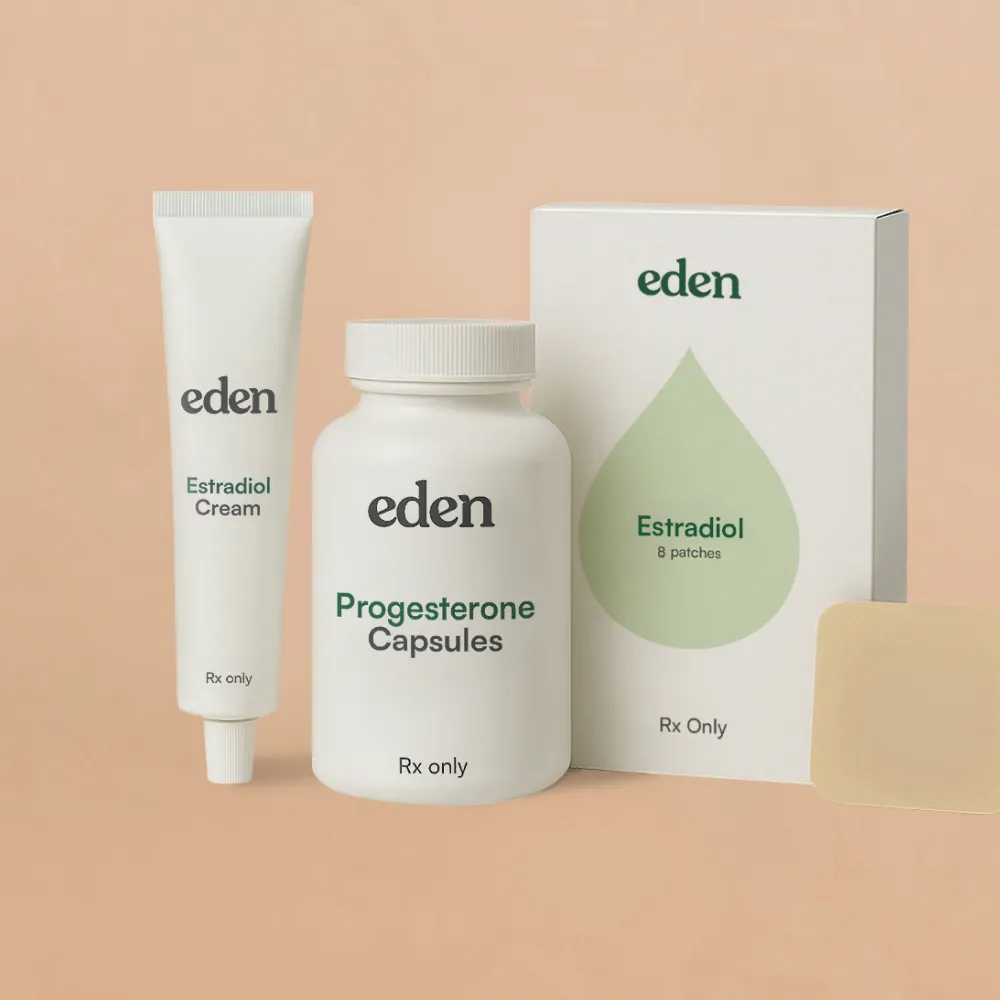
For women who want a modern, provider-guided path, Eden's My Custom Hormone Kit™ is a clinician-guided hormone care program that may include HRT, when clinically appropriate, across three personalized care tiers:
- Balance (estradiol patch)
- Ignite (estradiol patch plus compounded oral progesterone)
- Radiance (estradiol patch plus compounded oral progesterone plus vaginal estradiol)
These plans may help support women experiencing perimenopause and menopause symptoms. The process starts with a brief online intake. From there, Eden connects you with a licensed healthcare provider. Medications (if deemed appropriate by your licensed provider) may include both FDA-approved and U.S.-compounded bioidentical options. Compounded medications are not FDA-approved. Your care may also include 24/7 provider messaging, regular check-ins, and auto-shipments.
Non-Hormonal Prescription Options
For women who aren’t candidates for HRT, or who simply prefer a non-hormonal route, prescription options exist that may help manage specific symptoms. For example, certain antidepressants have shown efficacy for hot flashes, and some low-dose medications may support sleep and mood. A licensed provider can help determine whether any of them may be right for you.
When to Talk to a Provider About Your Hormones
Here are specific, recognizable symptoms that may indicate that it’s a good time to talk to your healthcare provider:
- Periods that have become irregular, significantly heavier, or have stopped before age 45
- Sleep disruption that has persisted for more than a few weeks without a clear cause
- Mood changes (such as anxiety, low mood, or irritability) that feel disproportionate or new
- Unexplained weight gain, especially around the abdomen, that isn’t responding to diet and exercise
- Significant fatigue that isn’t explained by lifestyle factors
- Hot flashes or night sweats that interfere with daily life
- Low libido or sexual discomfort that affects your quality of life
- A persistent sense of “not feeling like yourself” that has lasted weeks or months
These symptoms deserve evaluation, and accessing help has become far easier than it used to be. Telehealth now makes it possible to connect with a licensed provider for hormone care without waiting weeks for an in-person appointment. And this is where Eden can help connect you with a licensed provider, guiding you toward the help you need. Get started with a quick online intake.





The FDA does not approve compounded medications for safety, quality, or manufacturing. Prescriptions and a medical evaluation are required for certain products. The information provided on this blog is for general informational purposes only. It is not intended as a substitute for professional advice from a qualified healthcare professional and should not be relied upon as personal health advice. The information contained in this blog is not meant to diagnose, treat, cure, or prevent any disease. Readers are advised to consult with a qualified healthcare professional for any medical concerns, including side effects. Use of this blog's information is at your own risk. The blog owner is not responsible for any adverse effects or consequences resulting from the use of any suggestions or information provided in this blog.
Eden is not a medical provider. Eden connects individuals with independent licensed healthcare providers who independently evaluate each patient to determine whether a prescription treatment program is appropriate. All prescriptions are written at the sole discretion of the licensed provider. Medications are filled by state-licensed pharmacies. Please consult a licensed healthcare provider before making any medical decisions.
Frequently asked questions
What are the most common signs of a hormone imbalance in women?

Some of the most commonly reported hormone symptoms include disrupted sleep, mood changes, brain fog, unexplained weight gain (particularly around the midsection), irregular periods, low libido, and persistent fatigue. Because these overlap with many other conditions, their presence doesn’t confirm a hormonal cause on its own. A licensed healthcare provider can help determine whether hormones may be contributing.
Can I have a hormone imbalance if my bloodwork came back “normal”?
It’s possible. A result that falls within a standard reference range may still be inadequate for your particular life stage or symptoms; for instance, a level that’s typical for a 25-year-old may not be for a 48-year-old. This is why results are best interpreted alongside your symptoms and history rather than against a reference range alone, and why provider guidance is so important.
Is HRT for women safe?
Current guidance from major medical organizations supports it as an effective option for many women with moderate to severe menopause symptoms, with benefits that generally outweigh the risks for most healthy, symptomatic women under 60 or within 10 years of menopause onset. With that said, HRT isn’t right for everyone, and the risks and benefits should always be weighed with the help of a licensed provider.
When should I consider hormone testing?
Testing may be worth discussing if you’re experiencing persistent symptoms, such as sleep disruption, mood changes, irregular periods, or unexplained fatigue and weight changes, especially if they’ve lasted several weeks or longer. A provider can recommend which hormones to test and the best timing.
ACOG. (2026). My Periods Have Changed. Is Menopause Around the Corner? https://www.acog.org/womens-health/experts-and-stories/the-latest/my-periods-have-changed-is-menopause-around-the-corner
Centre for Reviews and Dissemination (UK). (2014). The efficacy and tolerability of SSRI/SNRIs in the treatment of vasomotor symptoms in menopausal women: a systematic review. Database of Abstracts of Reviews of Effects (DARE): Quality-assessed Reviews - NCBI Bookshelf. https://www.ncbi.nlm.nih.gov/books/NBK247306/
Lobo R. A. (2013). Where are we 10 years after the Women's Health Initiative?. The Journal of clinical endocrinology and metabolism, 98(5), 1771–1780. https://pubmed.ncbi.nlm.nih.gov/23493433/
Patil, N., Rehman, A., Anastasopoulou, C., & Jialal, I. (2024, February 18). Hypothyroidism. StatPearls - NCBI Bookshelf. https://www.ncbi.nlm.nih.gov/books/NBK519536/
“The 2022 Hormone Therapy Position Statement of The North American Menopause Society” Advisory Panel. (2022). The 2022 hormone therapy position statement of The North American Menopause Society. Menopause (New York, N.Y.), 29(7), 767–794. https://pubmed.ncbi.nlm.nih.gov/35797481/
WHO. (2026). Polycystic ovary syndrome. https://www.who.int/news-room/fact-sheets/detail/polycystic-ovary-syndrome
Thank you!
We'll be in touch.
Thank you!