

GLP‑1 Therapy and Muscle Loss: What to Know and How to Protect Lean Mass


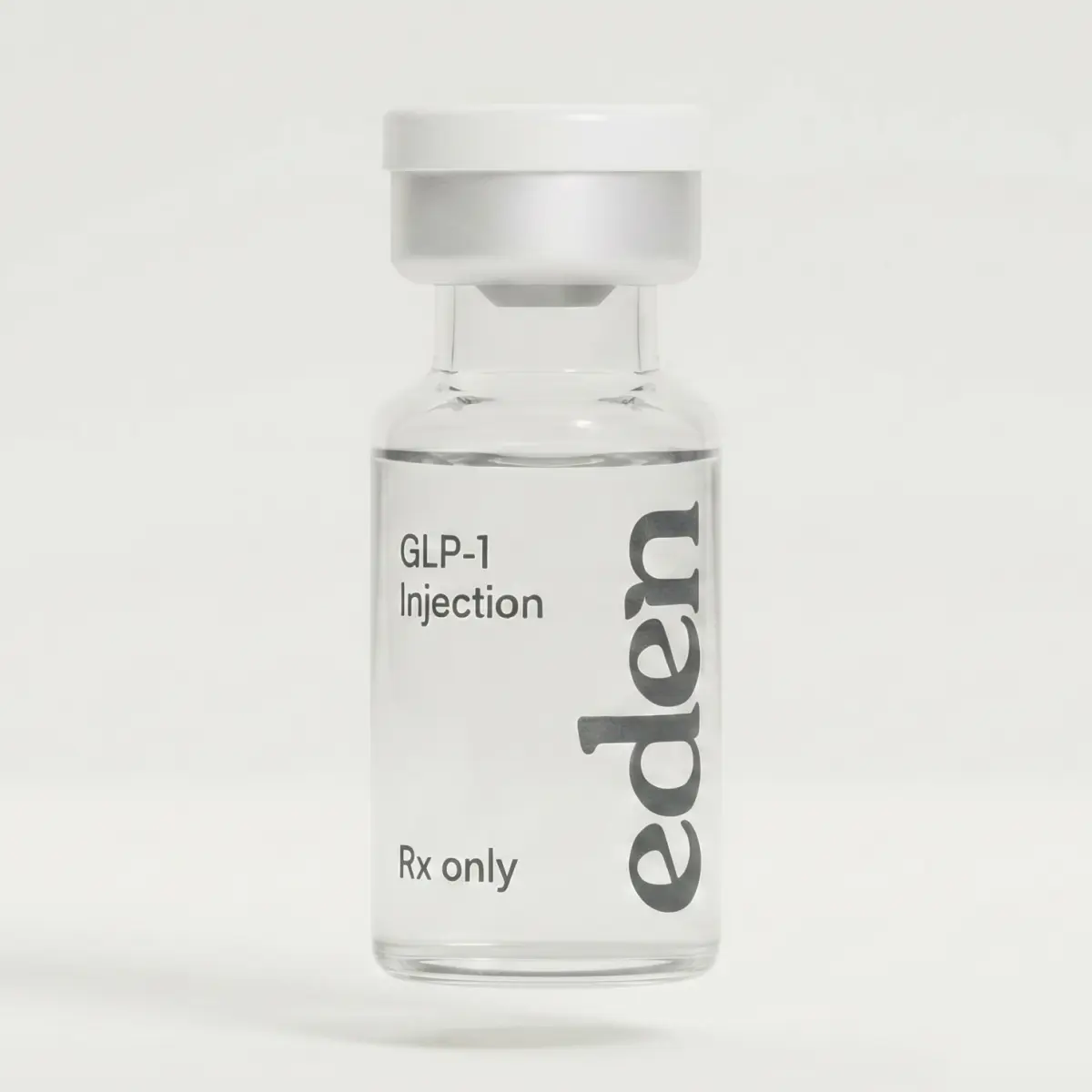

GLP-1 therapy may lead to some muscle loss alongside fat. What the research shows and how to protect lean mass on semaglutide or tirzepatide. Learn more.
- If you’re wondering about GLP-1 muscle loss, it’s worth noting that some lean mass loss is common during any significant caloric deficit, including GLP-1-assisted weight loss. But it isn’t unique to these medications.
- Recent research suggests GLP-1 medicines may not cause disproportionate muscle loss compared to other weight loss methods, though some muscle loss still occurs.
- Muscle loss is important beyond appearance; it can impact resting metabolism, strength, and how well weight loss holds over time.
- Resistance training and adequate protein intake are the two most evidence-supported strategies that may help you protect muscle during weight loss.
- Provider-guided dose management and ongoing monitoring may help support favorable GLP-1 body composition outcomes and provide clinical oversight throughout treatment.
This article is intended for educational purposes only and is not a substitute for professional medical advice, diagnosis, or treatment. Always talk with a licensed healthcare provider before starting, changing, or stopping any medication or therapy.
Some GLP-1 medications prescribed through telehealth programs may be compounded medications. Compounded medications are not FDA-approved and are prescribed only when a licensed healthcare provider determines they are clinically appropriate for an individual patient. Compounded drugs do not undergo FDA review for safety, effectiveness, or manufacturing quality.
Headlines are meant to alarm and provoke. But when they start mentioning a medication that you’re taking, it can be a cause for concern.
Recently, headlines have been circulating about GLP-1 medications “wasting” muscle. Concerns about semaglutide muscle loss and changes in body composition can be unsettling, whether you’ve already started treatment or are still weighing your options. The reality, as is often the case, is more nuanced than these headlines suggest.
Below, we explore what the current research actually shows about GLP-1 muscle loss, why protecting lean tissue matters for more than just how you look, and the practical, evidence-supported steps that may help you hold onto muscle while you lose fat.
Does GLP-1 Therapy Cause Muscle Loss?
At the end of the day, any significant caloric deficit may lead to some loss of lean mass. When you lose weight, through dieting, surgery, or medication, your body pulls from both fat and lean tissue for energy.
However, research published in 2026 suggests that GLP-1 medications don’t result in a disproportionate loss of muscle mass or function. In other words, the ratio of fat loss to lean mass loss on GLP-1 appears comparable to other weight loss interventions, not necessarily worse.
On top of this, early clinical trials further suggest that patients on GLP-1 agonists have achieved weight loss of 15-20%, compared to the 5-10% typically seen with previous medications. As such, it’s easy to assume you’ll lose more lean mass overall. But while the absolute number may be higher, the ratio may frequently be similar to other weight loss strategies.
What the Research Actually Shows
The same 2026 study mentioned above looked at this concern head-on, across four animal studies and an early clinical trial in people. In obese mice, the study reported reductions in body fat alongside a smaller reduction in lean body mass.
And while the total amount of muscle and strength went down a bit, muscle and strength relative to overall body size actually went up. In other words, these subjects ended up leaner and stronger for their size. In individuals with obesity, the study reported improvements in body composition measures without observed declines in strength.
In other words, GLP-1 medications don’t appear to cause more muscle loss than you’d expect from losing the same amount of weight through other means—but this doesn’t mean muscle loss isn’t happening.
Why Rapid Weight Loss Increases the Risk
When the body loses weight quickly, it has less time to adapt and preferentially protect muscle. This applies to crash diets and rapid weight loss of any kind—it isn’t a GLP-1-specific phenomenon.
However, since GLP-1 medications are so effective at reducing appetite and food intake, the rate of weight loss may be significant. In turn, this may make intentional lean mass preservation strategies even more important.
Why Losing Muscle Mass Matters
While muscle is often thought of as more of a cosmetic factor, lean mass actually plays an important role in metabolic health. This means maintaining muscle is more important than many people initially think. Here’s why:
- Muscle is metabolically active. It burns more calories at rest than fat does. This means that losing it may lower the number of calories you burn at rest.
- Muscle supports function. Strength, mobility, and everyday capability all rely on lean tissue. And this becomes increasingly important with age, when sarcopenia (age-related muscle loss) becomes a recognized clinical concern.
- Muscle may support body composition goals. Preserving lean mass during weight loss is associated with favorable body composition changes and may support long-term weight-management efforts.
The Connection Between Muscle and Metabolism
Your resting metabolic rate (RMR) is the number of calories your body burns at rest, and skeletal muscle is one of its primary drivers. When lean mass decreases, RMR tends to decline as well, which can make it harder to maintain weight loss over time (and is often referred to as metabolic adaptation).
While this isn’t a reason to avoid GLP-1 therapy, it is a reason to be proactive and protect your muscle mass during treatment.
Long-Term Implications for Weight Maintenance
One of the most common concerns with any weight-loss approach is regaining weight after stopping. Interestingly, preserving lean mass during active weight loss may help support a higher resting metabolic rate, which could make maintaining your results more manageable over time.
This is also one reason some individuals choose a supervised program that pairs medication with lifestyle guidance and monitoring.
How to Protect Lean Mass on GLP-1 Therapy
The good news is that lean mass loss isn’t inevitable, and several well-studied strategies may help you preserve it throughout your weight loss journey. Here’s what may help.
Prioritize Resistance Training
Resistance training, including weights, resistance bands, or bodyweight exercises, is the most research-backed way to protect muscle during weight loss. Resistance exercise signals to your body to maintain and build muscle, even when calories are reduced.
So, how much should you do? No matter whether you’re a beginner or advanced, aim for around 2-3 sessions per week, targeting all major muscle groups.
At the same time, GLP-1 medications may lower energy levels for some individuals, especially early on. This may mean starting with a more manageable volume and building gradually. A healthcare provider or qualified fitness professional can help determine what the best starting point for you is and how to progress from there.
Meet Your Protein Targets
Protein is the primary dietary building block for muscle. Adequate intake helps your body spare lean mass during a deficit.
Ideally, for physically active individuals in a caloric deficit, you want to aim for approximately 1.2-1.6 grams of protein per kilogram of body weight per day. But keep in mind that this is a general range, and individual needs may vary with age, activity, and health status.
Since GLP-1 medications significantly reduce appetite, it’s easy to under-eat protein without noticing. Prioritizing protein-rich foods at each meal, including lean meats, eggs, Greek yogurt, cottage cheese, and legumes, may help you achieve the recommended intake. You may also want to consider timing protein around workouts.
However, if you’re finding hitting your target through food alone is difficult, discuss your options with your provider; they can determine whether supplementation makes sense for you.
Avoid Overly Aggressive Caloric Restriction
With GLP-1-induced appetite changes, you may find yourself eating too little. But falling below your caloric threshold (often cited as below 1,200 calories/day for women and 1,500 for men, though individual thresholds vary) needed to support basic function and lean mass preservation may work against you and accelerate muscle loss.
This is also why provider-guided dose titration is important. A licensed clinician can help ensure your medication dosage and type support healthy, sustainable weight loss without leading to extreme restriction.
Work With a Provider to Monitor Body Composition
A bathroom scale can’t tell you whether you’re losing fat or muscle. To get the full picture, it’s worthwhile to talk with your provider about body composition monitoring; options may include DEXA scans, bioelectrical impedance analysis (BIA), or, at a minimum, tracking measurements and functional strength over time.
Just as importantly, a licensed healthcare provider can evaluate your response to treatment and determine whether adjustments to your care plan are appropriate.
The Role of Provider-Guided GLP-1 Care in Body Composition
GLP-1 therapy may be more effective for some individuals—and may better support lean mass preservation—when it's part of a supervised program suited to their needs. A provider can help monitor treatment progress and determine whether dose adjustments are appropriate, assess your individual risk factors (age, baseline muscle, activity level, diet), and make ongoing adjustments if your body composition starts shifting in an unfavorable direction.
And this is where Eden’s model may help. It all started with a quick online intake. From there, Eden connects you with a licensed healthcare provider who reviews your health history, goals, and lifestyle to determine which treatment—if any—is appropriate.
From there, your provider may create a plan appropriate for you, where your medication ships directly to your door through a licensed pharmacy. You also get 24/7 provider messaging and regular check-ins, so adjustments can happen as your needs change. Where clinically suitable, programs may also incorporate adjunct medications such as metformin alongside GLP-1 therapy. Either way, your provider works with you to evaluate your health history, goals, and treatment response and help determine appropriate next steps.












*Price includes doctor consultations, program membership and medication, if prescribed. All prices include GST. Medicines are dispensed by licensed pharmacies only against a valid prescription from a registered medical practitioner. A prescription is not guaranteed.
Prescriptions and a medical evaluation are required for certain products. The information provided on this blog is for general informational purposes only. It is not intended as a substitute for professional advice from a qualified healthcare professional and should not be relied upon as personal health advice. The information contained in this blog is not meant to diagnose, treat, cure, or prevent any disease. Readers are advised to consult with a qualified healthcare professional for any medical concerns, including side effects. Use of this blog's information is at your own risk. The blog owner is not responsible for any adverse effects or consequences resulting from the use of any suggestions or information provided in this blog.
Eden is not a medical provider. Eden connects individuals with independent licensed healthcare providers who independently evaluate each patient to determine whether a prescription treatment program is appropriate. All prescriptions are written at the sole discretion of the licensed provider. Medications are filled by state-licensed pharmacies. Please consult a licensed healthcare provider before making any medical decisions.
Frequently asked questions
Can I rebuild muscle after losing some on a GLP-1 medication?

In many cases, yes, muscle responds to training and adequate protein at essentially any stage. Pairing resistance exercise with sufficient protein may help you regain and strengthen lean tissue, but a licensed provider is always your best resource for guidance specific to your situation.
Does cardio count, or do I need to lift weights?
Cardio supports overall health, but resistance training is the more direct stimulus for preserving and building muscle during weight loss. Most evidence points toward strength-based work as the priority if protecting lean mass is your goal.
How do I know if I’m losing muscle instead of fat?
A standard scale can’t distinguish the two. But tools, such as DEXA scans or bioelectrical impedance, along with tracking strength and measurements over time, give a more complete picture.
Is muscle loss a reason to avoid GLP-1 therapy altogether?
Not necessarily. Current research suggests muscle loss on these medications may be proportional to overall weight loss, and it’s often manageable with training, protein, and provider oversight. However, whether GLP-1 therapy is right for you is a decision that should be made with the help of a licensed healthcare provider.
Related articles






Langer, H. T., Gilmore, N. K., Hayden, C. M. T., Roux, J., Bariohay, B., Rouquet, T., Awada, M., Marcotorchino, J., Bournot, L., Nunn, E., Titchenell, P. M., Liskiewicz, D., Müller, T. D., Anyiam, O., Atherton, P. J., Idris, I., Hentschel, A., Roos, A., Haritonow, N., Norman, K., … Baar, K. (2026). Weight loss with GLP-1 medicines does not result in a disproportionate loss of muscle mass or function in obese mice and humans. Cell reports. Medicine, 7(3), 102665. https://pubmed.ncbi.nlm.nih.gov/41850248/
UC DAVIS HEALTH. (2025, December 5). UC Davis Health examines systemic impact of GLP-1–based therapies. News. https://health.ucdavis.edu/news/headlines/uc-davis-health-examines-systemic-impact-of-glp-1based-therapies/2025/12
Thank you!
We'll be in touch.
Thank you!