

Insulin Resistance and Weight Loss: Why Diet and Exercise Alone May Not Be Enough




Insulin resistance may be why diet and exercise aren’t working. Learn what it is, the symptoms, and when medical support may help. Consult a provider today.
- Insulin resistance is a condition in which your cells stop responding normally to insulin, leading to elevated blood sugar and increased fat storage.
- It’s closely linked to prediabetes, which affected an estimated 97.6 million U.S. adults as of 2021, and many more may have insulin resistance without knowing it.
- Common insulin resistance symptoms include persistent belly fat, energy crashes after meals, carbohydrate cravings, and trouble losing weight despite consistent effort.
- Standard calorie-restriction diets may fall short because they may not fully address hormonal and metabolic factors associated with fat storage and energy regulation.
- Medically supervised approaches, including GLP-1 medications and certain oral metabolic therapies, may help address the underlying dysfunction.
- Always consult a licensed healthcare provider before starting any new medication or treatment program.
This article is intended for educational purposes only and is not a substitute for professional medical advice, diagnosis, or treatment. Always talk with a licensed healthcare provider before starting, changing, or stopping any medication or therapy.
You’ve cut calories. You’ve added workouts. You’ve even sworn off the foods you love. But still, you’re stuck wondering: Why can’t I lose weight?
The answer may have less to do with willpower and more to do with how your body handles a hormone called insulin.
Insulin resistance is a physiological condition. For many individuals, it’s why standard weight-loss strategies don’t deliver the expected results. And because it can be present for years without an obvious diagnosis, plenty of people struggle with insulin resistance and weight loss long before anyone names what’s actually going on.
In this article, we cover what insulin resistance is, why it creates such a stubborn barrier to weight loss, and why diet and exercise alone may not be enough to overcome it.
(Curious where you stand before reading on? You can check your BMI as a quick starting point. But to be clear, it is only one piece of a much bigger picture.)
What Is Insulin Resistance?
Insulin is a hormone produced by your pancreas. In many ways, it acts as a “key.” After you eat, your blood sugar (glucose) rises, and insulin unlocks the cells in your muscles, liver, and fat tissue so they can absorb glucose and use it for energy.
With insulin resistance, the locks get stiff. The key still works, but your cells don’t respond to it the way they should. Your pancreas then compensates by producing more and more insulin to force the door open.
According to the National Institute of Diabetes and Digestive and Kidney Diseases (NIDDK), this state of chronically elevated insulin is called hyperinsulinemia. As time goes on, blood glucose may stay elevated, and metabolic changes associated with insulin resistance may contribute to increased fat storage and make weight management more difficult.
How Common Is Insulin Resistance?
Insulin resistance is closely tied to prediabetes. And the NIDDK estimates that approximately 97.6 million U.S. adults had prediabetes as of 2021. Insulin resistance itself is likely even more widespread since it can develop years before prediabetes or type 2 diabetes is ever diagnosed.
On top of the above, insulin resistance can affect people across a range of body types, though excess body fat—particularly visceral fat around the abdomen—is one of the strongest known risk factors. Yet, only a licensed provider can assess your individual situation and make a proper diagnosis.
Insulin Resistance Symptoms to Know
If you have insulin resistance, you may notice the following symptoms:
- Persistent belly fat: Elevated insulin promotes fat storage, especially around the abdomen, even when you’re watching what you eat.
- Energy crashes after meals: When cells can’t absorb glucose efficiently, blood sugar can spike and then drop sharply, leaving you tired or foggy.
- Intense carbohydrate or sugar cravings: When cells aren’t getting enough glucose, the brain may signal hunger for quick-energy foods.
- Difficulty losing weight despite calorie restriction: A common and frustrating sign, which we’ll unpack in detail below.
- Darkened skin patches (acanthosis nigricans): Velvety dark areas sometimes appearing on the neck, armpits, or groin.
- Elevated fasting blood sugar or triglycerides: Often discovered through routine bloodwork, sometimes with no other symptoms at all.
If you recognize several of these signs, speak with a licensed healthcare provider. A fasting glucose test, HbA1c, or fasting insulin level can help assess your metabolic health, helping you and your provider get to the root of the problem.
Why Insulin Resistance Makes Weight Loss So Difficult
Insulin resistance doesn’t just coexist with weight gain; it can actively work against your weight-loss efforts. Below, we take a closer look at what this means and why it happens.
Elevated Insulin Promotes Fat Storage
Insulin is a fat-storage hormone. When insulin levels are chronically elevated—as with insulin resistance—your body is in a near-constant “store energy” mode. Even when you eat less, high circulating insulin may signal your fat cells to hold onto stored fat rather than release it for fuel.
This is part of why calorie restriction alone may not produce the results you expect; the hormonal environment is working against fat mobilization, no matter how disciplined you are.
Calorie Restriction May Worsen the Cycle
Severe or prolonged calorie restriction may trigger metabolic adaptation, in which your body lowers its resting metabolic rate (the calories you burn at rest) to compensate for reduced intake. However, for individuals with insulin resistance, this adaptation may be more pronounced.
At the same time, restriction-driven hunger and carbohydrate cravings (fueled by poor cellular glucose uptake) may lead to overeating, often of refined carbs, which also spikes insulin. This is the weight-loss plateau cycle that many people know all too well: restrict, crave, overeat, repeat.
Exercise Helps (But Has Limits)
Physical activity improves insulin sensitivity and is an important piece in any metabolic health strategy.
In fact, research suggests resistance training and high-intensity interval training (HIIT) tend to improve insulin sensitivity more effectively than steady-state cardio. But for people with significant insulin resistance, exercise alone may not be enough to overcome the hormonal imbalance driving fat storage and hunger.
Who Is Most at Risk for Insulin Resistance?
According to the Centers for Disease Control and Prevention (CDC) and NIDDK, you may be at higher risk for insulin resistance if you have one or more of the following:
- Excess body weight, especially around the abdomen
- A largely inactive lifestyle
- A family history of type 2 diabetes or prediabetes
- Age 35 or older (though it can affect younger adults and teens, too)
- Certain ethnic backgrounds, including African American, Hispanic/Latino, Asian American, American Indian, and Pacific Islander populations, which carry an elevated risk
- A history of gestational diabetes, PCOS, or sleep apnea
- Use of certain medications, such as glucocorticoids
Keep in mind that risk factors are not a diagnosis. Having several of the above doesn’t mean you have or will develop insulin resistance; an evaluation by a licensed healthcare provider is the appropriate next step.
Why Standard Diets Often Fall Short for Insulin Resistance
Most conventional diet programs, such as calorie counting, low-fat plans, and meal-replacement kits, are built on a simple assumption that the body responds predictably to an energy deficit. If you have insulin resistance, this assumption doesn’t fully hold.
Elevated insulin and disrupted glucose signaling mean the body often doesn’t behave the way the calorie math predicts. Sometimes described as metabolic resistance to weight loss, it’s a recognized clinical phenomenon. And this is why many individuals with insulin resistance lose a little weight at first on a new diet, then hit a wall or regain it quickly: the diet addressed calories but never the underlying metabolic dysfunction.
None of this means lifestyle changes aren’t important; they remain essential. But when insulin resistance is part of your overall profile, they may not be sufficient alone.
When Medically Supervised Support May Be Appropriate
With insulin resistance, a medically supervised approach may address the hormonal and metabolic dysfunction that lifestyle changes alone may not.
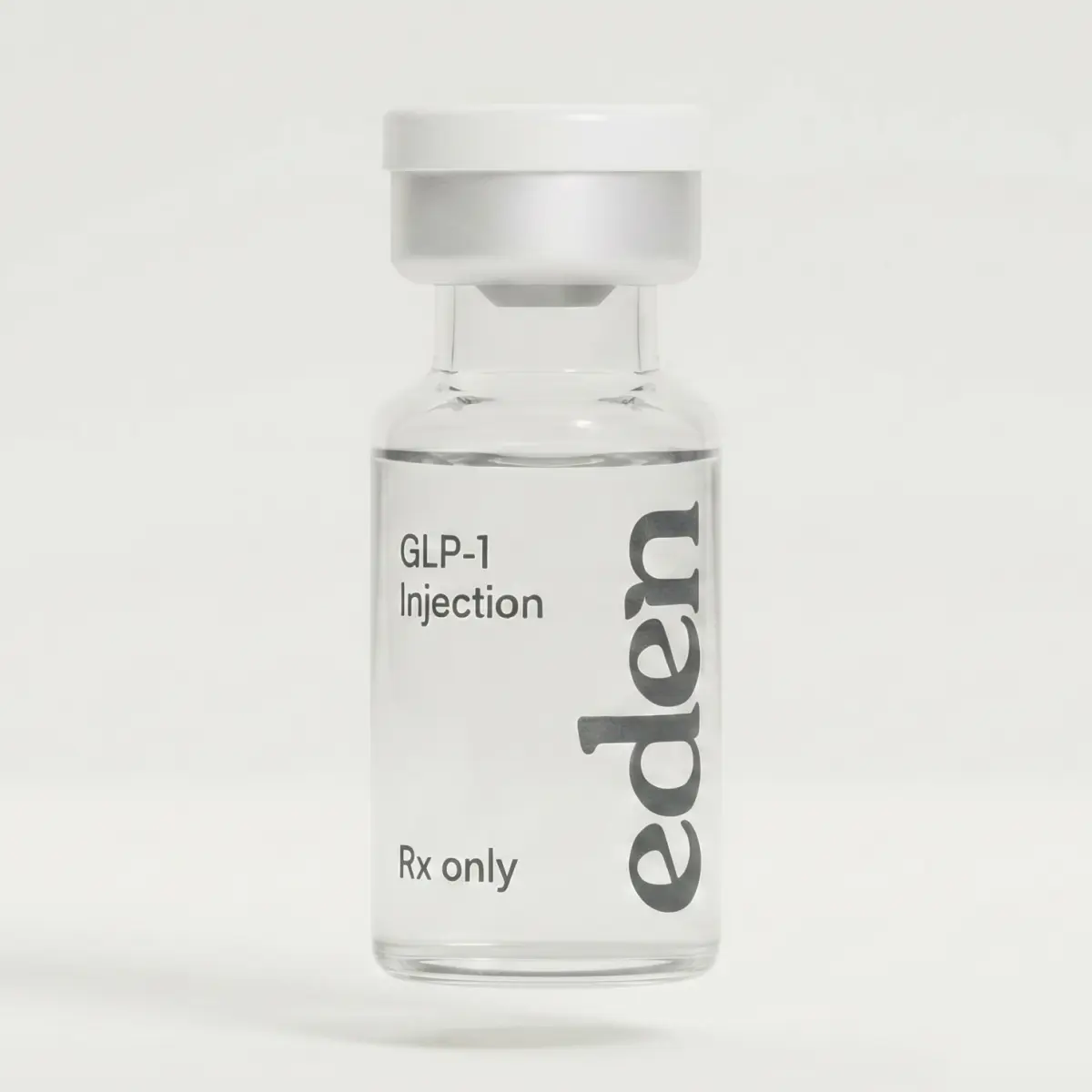
An option your licensed provider may consider is a GLP-1 receptor agonist, such as semaglutide or tirzepatide. These medications mimic a natural gut hormone called GLP-1 that prompts the pancreas to release insulin in response to food, slows how quickly the stomach empties, and helps reduce appetite. With insulin resistance, they may help support more normal glucose and insulin signaling. However, these are prescription medications; they require a provider evaluation, and they aren’t appropriate for everyone. This is why Eden’s medically supervised GLP-1 programs start with a quick online intake. Eden then connects you with a licensed provider who evaluates your health history and whether treatment options may be appropriate.
Your provider may also consider oral metabolic medications—such as metformin, which may improve cellular insulin sensitivity—or other adjunct options depending on your health profile. If you prefer a non-injectable route, custom oral weight loss options may offer another pathway to explore with provider guidance.
Overall, if you’ve been struggling to lose weight despite consistent effort, insulin resistance may be a contributing factor. However, only a licensed healthcare provider can conduct a thorough evaluation and make a diagnosis. Ultimately, discussing your health concerns with an expert may help get down to the root cause and avoid another diet cycle all over again.












*Price includes doctor consultations, program membership and medication, if prescribed. All prices include GST. Medicines are dispensed by licensed pharmacies only against a valid prescription from a registered medical practitioner. A prescription is not guaranteed.
Prescriptions and a medical evaluation are required for certain products. The information provided on this blog is for general informational purposes only. It is not intended as a substitute for professional advice from a qualified healthcare professional and should not be relied upon as personal health advice. The information contained in this blog is not meant to diagnose, treat, cure, or prevent any disease. Readers are advised to consult with a qualified healthcare professional for any medical concerns, including side effects. Use of this blog's information is at your own risk. The blog owner is not responsible for any adverse effects or consequences resulting from the use of any suggestions or information provided in this blog.
Eden is not a medical provider. Eden connects individuals with independent licensed healthcare providers who independently evaluate each patient to determine whether a prescription treatment program is appropriate. All prescriptions are written at the sole discretion of the licensed provider. Medications are filled by state-licensed pharmacies. Please consult a licensed healthcare provider before making any medical decisions.
Frequently asked questions
Can you lose weight if you have insulin resistance?

Yes, weight loss is possible with insulin resistance, but it may require a more targeted approach than standard calorie restriction. Addressing the underlying hormonal imbalance through dietary changes, physical activity, and in some cases, medical support, may make weight loss more achievable. A licensed provider can help assess your situation and recommend an appropriate plan.
What are the early signs of insulin resistance?
Early signs may include increased belly fat, fatigue after meals, strong cravings for carbohydrates or sugar, difficulty losing weight despite effort, and elevated fasting blood sugar or triglycerides on routine bloodwork. Some individuals also have no noticeable symptoms. If you suspect insulin resistance, speak with a healthcare provider about appropriate testing.
Does insulin resistance go away?
Insulin resistance can improve—and in some cases reverse—with sustained lifestyle changes such as regular physical activity, a lower-glycemic diet, and weight loss. For some individuals, however, medical support may also be needed to achieve meaningful metabolic improvements. Though the timeline and degree of improvement vary significantly from person to person.
What is the difference between insulin resistance and diabetes?
Insulin resistance is a condition in which your cells don’t respond normally to insulin; it’s not the same as diabetes. However, if it progresses and the pancreas can no longer keep up by producing extra insulin, blood sugar may rise to the level of prediabetes or type 2 diabetes. In fact, insulin resistance can be present for years before a diabetes diagnosis.
Related articles






Al-Mhanna, S. B., Poon, E. T., Franklin, B. A., Tarnopolsky, M. A., Hawley, J. A., Jakicic, J. M., Stamatakis, E., Little, J. P., Pescatello, L. S., Riebe, D., Thompson, W. R., Skinner, J. S., Colberg, S. R., Ehrman, J. K., Metsios, G. S., Douda, H. T., Omar, N., Alghannam, A. F., & Batrakoulis, A. (2025). Comparative effectiveness of high-intensity interval training and moderate-intensity continuous training on cardiometabolic health in patients with diabesity: a systematic review and meta-analysis of randomized controlled trials. Diabetology & metabolic syndrome, 17(1), 331. https://link.springer.com/article/10.1186/s13098-025-01909-z
Boyer, W., Toth, L., Brenton, M., Augé, R., Churilla, J., & Fitzhugh, E. (2023). The role of resistance training in influencing insulin resistance among adults living with obesity/overweight without diabetes: A systematic review and meta-analysis. Obesity research & clinical practice, 17(4), 279–287. https://pubmed.ncbi.nlm.nih.gov/37331899/
CDC. (2024). About Insulin Resistance and Type 2 Diabetes. https://www.cdc.gov/diabetes/about/insulin-resistance-type-2-diabetes.html
Freeman, A. M., Acevedo, L. A., & Pennings, N. (2023, August 17). Insulin resistance. StatPearls - NCBI Bookshelf. https://www.ncbi.nlm.nih.gov/books/NBK507839/
National Institute of Diabetes and Digestive and Kidney Diseases. (2026, May 5). Insulin Resistance & Prediabetes. https://www.niddk.nih.gov/health-information/diabetes/overview/what-is-diabetes/prediabetes-insulin-resistance
Thank you!
We'll be in touch.
Thank you!