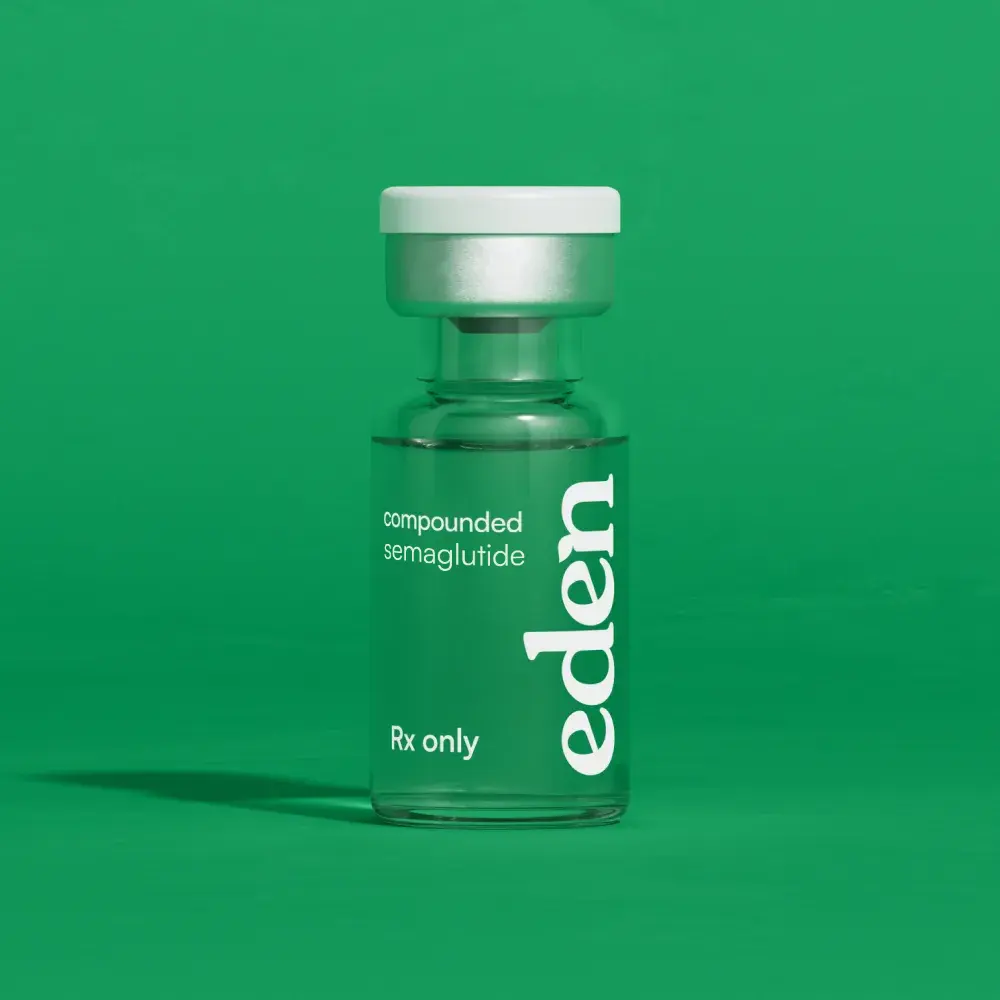

GLP-1 Weight Loss Plateau: Why It Happens & What to Do



Weight loss stalling on a GLP-1? Learn why plateaus happen on semaglutide or tirzepatide, and what steps may help you move forward. Get started with Eden.
- A GLP-1 weight loss plateau is a common, expected phase of treatment, and clinical trials suggest weight loss naturally slows after the first several months.
- A plateau after steady progress differs from non-response and doesn't mean your medication has stopped working.
- Common causes of a plateau include metabolic adaptation, dose and titration timing, lifestyle shifts, and underlying health factors.
- During a plateau, certain lifestyle changes may help, such as increased protein intake, resistance training, sleep, and stress management.
- For some people, a long-term plateau may mean they're nearing a new stable weight, which can be a natural point to talk with a provider about a maintenance plan.
- You should never adjust your dose on your own; always discuss your options with your provider and allow them to guide your treatment.
- Eden's care model includes 24/7 provider messaging and ongoing check-ins, so you can talk through next steps without waiting for an appointment.
This article is intended for educational purposes only and is not a substitute for professional medical advice, diagnosis, or treatment. Always talk with a licensed healthcare provider before starting, changing, or stopping any medication.
The clinical trial results discussed in this article relate to FDA-approved medications, not compounded versions. Compounded medications are not FDA-approved and have not been reviewed by the FDA for safety, effectiveness, or quality. They may be prescribed only when a licensed prescriber determines that a compounded preparation is clinically appropriate and meets applicable patient-specific requirements. Eden connects patients with licensed healthcare providers who independently determine treatment eligibility.
Is a GLP-1 Weight Loss Plateau Normal?
Yes, plateaus are actually a documented, expected part of GLP-1 therapy. In clinical trials, individuals taking GLP-1 medications that are FDA-approved for chronic weight management lost roughly 15% to 21% of their body weight on average, but the loss wasn't linear.
According to a 2025 joint advisory from four obesity and nutrition societies, weight reduction is typically fastest in the first six months, slows after that, and tends to level off around 18 months. In the STEP 1 trial, average weight on semaglutide 2.4 mg kept dropping until around week 60.
To be clear, a plateau happens when steady weight loss stalls, often for about a month. In contrast, non-response is when someone sees little meaningful loss from the start. In the STEP 1 trial, about 86% of individuals on semaglutide 2.4 mg lost at least 5% of their body weight, the threshold often used to define meaningful weight loss, which means roughly 1 in 7 did not. If you lost weight early on and then stalled, you may be in a different situation. So, let's take a closer look at what's happening.
Why Weight Loss Stalls on GLP-1 Therapy
There's usually not one single reason for a plateau. It may come down to a combination of factors, including metabolic adaptation, dose and titration dynamics, lifestyle factors, health conditions, and more.
Metabolic Adaptation
As you lose weight, your body needs fewer calories to function. It also adjusts to a lower calorie intake by burning fewer calories at rest, a process called metabolic adaptation (sometimes called adaptive thermogenesis). This happens with any sustained calorie deficit, not just GLP-1 therapy.
Your body may also increase hunger signals over time as a counterregulatory response, even while on a GLP-1.
Dose and Titration Dynamics
GLP-1 medications start at a low dose and increase gradually (a process called titration), usually to help limit side effects, such as nausea. At lower doses, appetite suppression may be less noticeable, and it can take several months to reach a maintenance dose. In the SURMOUNT-1 trial, for example, individuals in the highest tirzepatide group didn't reach 15 mg until week 20.
A stall during titration may be a reason to review your current dose with your provider. At the same time, dose changes should always be made by your licensed provider, never on your own.
Lifestyle Drift
GLP-1 medications reduce appetite, but food choices and activity still affect your results. Over months of treatment, your habits may gradually change without you noticing. For instance, your portions may creep up, or your physical activity may dip because of fatigue or a busy schedule. This is a common pattern, but you can take steps to address it. Reviewing a week or two of food and activity notes may help you spot changes and adjust accordingly.
Underlying Health Factors
Some conditions may make weight loss harder, even on a GLP-1. These include hypothyroidism, polycystic ovary syndrome (PCOS), insulin resistance, and sleep apnea. Certain medications are linked to weight gain too, including some antidepressants, antipsychotics, and corticosteroids. If your plateau persists, ask your provider whether a broader health review makes sense.
Medication Tolerance Over Time
Some individuals notice that the medication's effect on appetite feels less pronounced than it did at first, even at the same dose. As Houston Methodist physicians explain, this often isn't true tolerance in the traditional sense.
Instead, it may reflect a natural shift in how the body responds as weight decreases. In fact, it's one reason regular provider check-ins and dose reviews are standard in GLP-1 care.
What May Help When You Hit a GLP-1 Plateau
A plateau can feel discouraging, but you have options. Consider the steps below and discuss them with your care team.
Reassess Your Nutrition Approach
This isn't about strict calorie counting. Instead, it may help to focus on incorporating specific nutrients. For example, protein is a good place to start, since it supports muscle preservation and may help you feel full. The joint advisory notes that targets of about 1.2 to 1.6 grams of protein per kilogram of body weight per day have been proposed during active weight loss, though the right number depends on your body and health. Eden's protein calculator can also offer a great starting point.
The same advisory recommends leaning on minimally processed, nutrient-dense foods and limiting starchy and sugary ultra-processed foods to support weight loss on a GLP-1. For more ideas, see our guide on what to eat on semaglutide, or ask your care team about working with a registered dietitian.
Add or Adjust Resistance Training
When you lose weight, you may lose some muscle along with fat. In STEP 1, about 38% of the weight lost was lean mass (muscle and other non-fat tissue).
Since muscle helps drive your resting metabolism, protecting it may be important during a plateau. Resistance training, such as weights, bodyweight moves, or resistance bands, may also help preserve or rebuild lean mass. The advisory suggests working up to strength training at least three times per week.
If side effects like nausea or fatigue make exercise hard, start small and build gradually. Tell your provider if side effects limit your activity.
Review Your Sleep and Stress Levels
In a study of more than 1,000 adults, individuals who slept 5 hours instead of 8 had about 15% more ghrelin (a hormone that drives hunger) and about 15% less leptin (a hormone that signals fullness). Chronic stress may affect cortisol levels, appetite, and eating habits, potentially making weight management more challenging. If you suspect either may be playing a part, be sure to bring it up with your provider.
Talk to Your Provider About Dose Optimization
GLP-1 medications typically follow a gradual dose-escalation schedule. Your provider may consider a dose adjustment based on your response, tolerability, and treatment plan. If you've been on the same dose for several weeks, you're tolerating it well, and your weight has stalled, your provider may consider increasing it, as long as you haven't reached the maximum approved dose and an increase is clinically appropriate for you.
Some clinicians instead keep you at the lowest effective dose and increase only when weight loss stops. When a provider determines that a compounded medication, such as compounded semaglutide or compounded tirzepatide, is clinically appropriate, the dose is set for the individual patient, which may allow for smaller adjustments than standard pen strengths. Either way, dose changes should only happen under provider supervision.
If you're an Eden member, you don't need to wait for a scheduled appointment to start this conversation. You can message your provider 24/7 to share your progress and ask whether a dose review makes sense.
Consider Whether Additional Support May Be Appropriate
Some providers may recommend complementary approaches alongside GLP-1 therapy, such as behavioral support, dietary counseling, or, in some cases, additional medications. With Eden, your licensed provider reviews your health history, goals, and response to treatment, then adjusts your plan when it's clinically appropriate.
When a Plateau May Mean You've Reached Maintenance
Not every plateau is a problem to solve. Because weight loss on GLP-1 therapy tends to level off over time, a long-term stall may mean your body is settling at a new stable weight, especially if you're close to your goal and on a dose you tolerate well.
At that point, the conversation with your provider may shift from "how do I lose more?" to "how do I keep this off?" Stopping treatment often leads to weight regain, but stopping isn't the only option. In the SURMOUNT-MAINTAIN trial, adults who stepped down from their maximum tolerated dose of tirzepatide to 5 mg maintained most of their prior weight loss on average. Some providers also consider lower, individualized maintenance doses (sometimes called microdosing), though this approach hasn't been studied in large clinical trials.
Your provider can help you decide whether to keep working toward further loss or move into a maintenance plan. Learn more about long-term GLP-1 weight management and what happens when you stop a GLP-1.
Zepbound® Plateau and Mounjaro® Plateau: Is Tirzepatide Different?
Tirzepatide, the active ingredient in Zepbound® and Mounjaro®, is a dual GIP/GLP-1 receptor agonist. This means it acts on two hormone pathways involved in appetite and blood sugar instead of one.
In SURMOUNT-1, individuals on the 15 mg dose lost an average of 20.9% of their body weight over 72 weeks. In the SURMOUNT-5 head-to-head trial, average weight loss was 20.2% with tirzepatide and 13.7% with semaglutide.
Even so, a Zepbound® plateau or Mounjaro® plateau can be common. The same factors above apply here, too, including metabolic adaptation, titration timing, and lifestyle changes. If you've noticed a plateau on tirzepatide, brand-name or compounded, the troubleshooting steps above also still apply. If your weight loss has stalled, ask your provider whether your current treatment plan remains appropriate.
When to Contact Your Provider
Reach out to your licensed provider if:
- Your weight has stalled for 4 or more weeks despite consistent medication use and healthy habits.
- Side effects are making it hard to eat, exercise, or get through your day.
- You're not sure whether you've reached your maintenance dose.
- You're near your goal and want to talk about a long-term maintenance plan.
- You notice new symptoms that may point to another health issue.
- You're thinking about stopping your medication out of frustration.
A plateau is a normal part of the process, not a sign that you or your medication have failed. If you're not yet working with a provider, Eden can help connect you. Complete a quick online intake, and a licensed provider will review your health history and goals. If treatment is appropriate, a licensed provider may prescribe medication, which can be shipped to your door from a licensed pharmacy with free expedited shipping, when available, and you'll have 24/7 provider messaging along the way.












Prescriptions and a medical evaluation are required for certain products. The information provided on this blog is for general informational purposes only. It is not intended as a substitute for professional advice from a qualified healthcare professional and should not be relied upon as personal health advice. The information contained in this blog is not meant to diagnose, treat, cure, or prevent any disease. Readers are advised to consult with a qualified healthcare professional for any medical concerns, including side effects. Use of this blog's information is at your own risk. The blog owner is not responsible for any adverse effects or consequences resulting from the use of any suggestions or information provided in this blog.
Eden is not a medical provider. Eden connects individuals with independent licensed healthcare providers who independently evaluate each patient to determine whether a prescription treatment program is appropriate. All prescriptions are written at the sole discretion of the licensed provider. Medications are filled by state-licensed pharmacies. Please consult a licensed healthcare provider before making any medical decisions.
Frequently asked questions
What should I do about a semaglutide stall?

Start by reviewing protein, activity, sleep, and stress, since these may all affect progress. If your weight has stalled for four weeks or more, ask your provider whether a dose review or other adjustment makes sense.
How long does a GLP-1 weight loss plateau last?
It varies from person to person; some plateaus pass within a few weeks, while others signal you're nearing a new stable weight. Your provider can help you tell the difference and decide on next steps.
Does a plateau mean I should stop my GLP-1?
Not necessarily. A plateau is a normal phase of treatment, and stopping often leads to weight regain. If you're near your goal, your provider may discuss a maintenance plan, which could include staying on your current dose or moving to a lower one, rather than stopping outright.
Can compounded semaglutide or tirzepatide help with a plateau?
Compounded GLP-1 medications contain the same active ingredients as their brand-name counterparts and are not FDA-approved. When a provider determines one is clinically appropriate, the dose is set for the individual patient, which may allow for smaller adjustments. Whether that's appropriate for you, and whether it would help, is a decision for your provider.
Related articles










Aronne, L. J., Horn, D. B., le Roux, C. W., et al. (2025). Tirzepatide as compared with semaglutide for the treatment of obesity. New England Journal of Medicine, 393(1), 26–36. https://www.nejm.org/doi/full/10.1056/NEJMoa2416394
Davis, J. (2026, June 18). Not losing weight on a GLP-1? Here's what could be happening. Houston Methodist. https://www.houstonmethodist.org/blog/articles/2026/jun/not-losing-weight-on-a-glp-1-here-s-what-could-be-happening/
Eli Lilly. (2026). MOUNJARO® (tirzepatide) Injection, for subcutaneous use. https://pi.lilly.com/us/mounjaro-uspi.pdf
Eli Lilly. (2026). ZEPBOUND® (tirzepatide) Injection, for subcutaneous use. https://pi.lilly.com/us/zepbound-uspi.pdf
Horn, D. B., Aronne, L. J., Wharton, S., Bays, H. E., le Roux, C. W., Srinath, R., Gomez-Valderas, E., Arad, A. D., Das, S., Dunn, J. P., Ribeiro, A., Glass, L. C., & Lee, C. J. (2026). Tirzepatide for maintenance of bodyweight reduction in people with obesity in the USA (SURMOUNT-MAINTAIN): a multicentre, double-blind, randomised, placebo-controlled trial. Lancet (London, England), 407(10545), 2305–2318. https://pubmed.ncbi.nlm.nih.gov/42119587/
Jastreboff, A. M., Aronne, L. J., Ahmad, N. N., et al. (2022). Tirzepatide once weekly for the treatment of obesity. New England Journal of Medicine, 387(3), 205–216. https://www.nejm.org/doi/full/10.1056/NEJMoa2206038
Mozaffarian, D., Agarwal, M., Aggarwal, M., et al. (2025). Nutritional priorities to support GLP-1 therapy for obesity: A joint advisory from the American College of Lifestyle Medicine, the American Society for Nutrition, the Obesity Medicine Association, and the Obesity Society. American Journal of Lifestyle Medicine. https://pmc.ncbi.nlm.nih.gov/articles/PMC12125019/
Rosenbaum, M., & Leibel, R. L. (2010). Adaptive thermogenesis in humans. International Journal of Obesity, 34(Suppl 1), S47–S55. https://pmc.ncbi.nlm.nih.gov/articles/PMC3673773/
Taheri, S., Lin, L., Austin, D., Young, T., & Mignot, E. (2004). Short sleep duration is associated with reduced leptin, elevated ghrelin, and increased body mass index. PLoS Medicine, 1(3), e62. https://journals.plos.org/plosmedicine/article?id=10.1371/journal.pmed.0010062
Wharton, S., Raiber, L., Serodio, K. J., Lee, J., & Christensen, R. A. G. (2018). Medications that cause weight gain and alternatives in Canada: A narrative review. Diabetes, Metabolic Syndrome and Obesity, 11, 427–438. https://pmc.ncbi.nlm.nih.gov/articles/PMC6109660/
Wilding, J. P. H., Batterham, R. L., Calanna, S., et al. (2021). Once-weekly semaglutide in adults with overweight or obesity. New England Journal of Medicine, 384(11), 989–1002. https://www.nejm.org/doi/full/10.1056/NEJMoa2032183
Thank you!
We'll be in touch.
Thank you!