
Retatrutide vs. Tirzepatide: The Next-Gen Triple Agonist



Retatrutide is a triple agonist targeting GLP-1, GIP, and glucagon receptors. See how it compares to tirzepatide in clinical trials, and what's available now.
- Retatrutide is an investigational once-weekly injection from Eli Lilly that activates three hormone receptors (GLP-1, GIP, and glucagon). In comparison, tirzepatide activates two.
- In the Phase 3 TRIUMPH-1 trial, researchers reported that individuals on the highest dose of retatrutide lost about 25% to 28% of their body weight on average over 80 weeks.
- Retatrutide is not FDA-approved, is available only through Lilly-sponsored clinical trials, and Lilly plans to submit it to the FDA in early 2027.
- Anything sold online as retatrutide, including "research peptides" marketed for microdosing, is unregulated; no legitimate compounded retatrutide exists.
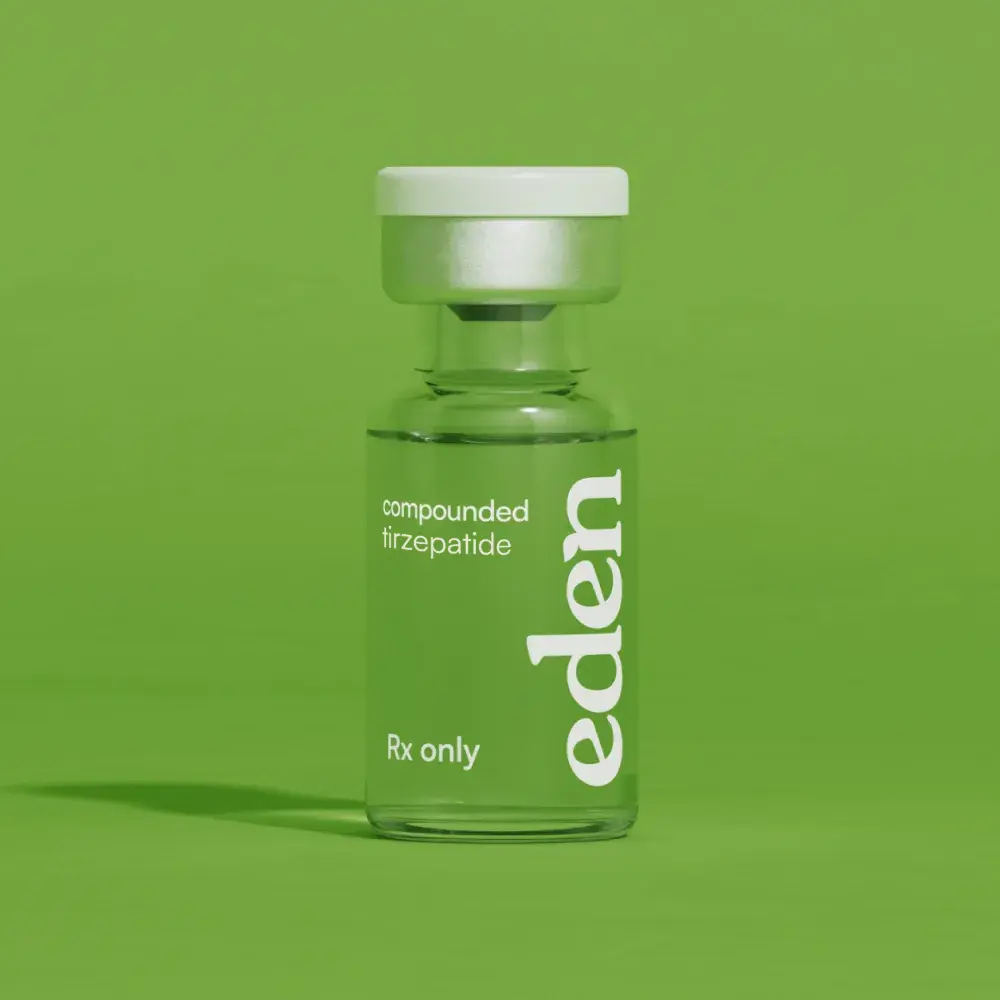
- Tirzepatide is available today as FDA-approved Zepbound® and Mounjaro®, and licensed healthcare providers may also prescribe compounded tirzepatide, when permitted by applicable law and clinically appropriate for an identified patient. Compounded tirzepatide is not FDA-approved.
This article is intended for general informational purposes only and is not a substitute for professional medical advice, diagnosis, or treatment. Always talk with a licensed healthcare provider before starting, changing, or stopping any medication.
Retatrutide is an investigational drug that is not FDA-approved. Compounded medications are also not FDA-approved. They are prepared by state-licensed pharmacies for individual patients when a licensed prescriber determines and documents a clinically significant difference from an FDA-approved medication, and are not reviewed by the FDA for safety, effectiveness, or quality.
Weight loss medications have come a long way in just a few years: from single GLP-1 agonists like semaglutide, to dual agonists like tirzepatide, and now to triple agonists like retatrutide.
Retatrutide is making headlines thanks to recent clinical trials, and many are calling it the next-generation GLP-1. Research indicated that it produced more average weight loss than any medication currently approved for weight management. But retatrutide is still investigational. It's available only to individuals enrolled in Lilly-sponsored clinical trials, and the FDA has not approved it.
So, where does that leave you? Below, we'll walk through how this next-generation GLP-1 option differs from tirzepatide, what the research shows so far, and what options exist right now.
What Is Retatrutide?
Retatrutide is an investigational, once-weekly injection under the skin (subcutaneous injection) developed by Eli Lilly. It's a triple hormone receptor agonist, meaning a single molecule that activates three different receptors, including GLP-1, GIP, and glucagon.
You may have even heard it called a "GLP-3" online. But this nickname isn't entirely accurate, since there is no hormone called GLP-3. Instead, the correct term is "triple agonist."
As of October 2026, the FDA and other regulators have not approved retatrutide. Eli Lilly has completed its core Phase 3 TRIUMPH trials and, according to its July 2026 announcement, plans to submit an application to the FDA in the first quarter of 2027. But there's no confirmed approval timeline.
How Does a Triple Agonist Work?
Retatrutide targets three hormonal receptors at one time, including:
- GLP-1 (glucagon-like peptide-1): This hormone slows gastric emptying (the speed at which food moves from your stomach to your small intestine), reduces appetite through brain regions that regulate hunger, and helps release insulin after meals.
- GIP (glucose-dependent insulinotropic polypeptide): This hormone also helps release insulin and may strengthen GLP-1's effects on appetite and fat metabolism.
- Glucagon: This one seems counterintuitive, since glucagon normally signals your liver to release sugar into your blood. In retatrutide, though, glucagon receptor activity is thought to increase energy use and fat breakdown, while the GLP-1 and GIP activity helps offset its effect on blood sugar.
Put together, GLP-1 and GIP mainly help you eat less, while glucagon may help your body burn more. Researchers believe that combination sets retatrutide apart; it may work on both sides of the energy equation, instead of primarily on appetite. An easy way to think about it is that tirzepatide pulls two levers, and retatrutide pulls three.
What Is Tirzepatide?
Tirzepatide is a dual GIP and GLP-1 receptor agonist given as a once-weekly injection. It's FDA-approved as Mounjaro® for type 2 diabetes and as Zepbound® for chronic weight management and moderate to severe obstructive sleep apnea in adults with obesity.
In the SURMOUNT-1 trial, individuals taking brand-name tirzepatide at the highest dose (15 mg) lost about 21% to 22.5% of their body weight on average over 72 weeks. You can read more about the benefits of tirzepatide in our full guide.
Licensed providers, including those in Eden's network, may also prescribe compounded tirzepatide, which is prepared by state-licensed pharmacies. However, compounded tirzepatide is not FDA-approved, and the trial results above come from brand-name tirzepatide only.
Retatrutide vs. Tirzepatide: How the Mechanisms Differ
When it comes down to the retatrutide vs. tirzepatide comparison, retatrutide targets one more receptor. Tirzepatide targets GLP-1 and GIP, and retatrutide targets those same two, plus glucagon.
This added glucagon activity may increase energy expenditure (the calories your body burns), support lipolysis (the breakdown of stored fat), and possibly raise your resting metabolic rate.
But because glucagon raises blood sugar, adding it to a weight-loss drug could, in theory, work against glucose control. In trials so far, the GIP and GLP-1 components appear to balance that effect, and retatrutide has actually lowered HbA1c (a measure of average blood sugar over about three months). Below, we explore the differences in these medications' mechanisms in more detail.
Shared Mechanisms
Retatrutide and tirzepatide have more in common than not. Both:
- Activate GLP-1 and GIP receptors
- Slow gastric emptying
- Reduce appetite through signals in the brain
- Stimulate insulin release when blood sugar is elevated
- Are given as once-weekly injections under the skin
This shared foundation is why both may produce weight loss.
For more regarding the basics, read our guide about how GLP-1 medications work.
What the Glucagon Component May Add
Adding glucagon to a weight-loss drug may seem paradoxical at first. But researchers believe it may increase thermogenesis (your body's heat-producing, calorie-burning process) and speed up fat oxidation in the liver. Still, the mechanism isn't fully understood, and researchers are continuing to study it.
Clinical Trial Results: What the Data Shows So Far
Here's how the evidence has developed.
In a 48-week Phase 2 trial in 2023, adults with obesity on the 12 mg dose lost about 24.2% of their body weight on average, compared with 2.1% on placebo. A separate Phase 2 trial in people with type 2 diabetes showed reductions in HbA1c.
Lilly's Phase 3 TRIUMPH program and related trials have now reported several other key findings:
- TRIUMPH-4 (December 2025): In adults with obesity or overweight and knee osteoarthritis, topline results showed an average weight loss of 28.7% at 68 weeks on 12 mg, along with reduced knee pain.
- TRIUMPH-1 (May 2026): In adults with obesity or overweight without diabetes, the results showed an average loss of about 70 lbs (28.3%) at 80 weeks on 12 mg. The full results, published in September 2026, reported 25.0% using an analysis that includes everyone who started the trial, whether or not they stayed on treatment.
- TRANSCEND-T2D-1 (June 2026): Published in The Lancet, this 40-week trial in adults with type 2 diabetes reported lower HbA1c and weight loss of up to 15.3%.
- TRIUMPH-2 and TRIUMPH-3 (July 2026): In adults with type 2 diabetes and obesity, average weight loss was 20.8% at 80 weeks. In adults with severe obesity and established heart disease, it was 22.6%.
Beyond weight loss, these trials also looked at knee osteoarthritis pain, obstructive sleep apnea, and cardiovascular risk factors, including blood pressure and cholesterol. A longer trial on heart and kidney outcomes, TRIUMPH-Outcomes, isn't expected to finish until 2029.
As for safety, the most common side effects reported were gastrointestinal and increased with dose, similar to other medications in this class.
In TRIUMPH-1, nausea affected up to 42% of people on the highest dose. Dysesthesia (unusual skin sensations like tingling or sensitivity) was also reported in up to 12.5% of participants, and about 11% on 12 mg stopped treatment due to side effects. Long-term safety data are still being collected. For comparison, you can review tirzepatide's side effects.
Either way, these are clinical trial results. Retatrutide still needs FDA review before it can be prescribed.
Retatrutide vs. Tirzepatide: Clinical Outcomes at a Glance
Tirzepatide data reflect results from FDA-approved brand-name products. Retatrutide data reflect Phase 3 results from investigational trials. Direct comparisons should be interpreted cautiously, as trial populations, protocols, and endpoints differ. A head-to-head trial, TRIUMPH-5, is comparing the two directly and is expected to finish in late 2026.
Is Retatrutide Available Right Now?
No. Retatrutide is not FDA-approved or commercially available. According to Eli Lilly, it's supplied only to participants in Lilly-sponsored clinical trials, and it cannot be lawfully compounded.
This means anything sold as retatrutide outside a trial is an unregulated product. Lilly has described research-grade and counterfeit versions as unverified and potentially dangerous, and says it's working with regulators and law enforcement to remove them. Products like these may contain unknown ingredients, contaminants, incorrect doses, or the wrong substance entirely.
As of the publication date of this article, Eli Lilly has not announced an approval date.
What You Can Do Right Now: Currently Available Options
It's natural to feel excited about retatrutide. But waiting on a future medication isn't your only option. A licensed provider can help you build a plan around medications that are available today.
For eligible patients, licensed providers in Eden's network may consider compounded tirzepatide, which targets two of the same receptors as retatrutide, or compounded semaglutide when a patient-specific clinical need supports compounding and applicable law permits it. For context, brand-name tirzepatide produced about 21% to 22.5% average weight loss in SURMOUNT-1. Compounded tirzepatide was not studied in those trials, is not FDA-approved, and is not reviewed by the FDA for safety, effectiveness, or quality.
If the microdosing trend is what drew you to retatrutide, it's worth knowing that a provider can discuss whether a patient-specific, lower-dose plan with a legitimate medication may be appropriate for you. Tirzepatide is also generally a long-term medication: in the SURMOUNT-4 trial, people who stopped it regained about 14% of their body weight over a year, so it helps to plan for long-term weight management from the start.
Not sure which might fit? Our tirzepatide vs. semaglutide guide breaks down the differences.
With Eden's GLP-1 weight loss program, getting started is simple. You'll complete a quick online assessment, and Eden connects you with a licensed healthcare provider. Your licensed provider will review your health history, goals, and current medications, determining what's the next best step for you.












Prescriptions and a medical evaluation are required for certain products. The information provided on this blog is for general informational purposes only. It is not intended as a substitute for professional advice from a qualified healthcare professional and should not be relied upon as personal health advice. The information contained in this blog is not meant to diagnose, treat, cure, or prevent any disease. Readers are advised to consult with a qualified healthcare professional for any medical concerns, including side effects. Use of this blog's information is at your own risk. The blog owner is not responsible for any adverse effects or consequences resulting from the use of any suggestions or information provided in this blog.
Eden is not a medical provider. Eden connects individuals with independent licensed healthcare providers who independently evaluate each patient to determine whether a prescription treatment program is appropriate. All prescriptions are written at the sole discretion of the licensed provider. Medications are filled by state-licensed pharmacies. Please consult a licensed healthcare provider before making any medical decisions.
Frequently asked questions
Can you microdose retatrutide?

No, retatrutide is investigational and available only in Lilly-sponsored clinical trials. Anything sold online as retatrutide, including "research peptides" marketed for microdosing, is unregulated and may contain the wrong ingredient, contaminants, or inaccurate doses.
Is compounded retatrutide available?
No. Retatrutide is not FDA-approved, and according to Eli Lilly, it cannot be lawfully compounded. Any product marketed as compounded retatrutide should be avoided.
Should I wait for retatrutide or start tirzepatide now?
This is a decision to make with a licensed provider. Retatrutide's approval timeline is uncertain, while tirzepatide is available today. A provider can weigh your health profile and goals and help you decide whether starting now makes sense.
Is compounded tirzepatide as effective as Zepbound®?
Published results, such as SURMOUNT-1, come from brand-name tirzepatide, and those trials did not include compounded tirzepatide. Compounded tirzepatide is also not FDA-approved and not reviewed by the FDA for safety, effectiveness, or quality. A provider can explain the differences and help you choose the option that fits you and your situation best.
Related articles












Aronne, L. J., Sattar, N., Horn, D. B., et al. (2024). Continued treatment with tirzepatide for maintenance of weight reduction in adults with obesity: The SURMOUNT-4 randomized clinical trial. JAMA, 331(1), 38–48. https://jamanetwork.com/journals/jama/fullarticle/2812936
Eli Lilly and Company. (2025, December 11). Lilly's triple agonist, retatrutide, delivered weight loss of up to an average of 71.2 lbs along with substantial relief from osteoarthritis pain in first successful Phase 3 trial [Press release]. https://www.prnewswire.com/news-releases/lillys-triple-agonist-retatrutide-delivered-weight-loss-of-up-to-an-average-of-71-2-lbs-along-with-substantial-relief-from-osteoarthritis-pain-in-first-successful-phase-3-trial-302638804.html
Eli Lilly and Company. (2026, May 21). Lilly's triple agonist, retatrutide, delivered powerful weight loss in pivotal Phase 3 obesity trial [Press release]. https://investor.lilly.com/news-releases/news-release-details/lillys-triple-agonist-retatrutide-delivered-powerful-weight-loss
Eli Lilly and Company. (2026, July 23). Lilly's triple agonist, retatrutide, successful in two additional Phase 3 obesity trials, delivering significant improvements in weight and A1C [Press release]. https://www.prnewswire.com/news-releases/lillys-triple-agonist-retatrutide-successful-in-two-additional-phase-3-obesity-trials-delivering-significant-improvements-in-weight-and-a1c-302832674.html
Eli Lilly and Company. (2026). Is retatrutide available in the consumer market? Lilly Medical. https://medical.lilly.com/us/products/answers/is-retatrutide-available-in-the-consumer-market-381272
Eli Lilly and Company. (2026). MOUNJARO® (tirzepatide) injection: Highlights of prescribing information. https://pi.lilly.com/us/mounjaro-uspi.pdf
Eli Lilly and Company. (2026). ZEPBOUND® (tirzepatide) injection: Highlights of prescribing information. https://pi.lilly.com/us/zepbound-uspi.pdf
Eli Lilly and Company. (2026). A study of retatrutide (LY3437943) compared to tirzepatide (LY3298176) in adults who have obesity (TRIUMPH-5) (ClinicalTrials.gov Identifier NCT06662383). https://clinicaltrials.gov/study/NCT06662383
Eli Lilly and Company. (2026). The effect of retatrutide once weekly on cardiovascular outcomes and kidney outcomes in adults living with obesity (TRIUMPH-Outcomes) (ClinicalTrials.gov Identifier NCT06383390). https://clinicaltrials.gov/study/NCT06383390
Eli Lilly and Company. (2024). A study of tirzepatide (LY3298176) on the reduction on morbidity and mortality in adults with obesity (SURMOUNT-MMO) (ClinicalTrials.gov Identifier NCT05556512). https://clinicaltrials.gov/study/NCT05556512
Jastreboff, A. M., Aronne, L. J., Ahmad, N. N., et al. (2022). Tirzepatide once weekly for the treatment of obesity. New England Journal of Medicine, 387(3), 205–216. https://www.nejm.org/doi/10.1056/NEJMoa2206038
Jastreboff, A. M., Kaplan, L. M., Davies, M. J., et al. (2026). Retatrutide, a triple hormone receptor agonist, for treatment of obesity. New England Journal of Medicine. Advance online publication. https://www.nejm.org/doi/10.1056/NEJMoa2604169
Jastreboff, A. M., Kaplan, L. M., Frías, J. P., et al. (2023). Triple-hormone-receptor agonist retatrutide for obesity: A phase 2 trial. New England Journal of Medicine, 389(6), 514–526. https://www.nejm.org/doi/full/10.1056/NEJMoa2301972
Katsi, V., Koutsopoulos, G., Fragoulis, C., Dimitriadis, K., & Tsioufis, K. (2025). Retatrutide: A game changer in obesity pharmacotherapy. Biomolecules, 15(6), 796. https://pmc.ncbi.nlm.nih.gov/articles/PMC12190491/
Nicholls, S. J., Pavo, I., Bhatt, D. L., et al. (2025). Cardiovascular outcomes with tirzepatide versus dulaglutide in type 2 diabetes. New England Journal of Medicine, 393(24), 2409–2420. https://doi.org/10.1056/NEJMoa2505928
Rosenstock, J., Frias, J., Jastreboff, A. M., et al. (2023). Retatrutide, a GIP, GLP-1 and glucagon receptor agonist, for people with type 2 diabetes: A randomised, double-blind, placebo and active-controlled, parallel-group, phase 2 trial conducted in the USA. The Lancet, 402(10401), 529–544. https://www.thelancet.com/journals/lancet/article/PIIS0140-6736(23)01053-X/abstract
TRANSCEND-T2D-1 Investigators. (2026). Efficacy and safety of retatrutide, a GIP, GLP-1, and glucagon receptor agonist, in people with type 2 diabetes and inadequate glycaemic control with diet and exercise (TRANSCEND-T2D-1): A double-blind, randomised, phase 3 trial. The Lancet, 407(10546), 2402–2413. https://doi.org/10.1016/S0140-6736(26)00967-0
Thank you!
We'll be in touch.
Thank you!