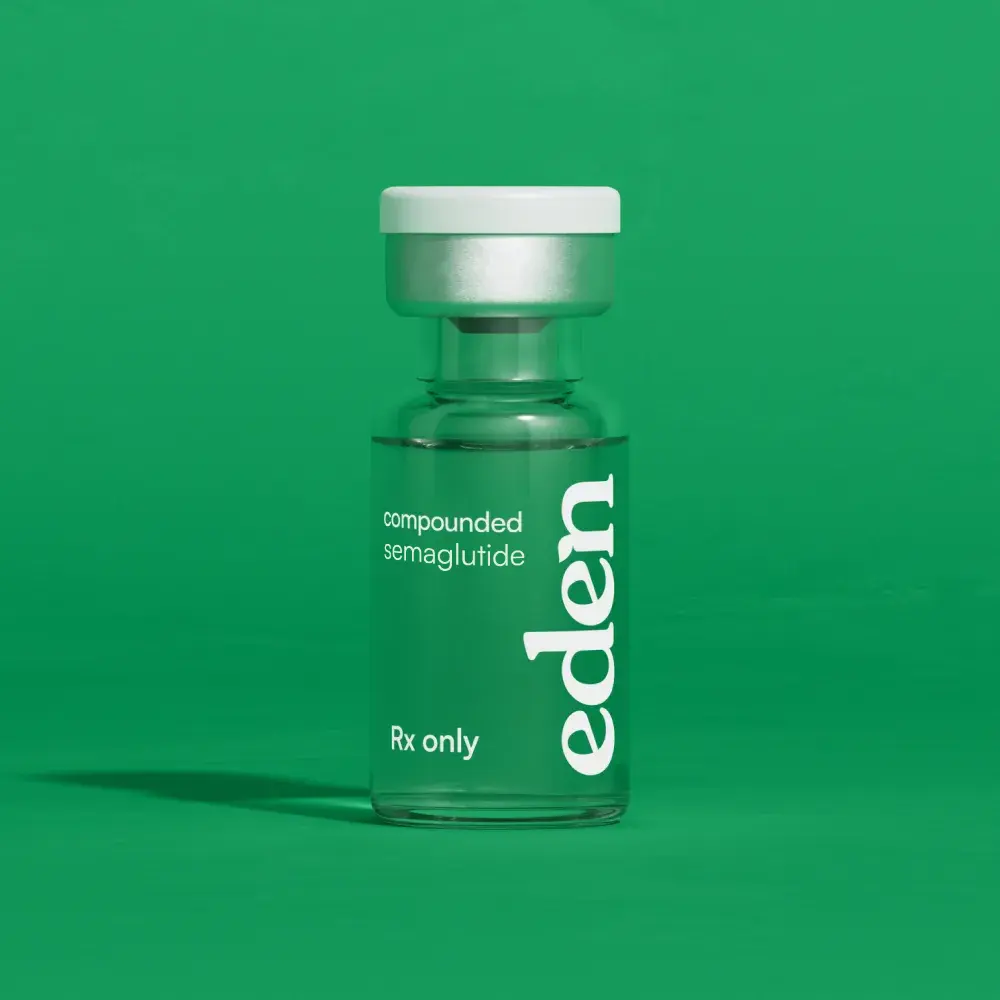

Wegovy® vs. Ozempic®: Which Is Right for You?



Wegovy® and Ozempic® both contain semaglutide but aren't the same. Compare uses, dosing, results, and compounded semaglutide. Get started today.
- When it comes to Wegovy® vs. Ozempic®, they are two semaglutide brands from the same manufacturer. But the FDA approved them for different conditions.
- Wegovy® is approved for chronic weight management, and Ozempic® is approved for type 2 diabetes and related heart and kidney risks.
- Wegovy® is typically prescribed at a higher maintenance dose than Ozempic®, which may explain its larger average weight loss in clinical trials.
- As of October 2026, manufacturer self-pay pricing is $349 per month for most doses of both brands, though prices may change.
- Compounded semaglutide may be prescribed for an individual patient when a licensed provider determines that a compounded preparation offers a clinically significant difference. It is not FDA-approved.
- Stopping semaglutide often leads to weight regain; some providers may use lower maintenance doses or a different medication to help manage this.
This article is intended for general informational purposes only and is not a substitute for professional medical advice, diagnosis, or treatment. Always talk with a licensed healthcare provider before starting, changing, or stopping any medication.
Compounded medications are not FDA-approved. They are prepared by state-licensed pharmacies for individual patients when a licensed prescriber determines and documents a clinically significant difference from an FDA-approved product for that patient. They are not reviewed by the FDA for safety, effectiveness, or quality.
What Are Wegovy® and Ozempic®?
Wegovy® and Ozempic® are both semaglutide medications made by Novo Nordisk.
If you're wondering how GLP-1 medications work, essentially semaglutide is a GLP-1 receptor agonist (a medication that mimics glucagon-like peptide-1, a hormone your gut releases after you eat). This hormone slows gastric emptying (the speed at which food leaves your stomach), so you may feel full longer. It also suppresses appetite signals in the brain and helps regulate blood sugar by prompting insulin release when glucose rises.
However, the two brands, Wegovy® and Ozempic®, have different approved uses, dosing schedules, and maximum doses.
Licensed providers may also prescribe compounded semaglutide, a version prepared by a state-licensed pharmacy for an individual patient that is not FDA-approved, when an individualized clinical need supports its use.
FDA-Approved Uses: The Key Distinction
Ozempic® (approved 2017) is indicated for adults with type 2 diabetes. Its prescribing information includes approval for blood sugar control, plus lowering the risk of major cardiovascular events (with established heart disease) and kidney disease progression (with chronic kidney disease). It's not FDA-approved for weight loss, although providers sometimes prescribe it off-label.
Wegovy® (approved 2021) is indicated for chronic weight management in adults with obesity (BMI of 30 or higher) or overweight (BMI of 27 or higher) with at least one weight-related condition, and in adolescents 12 and older with obesity. Its current label also covers cardiovascular risk reduction in adults with obesity or overweight and established heart disease.
In August 2025, the FDA also granted Wegovy® accelerated approval for MASH, a form of fatty liver disease, in adults with moderate to advanced fibrosis.
Both brands now come in pill form. The once-daily Wegovy® pill was approved for weight management in adults in December 2025, and Novo Nordisk's oral diabetes tablet, formerly Rybelsus® (which is being phased out), is now sold as an oral Ozempic®.
These indications influence insurance coverage and prescribing eligibility. Ozempic® is frequently prescribed off-label for weight loss, but this isn't the same as Wegovy®'s approved weight-management indication and may impact your insurance coverage.
Comparison Table: Wegovy® vs. Ozempic® vs. Compounded Semaglutide
*Prices as of October 2026 from NovoCare® Pharmacy and Eden. Costs vary by pharmacy, location, dose, and plan, and may change.
Dosing: How Each Medication Is Taken
Both injections are taken once weekly, with gradual dose increases to help reduce gastrointestinal side effects.
Ozempic®'s dosing schedule may involve the following:
- 0.25 mg once weekly for 4 weeks (an introductory dose, not meant for blood sugar control)
- Increase to 0.5 mg once weekly
- May increase to 1 mg, then 2 mg, at least 4 weeks apart if more blood sugar control is needed
- Maximum dose: 2 mg once weekly
Explore our guide to Ozempic® dosing for more detail.
Wegovy®'s dosing schedule may include:
- 0.25 mg once weekly for 4 weeks
- Increases every 4 weeks: 0.5 mg, 1 mg, 1.7 mg, then 2.4 mg
- Usual maintenance dose: 2.4 mg once weekly (1.7 mg is also an option)
- Adults with obesity who tolerate 2.4 mg for 4 weeks may move to Wegovy® HD (7.2 mg) if clinically appropriate
Wegovy®'s higher maintenance dose is one reason it's associated with greater weight loss in trials. Meanwhile, compounded semaglutide may be prescribed at a different dose when a prescriber documents a clinically significant need for that individual patient. But this is always up to the discretion of your provider. For a closer look at the brand, see our full Wegovy® guide.
Weight-Loss Results: What the Clinical Evidence Shows
When comparing Ozempic® vs. Wegovy® weight loss, here's what the data shows.
In the STEP 1 trial, adults with obesity or overweight and no diabetes who took Wegovy®, semaglutide 2.4 mg, lost an average of about 14.9% of their body weight over 68 weeks, compared with 2.4% on placebo. In the STEP UP program, the 7.2 mg dose produced additional weight loss.
In the SUSTAIN FORTE trial for Ozempic®, adults with type 2 diabetes starting from an average of about 99 kg (219 lbs) lost about 6.0 kg (roughly 6%) on 1 mg and 6.9 kg (roughly 7%) on 2 mg over 40 weeks.
So, why the gap?
This comes down to the fact that Wegovy® uses a higher maintenance dose, and its trials enrolled people specifically for weight management, often without diabetes. At the same time, individual results may vary.
It's also worth noting that these results come from studies of FDA-approved semaglutide products, not compounded semaglutide.
Cost Comparison: Wegovy® vs. Ozempic®
Here are the current prices as of October 2026:
- Wegovy® list price: About $1,349 per month before insurance or discounts.
- Ozempic® list price: About $1,000 per month before insurance or discounts.
- Self-pay programs: Through NovoCare® Pharmacy, Wegovy® injections cost $349 per month up to 2.4 mg and $399 for 7.2 mg, with a $199 intro offer for new patients through December 31, 2026. The Wegovy® pill runs $149 to $299 per month. NovoCare® lists Ozempic® at $349 per month for 0.25 mg to 1 mg and $499 per month for 2 mg. Government-insured patients are not eligible for this program.
- Insurance: Ozempic® is more commonly covered for type 2 diabetes, while Wegovy® coverage is less consistent. Savings cards may lower costs to $25 per month for eligible commercially insured patients.
-
A Third Option: Compounded Semaglutide
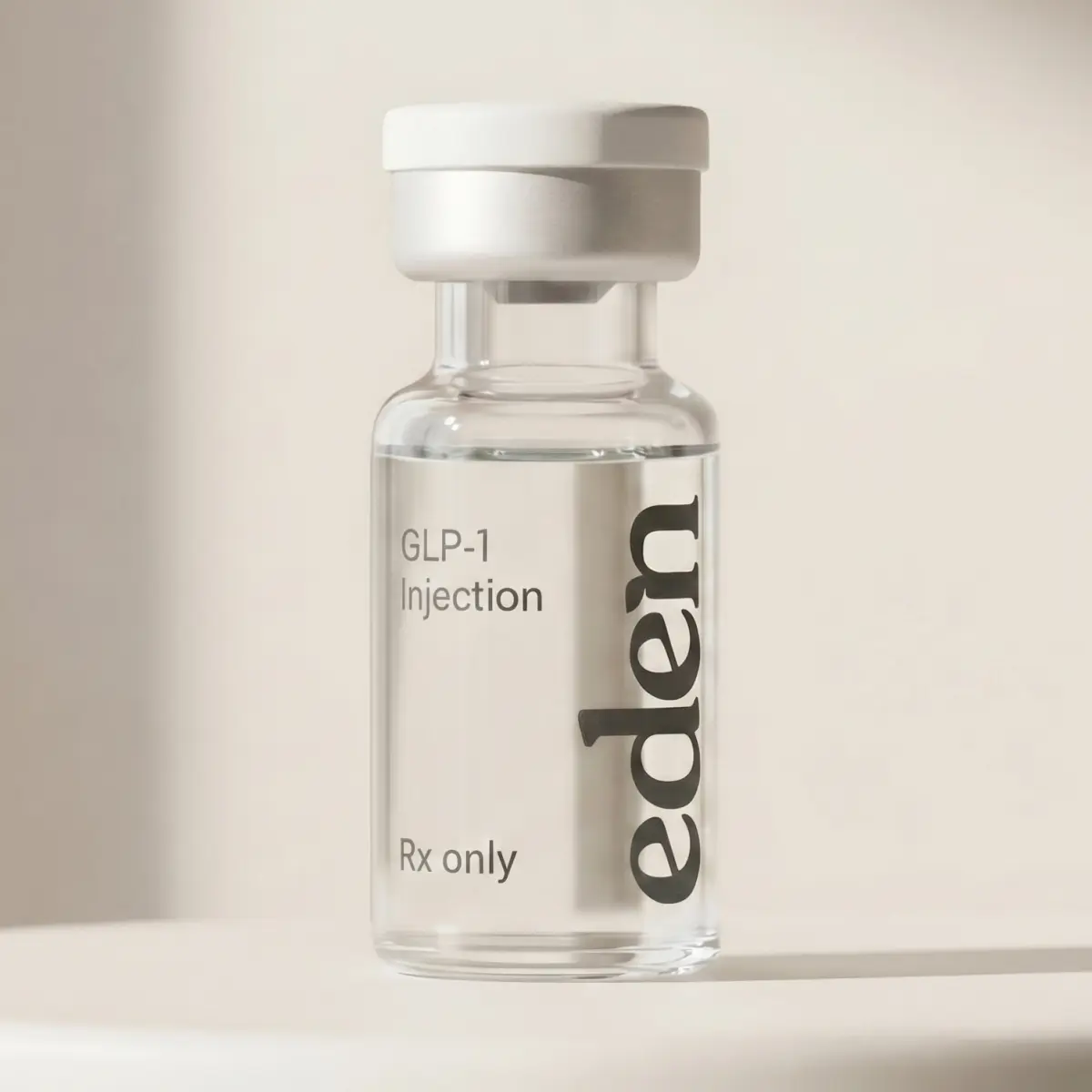
Compounded semaglutide is semaglutide prepared by a state-licensed compounding pharmacy for an individual patient, based on a licensed provider's prescription. It is not FDA-approved and is not a generic version of either drug.
While brand-name pens come in fixed strengths, with compounded semaglutide, a provider may prescribe a different dose or smaller dose adjustments when medically necessary for an individual patient. Formulations may vary by prescriber and pharmacy.
If you're interested in exploring your options, compounded semaglutide through Eden starts with a quick online intake. A licensed provider reviews your health history, goals, and medications and, if appropriate, creates a treatment plan suited to you and your needs.
Why Would a Provider Prescribe One Over the Other?
There are several reasons your provider may prescribe one type over another. The common ones include:
- Diagnosis: With type 2 diabetes, Ozempic® is the on-label choice. For weight management without diabetes, Wegovy® is the usual option.
- BMI and eligibility: Wegovy® is approved for a BMI of 30 or higher, or 27 or higher with a weight-related condition. If you're not sure about your BMI, check your BMI with our calculator.
- Insurance: Ozempic® is more reliably covered for patients with diabetes.
- Heart and liver history: With obesity plus established heart disease, or MASH with fibrosis, a provider may consider Wegovy® for its additional approved uses.
- Age: Wegovy® injection is approved for adolescents 12 and older, and Ozempic® is approved only for adults.
The decision between Wegovy®, Ozempic®, or any semaglutide-based treatment should be made with a licensed healthcare provider who can review your full health history, current medications, and goals.
Common Side Effects of Both Medications
Both brands and compounded semaglutide may have overlapping side effects, although compounded formulations have not undergone the same FDA review.
The most common side effects may include:
- Nausea (especially during dose increases)
- Vomiting
- Diarrhea
- Constipation
- Stomach pain or discomfort
Less common side effects include headache, fatigue, dizziness, and injection site reactions. At the 7.2 mg Wegovy® dose, altered skin sensations (such as tingling or sensitivity) were reported more often.
Serious risks may include:
- Thyroid C-cell tumors seen in animal studies (a boxed warning). People with a personal or family history of medullary thyroid carcinoma or MEN 2 should not use semaglutide.
- Pancreatitis (rare but serious)
- Gallbladder problems, including gallstones
- Diabetic retinopathy complications, mainly for people with diabetes
- Dosing errors and formulation-related risks with compounded semaglutide
Side effects are often more pronounced during dose escalation. If you experience severe or unusual symptoms, make sure to report them to your provider promptly.
Long-Term Semaglutide: Maintenance and Microdosing
In the STEP 1 trial extension, participants who stopped semaglutide 2.4 mg regained about two-thirds of the weight they had lost within a year. And this is why many providers treat semaglutide as a long-term medication.
In fact, some providers may lower a patient's dose instead of stopping the medication completely. Microdosing refers to using a lower-than-standard dose of a GLP-1, set and adjusted by a licensed provider. However, lower-dose maintenance isn't a standardized protocol, and has not been established as effective in large clinical trials.
Others may discuss switching to a different medication for maintenance. For example, research on oral GLP-1s for weight maintenance has looked at people switching from injectable semaglutide. Learn more about long-term GLP-1 weight management and what happens when you stop a GLP-1.
Researchers are also exploring semaglutide's broader metabolic effects. In the SELECT trial, semaglutide 2.4 mg reduced major cardiovascular events by about 20% in adults with overweight or obesity and heart disease. This benefit was observed at the full dose, and whether lower doses offer similar long-term benefits is unknown.
Wegovy® vs. Ozempic®: Which Is Better for Weight Loss?
For weight loss specifically, Wegovy® is the FDA-approved option and is linked to greater average weight loss, about 15% at 2.4 mg in STEP 1. Ozempic® may produce meaningful weight loss, but it isn't approved for this use and typically produces more modest results in the populations studied.
So, which is better?
It ultimately depends on the person. Someone with type 2 diabetes may be appropriately prescribed Ozempic®, while someone focused on weight management is more likely to be prescribed Wegovy®. The right choice depends on diagnosis, eligibility, cost, and provider judgment.
If you're unsure which option applies to you, a licensed provider can review your health profile and help identify the most appropriate path. Learn more about Eden's GLP-1 weight loss program. It all starts with a quick online intake.












Prescriptions and a medical evaluation are required for certain products. The information provided on this blog is for general informational purposes only. It is not intended as a substitute for professional advice from a qualified healthcare professional and should not be relied upon as personal health advice. The information contained in this blog is not meant to diagnose, treat, cure, or prevent any disease. Readers are advised to consult with a qualified healthcare professional for any medical concerns, including side effects. Use of this blog's information is at your own risk. The blog owner is not responsible for any adverse effects or consequences resulting from the use of any suggestions or information provided in this blog.
Eden is not a medical provider. Eden connects individuals with independent licensed healthcare providers who independently evaluate each patient to determine whether a prescription treatment program is appropriate. All prescriptions are written at the sole discretion of the licensed provider. Medications are filled by state-licensed pharmacies. Please consult a licensed healthcare provider before making any medical decisions.
Frequently asked questions
Is Ozempic® the same as Wegovy®?

Both contain semaglutide, but they're different products. Ozempic® is approved for type 2 diabetes and Wegovy® for weight management, and they differ in dosing and maximum doses.
Which is better for weight loss, Wegovy® or Ozempic®?
Wegovy® is FDA-approved for weight loss and was linked to about 15% average weight loss at 2.4 mg in clinical trials. Ozempic® may lead to weight loss but isn't approved for that purpose. A licensed provider can help determine which fits your health profile.
Which costs less, Wegovy® or Ozempic®?
As of October 2026, both cost $349 per month through NovoCare® self-pay at most injectable doses, while Ozempic® 2 mg costs $499 and Wegovy® 7.2 mg costs $399. Your actual cost depends on insurance, dose, and program eligibility.
Can I use Ozempic® for weight loss if I don't have diabetes?
Some providers prescribe Ozempic® off-label for weight loss in individuals without diabetes, but it isn't approved for this use. Wegovy® is the on-label option for weight management.
What is compounded semaglutide, and how does it compare to Wegovy® or Ozempic®?
Compounded semaglutide is prepared by a state-licensed pharmacy for an individual patient based on a provider's prescription, and it is not FDA-approved or a generic version of either brand. Its main practical difference is the ability to address an individual clinical need, such as a different dose, when documented by a licensed prescriber.
Can you microdose semaglutide?
Some providers prescribe lower semaglutide doses for weight maintenance or to improve tolerability. This approach hasn't been studied in large trials, and its effectiveness for these purposes is not established. Any dose change should be made with a licensed provider.
What happens if you stop taking Wegovy® or Ozempic®?
Many people regain weight after stopping semaglutide, with STEP 1 extension participants regaining about two-thirds of their lost weight within a year. Talk to your provider before stopping, since a gradual step-down, a different medication, or another maintenance plan may be an option.
Related articles





Frías, J. P., Auerbach, P., Bajaj, H. S., Fukushima, Y., Lingvay, I., Macura, S., Søndergaard, A. L., Tankova, T. I., Tentolouris, N., & Buse, J. B. (2021). Efficacy and safety of once-weekly semaglutide 2.0 mg versus 1.0 mg in patients with type 2 diabetes (SUSTAIN FORTE): A double-blind, randomised, phase 3B trial. The Lancet Diabetes & Endocrinology, 9(9), 563–574. https://pubmed.ncbi.nlm.nih.gov/34293304/
Lincoff, A. M., Brown-Frandsen, K., Colhoun, H. M., Deanfield, J., Emerson, S. S., Esbjerg, S., Hardt-Lindberg, S., Hovingh, G. K., Kahn, S. E., Kushner, R. F., Lingvay, I., Oral, T. K., Michelsen, M. M., Plutzky, J., Tornøe, C. W., & Ryan, D. H. (2023). Semaglutide and cardiovascular outcomes in obesity without diabetes. New England Journal of Medicine, 389(24), 2221–2232. https://www.nejm.org/doi/full/10.1056/NEJMoa2307563
Novo Nordisk. (2026). Ozempic® (semaglutide) injection: Prescribing information. https://www.novo-pi.com/ozempic.pdf
Novo Nordisk. (2026). Rybelsus® (semaglutide) tablets and Ozempic® (semaglutide) tablets: Prescribing information. https://www.novo-pi.com/ozempictablets.pdf
Novo Nordisk. (2026). Wegovy® (semaglutide) injection and tablets: Prescribing information. https://www.novo-pi.com/wegovy.pdf
NovoCare®. (2026). NovoCare® Pharmacy. https://www.novocare.com/pharmacy.html
NovoCare®. (2026). Wegovy® (semaglutide) online pharmacy. https://www.novocare.com/pharmacy/wegovy.html
U.S. Food and Drug Administration. (2025). FDA approves treatment for serious liver disease known as "MASH". https://www.fda.gov/drugs/news-events-human-drugs/fda-approves-treatment-serious-liver-disease-known-mash
U.S. Food and Drug Administration. (2026). FDA approves fourth product under National Priority Voucher program, higher dose semaglutide. https://www.fda.gov/news-events/press-announcements/fda-approves-fourth-product-under-national-priority-voucher-program-higher-dose-semaglutide
Wilding, J. P. H., Batterham, R. L., Calanna, S., Davies, M., Van Gaal, L. F., Lingvay, I., McGowan, B. M., Rosenstock, J., Tran, M. T. D., Wadden, T. A., Wharton, S., Yokote, K., Zeuthen, N., & Kushner, R. F. (2021). Once-weekly semaglutide in adults with overweight or obesity. New England Journal of Medicine, 384(11), 989–1002. https://www.nejm.org/doi/full/10.1056/NEJMoa2032183
Wilding, J. P. H., Batterham, R. L., Davies, M., Van Gaal, L. F., Kandler, K., Konakli, K., Lingvay, I., McGowan, B. M., Oral, T. K., Rosenstock, J., Wadden, T. A., Wharton, S., Yokote, K., & Kushner, R. F. (2022). Weight regain and cardiometabolic effects after withdrawal of semaglutide: The STEP 1 trial extension. Diabetes, Obesity and Metabolism, 24(8), 1553–1564. https://dom-pubs.pericles-prod.literatumonline.com/doi/10.1111/dom.14725
Thank you!
We'll be in touch.
Thank you!